Facebook
 Google
 GitHub
 Linkedin


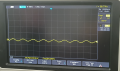
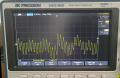
i have built a 4-wire milliohm meter for our test gear. at first readings were ok then crap, then ok again... turns out there was an instability of constant current source which had tendency to oscillate at ~6MHz. once that part was resolved i run it again and CC was solid. then i checked readings and at first thought was getting false data because measurements were too perfect. i switched channels, and cables (0m, 5m, 10m) and in all cases displayed 5 significant figures were exactly the same. a little bit of change would be appreciated.... so i switched from 2.000 Ohm 2ppm precision resistor used to calibrate it to a same value regular 1% specimen and got what i was looking for - reading changed a bit. good...! then tried different values to ensure scaling is correct and yup, everything was good. so i built remaining units and let them run over the weekend.
as a baseline, my dear old Keithly 2000 using 4-wire sense, reading precision 2.00 ohm resistor fluctuates 2.000 to 2.0042 (5min interval).
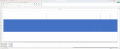
few units reading that same precision resistor type were practically unchanged over 50h:
the best one had peak to peak deviation of 0.0001 Ohm, the worst one had 0.0003 Ohm.
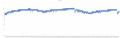
and one of the units i left with plain 1% resistors (happens to be 2.0 and 2.7 Ohm wired in parallel, equivalent 1.15 Ohm). this combo has temperature coefficient of 100ppm/degC and it shows
as a baseline, my dear old Keithly 2000 using 4-wire sense, reading precision 2.00 ohm resistor fluctuates 2.000 to 2.0042 (5min interval).
few units reading that same precision resistor type were practically unchanged over 50h:
the best one had peak to peak deviation of 0.0001 Ohm, the worst one had 0.0003 Ohm.
and one of the units i left with plain 1% resistors (happens to be 2.0 and 2.7 Ohm wired in parallel, equivalent 1.15 Ohm). this combo has temperature coefficient of 100ppm/degC and it shows
Last edited: