Facebook
 Google
 GitHub
 Linkedin

I know. I written several Hall sensor software calibration routines. The primary problems are Hall sensor noise, drift and the quality of ADC.NSAspook;
Indeed Hall effect sensors don’t have the accuracy of a high-precision shunt.
But its errors can be calibrated in software. The zero-current offset is trivial. The full-load gain requires a way to simulate the high currents and thus not straightforward. That is the reason closed-loop are preferred for the highest accuracy.
https://www.lem.com/en/hall-effect-current-sensors
The Honeywell series of ratiometric sensors are very good with very stable voltage supplies and references for the ADC.
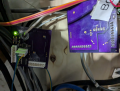
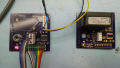
DAQ board with Hall sensor, designed for two types of sensors and a DAC: https://www.analog.com/media/en/technical-documentation/data-sheets/MAX5322.pdf
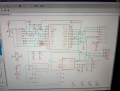
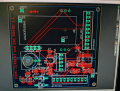
Sensors voltage supply: https://docs.rs-online.com/bb04/0900766b80026627.pdf
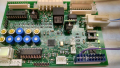
ADC ref: https://www.ti.com/lit/ds/symlink/ref3440.pdf
A simple ADC/DAC DAQ system for K42 with voltage and current sensor calibration
C:
/*
* 12-bit analog 64 sample average per channel on ports A and B
* uses the compute burst average mode threshold interrupt to auto change
* channels during interrupt after a repeat count
* The end result is a 13-bit ADC value
*/

#include <xc.h>

#include "daq.h"

typedef struct D_data {
    uint8_t dac0 : 8;
    uint8_t dac1 : 4;
    uint8_t cont : 4;
} D_data;

union bytes2 {
    uint16_t ld;
    uint8_t bd[2];
};

union dac_buf_type {
    uint16_t ld;
    uint8_t bd[2];
    struct D_data map;
};

typedef struct R_data { // internal variables
    adc_result_t raw_adc[ADC_BUFFER_SIZE];
    adc_result_t raw_dac[DAC_BUFFER_SIZE];
    union dac_buf_type max5322_cmd;
    int16_t n_offset[NUM_C_SENSORS];
    float n_scalar[NUM_C_SENSORS];
    uint8_t scan_index;
    uint16_t scan_select;
    bool done;
    hist_type H;
    uint8_t hist_save : 1;
    uint8_t hist_update : 1;
    uint8_t c_zero_cal : 1;
    uint8_t c_scale_cal : 1;
    uint16_t checkmark;
    uint8_t crc;
} R_data;

static volatile R_data R = {
    .done = false,
    .scan_index = 0,
#ifdef BAT_100A
    .n_offset[A100B] = C_OFFSET100,
    .n_scalar[A100B] = C_A100,
#else
    .n_offset[A200] = C_OFFSET200,
    .n_scalar[A200] = C_A200,
#endif
    .n_offset[A100] = C_OFFSET100,
    .n_offset[A100M] = C_OFFSET100M,
    .n_scalar[A100] = C_A100,
    .n_scalar[A100M] = C_A100M,
    .raw_dac[DCHAN_A] = 0x0,
    .raw_dac[DCHAN_B] = 0x0,
    .checkmark = EE_CHECKMARK,
    .crc = TATE,
    .c_scale_cal = false,
    .c_zero_cal = false,
    .hist_save = false,
    .hist_update = false,
};

static void adc_int_handler(void);
static void adc_int_t_handler(void);
static bool check_range(int16_t, int16_t, int16_t);

static R_data r_cal;

/*
* start computed ADC results: 64 samples per average value per selected channel from
* AN channel zero to LAST_ADC_CHAN
* check_adc_scan returns true when sequence is complete
*/
bool start_adc_scan(void)
{
    bool ret;
    if (R.done) {
        ret = false;
    } else {
        R.scan_index = 0;
        R.scan_select = (uint16_t) ((ANSELB << 8) + ANSELA) & ADC_SCAN_CHAN; // skip digital pins PORT A and B
        ADCC_SetADIInterruptHandler(adc_int_handler);
        ADCC_SetADTIInterruptHandler(adc_int_t_handler);
        ADCC_DischargeSampleCapacitor(); // short ADC sample cap before channel sampling
        ADCC_StartConversion(R.scan_index & 0xf);
#ifdef DEBUG_DAQ1
        DEBUG1_SetHigh();
#endif
#ifdef DEBUG_DAQ2
        DEBUG2_SetHigh();
#else
        PIE1bits.ADIE = 0;
#endif
        ret = true;
    }
    return ret;
}

/*
* check scan done flag
*/
bool check_adc_scan(void)
{
    return R.done;
}

/*
* clear scan done flag
*/
void clear_adc_scan(void)
{
    R.done = false;
}

/*
* update the raw adc values
*/
bool update_adc_result(void)
{
    if (R.done) {
        clear_adc_scan();
        start_adc_scan();
        StartTimer(TMR_ADC, ADC_SCAN_SPEED);
        while (!TimerDone(TMR_ADC) && !check_adc_scan());
        return true;
    } else {
        return false;
    }
}

/*
* read average value of a channel after scan completion (done)
*/
adc_result_t get_raw_result(const adcc_channel_t index)
{
    static adc_result_t raw_result;

    // stop ADC interrupt value updates
    PIE1bits.ADTIE = 0; // while getting raw values
    raw_result = R.raw_adc[index];
    // restore ADC enables
    PIE1bits.ADTIE = 1;

    return raw_result;
}

/*
* turn ADC values into standard program values
*/
float conv_raw_result(const adcc_channel_t chan, const adc_conv_t to_what)
{

    switch (to_what) {
    case CONV:
        if (!(ADC_SCAN_CHAN >> chan & 0x1))
            return NAN;

        if (ADC_C_CHAN >> chan & 0x1) { // current conversion
            if (ADC_C_CHAN_TYPE >> chan & 0x1) {
#ifdef BAT_100A
                return((float) ((int16_t) get_raw_result(chan)) - R.n_offset[A100B]) * R.n_scalar[A100B];
#else
                return((float) ((int16_t) get_raw_result(chan)) - R.n_offset[A200]) * R.n_scalar[A200];
#endif
            } else {
                if (ADC_C_CHAN_MPPT >> chan & 0x1) {
                    return((float) ((int16_t) get_raw_result(chan)) - R.n_offset[A100M]) * R.n_scalar[A100M];
                } else {
                    return((float) ((int16_t) get_raw_result(chan)) - R.n_offset[A100]) * R.n_scalar[A100];
                }
            }
        } else {
            if (ADC_T_CHAN >> chan & 0x1) { // temp conversion
                return 25.0; // filler until sensor is selected
            } else { // voltage conversion
                if (ADC_V_CHAN_TYPE >> chan & 0x01) {
                    return((float) get_raw_result(chan) * V_SCALE_H) / 1000.0f;
                } else {
                    return((float) get_raw_result(chan) * V_SCALE) / 1000.0f;
                }
            }
        }
        break;
    case O_CONV:
        if (ADC_C_CHAN >> chan & 0x1 || ADC_T_CHAN >> chan & 0x1)
            return((float) get_raw_result(chan) * C_SCALE) / 1000.0f;

        if (ADC_V_CHAN_TYPE >> chan & 0x01) {
            return((float) get_raw_result(chan) * V_SCALE_H) / 1000.0f;
        } else {
            return((float) get_raw_result(chan) * V_SCALE) / 1000.0f;
        }

        break;
    default:
        return 0.0f;
        break;
    }
    return 0.0f;
}

/*
* ADC per conversion interrupt
*/
static void adc_int_handler(void)
{
#ifdef DEBUG_DAQ2
    DEBUG2_Toggle();
#endif
}

/*
* ADC per channel average interrupt
*/
static void adc_int_t_handler(void)
{
    /*
     * use the filter result buffer for raw adc data
     */
    R.raw_adc[R.scan_index] = ((adc_result_t) ((ADFLTRH << 8) + ADFLTRL));
    do {
        if (++R.scan_index > LAST_ADC_CHAN) {
            R.done = true;
#ifdef DEBUG_DAQ1
            DEBUG1_SetLow();
#endif
            return;
        }
    } while (!((R.scan_select >> R.scan_index) &0x1)); // check for analog port bit
    ADCC_DischargeSampleCapacitor(); // short ADC sample cap before next channel sampling
    ADCC_StartConversion(R.scan_index & 0xf);
    V.adc_count++;
#ifdef DEBUG_DAQ1
    DEBUG1_SetHigh();
#endif
}

/*
* set == true, set dac spi params
* set == false restore default spi params
*/
void dac_spi_control(bool set)
{
    static bool init = false;
    static uint8_t S0, S1, S2, SC, SB; // SPI device status backup

    if (set) {
        SPI1CON0bits.EN = 0;
        if (!init) {
            init = true;
            S0 = SPI1CON0;
            S1 = SPI1CON1;
            S2 = SPI1CON2;
            SC = SPI1CLK;
            SB = SPI1BAUD;
        }
        /*
         * set DAC SPI mode, speed and fifo
         */
        // mode 1
        SPI1CON1 = 0x00;
        SPI1CON1bits.CKE = 1;
        SPI1CON1bits.CKP = 0;
        SPI1CON1bits.SMP = 0;
        // SSET disabled; RXR suspended if the RxFIFO is full; TXR required for a transfer;
        SPI1CON2 = 0x03;
        // BAUD 0;
        SPI1BAUD = 0x0f; // 2MHz SCK
        // CLKSEL FOSC;
        SPI1CLK = 0x00;
        // BMODE every byte; LSBF MSb first; EN enabled; MST bus master;
        SPI1CON0 = 0x83;
        SPI1CON0bits.EN = 1;
    } else {
        if (init) {
            /*
             * restore default SPI mode
             */
            SPI1CON0bits.EN = 0;
            SPI1CON1 = S1;
            SPI1CON2 = S2;
            SPI1CLK = SC;
            SPI1BAUD = SB;
            SPI1CON0 = S0;
            SPI1CON0bits.EN = 1;
        }
    }
}

void set_dac(void)
{
    while (!SPI1STATUSbits.TXBE); // wait until TX buffer is empty
    CSB_SetHigh();
    CS_SDCARD_SetHigh();
    dac_spi_control(true);
    R.max5322_cmd.map.dac0 = R.raw_dac[DCHAN_A]&0xff;
    R.max5322_cmd.map.dac1 = (R.raw_dac[DCHAN_A] >> 8) &0xf;
    R.max5322_cmd.map.cont = DAC_LOAD_A; // update DAC A @ registers
    DAC_CS0_SetLow();
    SPI1_ExchangeByte(R.max5322_cmd.bd[1]);
    SPI1_ExchangeByte(R.max5322_cmd.bd[0]);
    DAC_CS0_SetHigh();
    R.max5322_cmd.map.dac0 = R.raw_dac[DCHAN_B]&0xff;
    R.max5322_cmd.map.dac1 = (R.raw_dac[DCHAN_B] >> 8) &0xf;
    R.max5322_cmd.map.cont = DAC_LOAD_B; // update DAC B @ registers
    DAC_CS0_SetLow();
    SPI1_ExchangeByte(R.max5322_cmd.bd[1]);
    SPI1_ExchangeByte(R.max5322_cmd.bd[0]);
    while (!SPI1STATUSbits.TXBE); // wait until TX buffer is empty
    DAC_CS0_SetHigh();
    dac_spi_control(false);
}

static uint16_t convert_dac_raw(float voltage)
{
    /*
     * check limits
     */
    if (voltage < 0.001f)
        voltage = 0.001f;
    if (voltage > 10.0f)
        voltage = 10.0f;
    /*
     * scale to DAC units
     */
    return(uint16_t) (voltage / DAC_SCALE);
}

/*
* 0.0 to 10.0 volts
*/
uint16_t set_dac_a(const float voltage)
{
    R.raw_dac[DCHAN_A] = convert_dac_raw(voltage);
    return R.raw_dac[DCHAN_A];
}

/*
* 0.0 to 10.0 volts
*/
uint16_t set_dac_b(const float voltage)
{
    R.raw_dac[DCHAN_B] = convert_dac_raw(voltage);
    return R.raw_dac[DCHAN_B];
}

/*
* sanity check values in a range
*/
static bool check_range(const int16_t value, const int16_t window, const int16_t standard)
{
    if (value > (standard + window))
        return false;
    if (value < (standard - window))
        return false;
    return true;
}

/*
* mode set to false for check values only, do not update
*/
bool cal_current_zero(const bool mode, const int16_t cb, const int16_t cp, const int16_t cm)
{

    if (!check_range(cb, ZERO_RANGE, C_CAL_ZERO))
        return false;

    if (!check_range(cp, ZERO_RANGE, C_CAL_ZERO))
        return false;

    if (!check_range(cm, ZERO_RANGE, C_CAL_ZERO))
        return false;

    if (!mode)
        return true;

#ifdef BAT_100A
    R.n_offset[A100B] = cb;
#else
    R.n_offset[A200] = cb;
#endif
    R.n_offset[A100] = cp;
    R.n_offset[A100M] = cm;
    R.c_zero_cal = true;
    return true;
}

/*
* update internal current scaling using a calibrated 10A value in both sensors
*/
bool cal_current_10A(const bool mode, const int16_t cb, const int16_t cp, const float scaleb, const float scalep)
{
#ifdef BAT_100A
    if (!check_range(cb, TEN_A_RANGE, C_CAL_A100))
#else
    if (!check_range(cb, TEN_A_RANGE, C_CAL_A200))
#endif
        return false;

    if (!check_range(cp, TEN_A_RANGE, C_CAL_A100))
        return false;

    if (!mode)
        return true;

#ifdef BAT_100A
    R.n_scalar[A100B] = scaleb;
#else
    R.n_scalar[A200] = scaleb;
#endif
    R.n_scalar[A100] = scalep;
    R.n_scalar[A100M] = scalep;
    R.c_scale_cal = true;
    return true;
}

/*
* read eeprom into temp program variable buffer
*/
bool read_cal_data(void)
{
    uint16_t x = 0, y;
    uint8_t *r_cal_ptr, crcVal_save;

    y = sizeof(r_cal);
    r_cal_ptr = (uint8_t*) & r_cal;
    // Initialize the CRC module
    CRC_Initialize();

    // Start CRC
    CRC_Start();

    do {
        r_cal_ptr[x] = DATAEE_ReadByte(x);
    } while (++x < y);
    crcVal_save = r_cal.crc;

    if (r_cal.checkmark == EE_CHECKMARK) {
        r_cal.crc = TATE; // standard CRC filler code
        x = 0;

        do {
            CRC_8BitDataWrite(r_cal_ptr[x]);
            while (CRC_IsBusy());
        } while (++x < y);
        if (CRC_CalculatedResultGet(NORMAL, 0x00) != crcVal_save)
            return false;
    } else {
        return false;
    }
    r_cal.crc = crcVal_save; // reload actual eeprom CRC
    return true;
}

/*
* write program variables to eeprom
*/
void write_cal_data(void)
{
    uint16_t x = 0, y;
    uint8_t *r_cal_ptr, crcVal;

    y = sizeof(R);
    R.crc = TATE;
    r_cal_ptr = (uint8_t*) & R;
    R.checkmark = EE_CHECKMARK;
    // Initialize the CRC module
    CRC_Initialize();

    // Start CRC
    CRC_Start();

    do {
        DATAEE_WriteByte(x, r_cal_ptr[x]);
        CRC_8BitDataWrite(r_cal_ptr[x]);
        while (CRC_IsBusy());
    } while (++x < y);
    // Read CRC check value
    crcVal = (uint8_t) CRC_CalculatedResultGet(NORMAL, 0x00);
    // store crc in EEPROM
    DATAEE_WriteByte(sizeof(R) - 1, crcVal);
}

/*
* copy program variable buffer into active variable
*/
void update_cal_data(void)
{
    R = r_cal;
    if (!R.c_zero_cal) {
#ifdef BAT_100A
        R.n_offset[A100B] = C_OFFSET100;
#else
        R.n_offset[A200] = C_OFFSET200;
#endif
        R.n_offset[A100] = C_OFFSET100;
        R.n_offset[A100M] = C_OFFSET100M;
    }

    if (!R.c_scale_cal) {
#ifdef BAT_100A
        R.n_scalar[A100B] = C_A100;
#else
        R.n_scalar[A200] = C_A200;
#endif
        R.n_scalar[A100] = C_A100;
        R.n_scalar[A100M] = C_A100M;
    }
}

/*
* mode true: copy local hist data to operational history
* mode false: copy operational history to local buffer
*/
bool update_hist_data(const bool mode, volatile hist_type *hist)
{
    if (hist == NULL)
        return false;

    if (mode) {
        if (R.hist_save) {
            *hist = R.H;
            if (R.hist_update) { // we should have a valid history time to load
                return true;
            }
        }
    } else {
        R.H = *hist;
        R.hist_save = true;
    }
    return false;
}

void set_hist_flag(void)
{
    R.hist_update = true;
}
Last edited: