Microwave transformer rewind

Thread Starter

RickSmit

Joined Sep 13, 2024
76
Hi guys.
hi guys starting new thread, i got my answers from the previous ones.

i have recently acquired a microwave transformer, now i want to rewind the secondary WITHOUT touching the primary(but if i must i will), so it goes without saying then i do not know the amount of turns on the primary.... HOWEVER my targeted output is ~36V.... what is the best way going in calculating it??,,, can i just take my mains 220v/36v = 6.11 then check either the primary's inductance or resistance, and then divide THAT by 6.11 to see my targeted resistance or inductance and then just wind the secondary until i achieved the needed amount?

ALSO in testing that i have got my targeted output, will it be okay to put a 1M ohm resistor across the secondary's points and measure the voltage across it in AC mode? in my head 36V/1Mohm= very small current, so nothing should over heat and pop. unless you guys know something bout AC that will make it go pop. hahahahaha
 
Ballpark is 1V/turn. These transformers run at quite high flux density for economy. Not really designed for steady use. It will heat up doing nothing, no power out.
How many amps at 36VAC were you needing? See if the aperture is big enough for the chosen wire gauge and say 36T.
Getting 36VAC at no load like your 1MEG, it will sag a bit under load so you overwind a turn or two. When you run it, always have a primary fuse or circuit breaker in case of mistake.

Hacksawing off the original secondary winding, I have learned to put a protective metal plate over the primary to prevent hacksaw slips from nicks and gouging it.
 

MisterBill2

Joined Jan 23, 2018
27,164
Posts #2 and #3 are both correct, except that absolutely you need to remove the magnetic shunt material. MAX, in post #2 has the accurate way of determining how many turns to use. One turn per volt is a W.A.G. and often off quite a bit.

Be warned, M.W.O. transformers certainly are not designed for constant duty at all. At rated power they get hot much sooner than other power transformers. So you might need a cooling fan.
and a caution: ALL of those M.W.O. transformers that I have seen are welded after assembly. So rewinding a secondary with enameled wire is very tedious if you need a lot of turns. So if you are not able to be patient and careful you need to learn how to be.
 

Tonyr1084

Joined Sep 24, 2015
9,744
Try a different approach. If you need 36VAC at some undisclosed amperage, find a power supply that can give you a minimum of 1 & 1/3 times the wattage you need.

Also, to help us better help you - be clear about the final voltage you need. Is it 36 volts AC or DC? You might not be aware that changing AC to DC comes with a few other rules. If you're going from 220 to 36 volts AC and you want to rectify it to DC you can do that with a bridge rectifier. BUT if you need that DC filtered then you need to understand the difference between RMS (Root Mean Square) law. With AC you get about 0.7 useful volts out of each volt. So a 36 volt AC that is rectified and filtered will give you (36x1.414=50.904) volts DC "Minus" the forward voltage drops through the bridge rectifier.

It's best to give us the details about what you are trying to achieve. We can recommend a way to build a simple regulator circuit that will give you the needed voltage AND amperage.

I mentioned "Wattage". Watts are equal to Volts x Amps. So if you can give us either V & A or V & W we should be able to figure out the rest. It's among the most basic laws of electronics.
 

MisterBill2

Joined Jan 23, 2018
27,164
Even less work than winding on ten turns is that after removing that magnetic shunt that is between the primary and the high voltage secondary, find the ends of the heater voltage winding. It might be connected to one end of the secondary, so you will need to disconnect it from that to avoid getting ZAPPED. You can measure the voltage of the heater winding safely when the transformer is energized. Then, unwind the heater winding with carefully counting the turns. Now you have both the turns and the volts so you can do the math to know turns per volt. BUT be sure to use a meter scale that will provide an accurate reading.

For checking the no-load voltage you do not need to connect a resistor across the winding. Just do not allow the ends to touch each other.

Of course,we do need to know the current that you want the transformer to be able to deliver. THAT will decide the wire size that you use.
 

Thread Starter

RickSmit

Joined Sep 13, 2024
76
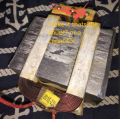
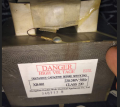
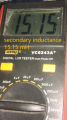
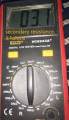
here is the transformer.
1765818865577.png1765818937822.png1765818957786.png
Hi thanx guys for the advice:
1. i was definitely planning on a 10fuse on the mains side, and a 80mp fuse at my secondary, i have already grinded and taken off the cap to get to the windings, i will rewind it once i'm done.... i have also bought heavy gauge wires for secondary.

2. in my simulations online i have seen i need to under turn so i can get a little higher voltage out of the secondary so that when load is on it can stabilize at 36v, i am planning to convert the 36vAC to DC with high amp diodes in parallel, and a arrangement of capacitor in parallel then a 20mH inductor in series with positive and another capacitor in parallel after the inductor, and a 1M ohm bleeding resistor.

3.My amp output is pretty much what ever i can get honestly

4.im planning on having another having another smaller transformer to power my 50w brushless 10000rpm fan its 24v at about 2amps. so i was already considering the heat factor, i was even thinking of submerging the transformer in mineral oil and then put the fan on that. but that can come later

5.. What and where is the magnetic shunt?

6, if i HAVE to,,, i will buy heavier gage enamel wire for primary for few turn also, it should cut back on the heat as shorter wire means less resistance hence less powerloss, right? but that is only if i have to, if the primary dies on me in usage i will rewind it thicker, but i was planning to use it as it is..

1765819045741.png1765819249667.png1765819137557.png1765819186639.png
 
Last edited:

Thread Starter

RickSmit

Joined Sep 13, 2024
76
Try a different approach. If you need 36VAC at some undisclosed amperage, find a power supply that can give you a minimum of 1 & 1/3 times the wattage you need.

Also, to help us better help you - be clear about the final voltage you need. Is it 36 volts AC or DC? You might not be aware that changing AC to DC comes with a few other rules. If you're going from 220 to 36 volts AC and you want to rectify it to DC you can do that with a bridge rectifier. BUT if you need that DC filtered then you need to understand the difference between RMS (Root Mean Square) law. With AC you get about 0.7 useful volts out of each volt. So a 36 volt AC that is rectified and filtered will give you (36x1.414=50.904) volts DC "Minus" the forward voltage drops through the bridge rectifier.

It's best to give us the details about what you are trying to achieve. We can recommend a way to build a simple regulator circuit that will give you the needed voltage AND amperage.

I mentioned "Wattage". Watts are equal to Volts x Amps. So if you can give us either V & A or V & W we should be able to figure out the rest. It's among the most basic laws of electronics.
Thank you for explaining that, i have wondered... seems now i must OVER turn and get less AC voltage so that after filtering the RMS will give me 36vDC... thank you that was very helpful. i did post some particulars
 

Thread Starter

RickSmit

Joined Sep 13, 2024
76
Even less work than winding on ten turns is that after removing that magnetic shunt that is between the primary and the high voltage secondary, find the ends of the heater voltage winding. It might be connected to one end of the secondary, so you will need to disconnect it from that to avoid getting ZAPPED. You can measure the voltage of the heater winding safely when the transformer is energized. Then, unwind the heater winding with carefully counting the turns. Now you have both the turns and the volts so you can do the math to know turns per volt. BUT be sure to use a meter scale that will provide an accurate reading.

For checking the no-load voltage you do not need to connect a resistor across the winding. Just do not allow the ends to touch each other.

Of course,we do need to know the current that you want the transformer to be able to deliver. THAT will decide the wire size that you use.
im looking to get max power out of this, that mean at most before my 10mains fuse blow i can get 2200W (220Vx10Amp) so the math would suggest at 36V i should draw a MAX of 60amps,,,, i have an 80Amp fuse for Spikes.... the current draw will depend on my load wont it? 1ohm resistor will draw max AMPS and 1Mohm the least amps..... im just looking to power and induction heater. that bout 30amps....

will my multimeter be safe to check NO load voltage? wont it pop?
 

MisterBill2

Joined Jan 23, 2018
27,164
It appears that the TS has not paid any attention to my suggestion about using the existing magnetron heater winding to discover the turns per volt, or volts per turn.
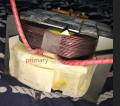
What I see is that the TS has marked the secondary as "primary", which if it is what was actually done, it is wrong. The winding next to the removed end is the primary, just like the transformer that I started to experiment with.

There is also a very serious misunderstanding: "
6, if i HAVE to,,, i will buy heavier gage enamel wire for primary for few turn also, it should cut back on the heat as shorter wire means less resistance hence less powerloss, right? but that is only if i have to, if the primary dies on me in usage i will rewind it thicker, but i was planning to use it as it is.."

In addition, putting a TEN AMP FUSE in series with the primary does not mean ten amps will flow. The very maximum power might be 1200 watts, but most of the transformers are only 1000 watts.
YOU CAN NOT get more power out than goes in ! !
Wanting it to be different from that does not make it happen.

1000 watts / 36 volts =27.777 amps, (at 100% efficiency.) The actual results will be a bit less.
 

Futurist

Joined Apr 8, 2025
721
Hi guys.
hi guys starting new thread, i got my answers from the previous ones.

i have recently acquired a microwave transformer, now i want to rewind the secondary WITHOUT touching the primary(but if i must i will), so it goes without saying then i do not know the amount of turns on the primary.... HOWEVER my targeted output is ~36V.... what is the best way going in calculating it??,,, can i just take my mains 220v/36v = 6.11 then check either the primary's inductance or resistance, and then divide THAT by 6.11 to see my targeted resistance or inductance and then just wind the secondary until i achieved the needed amount?

ALSO in testing that i have got my targeted output, will it be okay to put a 1M ohm resistor across the secondary's points and measure the voltage across it in AC mode? in my head 36V/1Mohm= very small current, so nothing should over heat and pop. unless you guys know something bout AC that will make it go pop. hahahahaha
I just don't get this, why don't you just order a 220v to 36v transformer?
 

MisterBill2

Joined Jan 23, 2018
27,164
Certainly, if it works, a rewound transformer scheme costs a lot less than AN ADEQUATE 36 volt DC supply. Consider that a low cost switcher supply will certainly have more noise on the DC output than a transformer/rectifier supply, and that noise would be a problem with an audio amplifier.
 

Thread Starter

RickSmit

Joined Sep 13, 2024
76
what multimeter is that? do you know how to set it to measure AC voltage?
Yes ofcourse i would have set it to AC voltage to test. but i was planning to put a 1M ohm resister in i didnt know i can check it open load. i was scared for the meter. i only have one hahahaha
 

panic mode

Joined Oct 10, 2011
4,864
Yes ofcourse i would have set it to AC voltage to test. but i was planning to put a 1M ohm resister in i didnt know i can check it open load. i was scared for the meter. i only have one hahahaha
you did not answer the question, so here it is again:
what kind of multimeter you have and how do you plan on setting it up to measure AC voltage?

why do you think that 1M resistor would make a difference? since most multimeters out there usually are at least 10M, that would at best make multimeter see 90% of voltage that you would see without that resistor. and if you have one with higher internal resistance, it would make no difference at all.
 

Thread Starter

RickSmit

Joined Sep 13, 2024
76
It appears that the TS has not paid any attention to my suggestion about using the existing magnetron heater winding to discover the turns per volt, or volts per turn.
What I see is that the TS has marked the secondary as "primary", which if it is what was actually done, it is wrong. The winding next to the removed end is the primary, just like the transformer that I started to experiment with.

There is also a very serious misunderstanding: "
6, if i HAVE to,,, i will buy heavier gage enamel wire for primary for few turn also, it should cut back on the heat as shorter wire means less resistance hence less powerloss, right? but that is only if i have to, if the primary dies on me in usage i will rewind it thicker, but i was planning to use it as it is.."

In addition, putting a TEN AMP FUSE in series with the primary does not mean ten amps will flow. The very maximum power might be 1200 watts, but most of the transformers are only 1000 watts.
YOU CAN NOT get more power out than goes in ! !
Wanting it to be different from that does not make it happen.

1000 watts / 36 volts =27.777 amps, (at 100% efficiency.) The actual results will be a bit less.
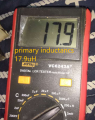
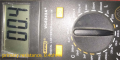
the primary is the bright red cloth-like covered windings, in my head as they are thicker wire meaning less turns.... the side where you can see the open wires i feel is the secondary ass the resistance and inductance are larger which means longer wire.

I am also fully aware that a 10AMPfuse wont GIVE me 10 amp. im not that stupid... im also FUSLLY aware i cant get out more than i put it, im just adding the 10amp fuse to the mains side for incase the system DRAWS 10 amps from mains, so it pops and not over use the breaker, its an old house. i just used the 220 x 10 amp as the MAXIMUM it can draw seeing that at 10 or above the fuse will pop. that all.....if in the end all i get out is 1000watts then halle-fucking-luya.... i dont care bout AMPS, i will prepare for it by having heavy duty components... all i care about is the voltage...

your tip about the magnetron heater whatever wont help as i only have the transformer, i DO NOT have a broken microwave in pieces
 
Top