Looking for a decent 3d printer

Thread Starter

cmartinez

Joined Jan 17, 2007
8,759
Hello everyone, I use a old and second-hand printer for two years but now it's totally damage and here I see some beautiful recommendation of it. I decide to buy a 3d printer as soon as possible but I don't have any idea about it. So here I'm looking for a better recommendation. Any helps would be greatly appreciated.
Was your printer of the filament type? What's your price range?
 

Thread Starter

cmartinez

Joined Jan 17, 2007
8,759
Question. Although roasting the parts in UV light for an hour or so does make a difference in how quickly they become rigid, I'm noticing that their surfaces remain tacky for at least a couple of days. No matter if I wash/rinse them using isopropyl alcohol. Is there a way to accelerate this?
 

jpanhalt

Joined Jan 18, 2008
11,087
Polyester fiberglass resin has a small amount of wax added. That rises to the surfaces and promotes full cure by protecting from air. Resin for laminating will often omit that wax, except for the final layer.

Source: https://fiberglasssource.com/products/wax-solution-surfacing-agent-1-gallon
"Wax solution" is paraffin wax dissolved in styrene that is added to polyester resins and gel coats to prevent tackiness. The wax in the curing process will rise or "bloom" to the top creating a barrier between the resin and air. Oxygen inhibits the chemical reaction needed for a full cure.
Your system has a lot in common with that (i.e., it is probably inhibited by oxygen). You could try putting a few tests samples in a jar and flushing with a dry gas, such as argon. If that works as a test, then you might consider a more sophisticated way.
 

Thread Starter

cmartinez

Joined Jan 17, 2007
8,759
Polyester fiberglass resin has a small amount of wax added. That rises to the surfaces and promotes full cure by protecting from air. Resin for laminating will often omit that wax, except for the final layer.

Source: https://fiberglasssource.com/products/wax-solution-surfacing-agent-1-gallon


Your system has a lot in common with that (i.e., it is probably inhibited by oxygen). You could try putting a few tests samples in a jar and flushing with a dry gas, such as argon. If that works as a test, then you might consider a more sophisticated way.
Interesting... I do have a small tank of argon with me, which I use for spot welding stainless steel ... So, what you're saying is that if I place the part in a sealed jar, and then flush all the air inside it (therefore displacing all of its oxygen) using argon, then the part's surface is going to cure a bit faster?

EDIT: I think I'm beginning to understand the recommendation I read somewhere that "curing under water is recommended" ... wouldn't that displace most of the oxygen as well?
 

Thread Starter

cmartinez

Joined Jan 17, 2007
8,759
Water should work too. Boil it first and let cool undisturbed. That will "degas" it. Another way to degas it is to bubble argon or nitrogen, which is caller sparging (https://en.wikipedia.org/wiki/Sparging_(chemistry) ). Both techniques are used in photochemistry to remove dissolved oxygen.
Excellent ... that makes things a lot simpler ... what I'm using right now is purified water from a commercial 5 gallon bottle. It should have much less gas in it than water from the tap.... although I'm not certain about it having much less oxygen in particular.
 

Thread Starter

cmartinez

Joined Jan 17, 2007
8,759
I don't have any idea about it so sir kindly give me some brief information about it with price list.
Looking forward.
Thanks
You did not answer my first question. And as for handing you a price list, that is not the purpose of this thread. I suggest you do some research yourself, and then come back here and open a different thread. Then those of us interested in the subject will be more than glad to try and help you out.
 

Thread Starter

cmartinez

Joined Jan 17, 2007
8,759
That does look like fluorescence. Benzophenone does not fluoresce if oxygen or other quenchers of its excited state are present. Thus, in liquids, it is not seen unless the liquid is carefully de-oxygenated beforehand. Carbon tetrachloride is usually used as the solvent as it does not react with the benzophenone triplet. Solids are a different story, as the oxygen can be depleted by other reactions and does not diffuse in rapidly enough. Fluorescence from benzophenone is usually referred to as delayed fluorescence if from a singlet state and phosphorescence if from a triplet state.

Benzophenone is colorless. The yellow you observe may be due to impurities or reaction by-products. I suspect the fluorescence is mostly from the those by-products and/or impurities. The changing colors would also be consistent with reaction by-products. Longer exposure would give more by-products. They are probably at a very low concentration.

The emission spectrum of benzophenone has been reported in several papers (See: Figure 1, https://www.researchgate.net/profil...-with-Compensation-for-Thermal-Broadening.pdf ). That is probably well beyond any importance.
Well tomorrow's gonna be a week since I printed the last parts made using the Siraya resin mix. And they look good, but they're still an itsy bit tacky, unlike the ones made using eSun's hard and though resin. This morning I remembered your comment about wax (or paraffin) migrating to the part's surface and being responsible for that. So I decided to take a closer look. Sure enough, the part's surface is waxy in that one can easily leave a clear fingerprint on it, but it can also be easily wiped out.

I figured that rubbing it with a little IA would do the trick and get rid of that tacky layer, but I was wrong. After all this time, the part looks more transparent and less yellowish, and it's also quite rigid. But it's clear to me that the curing process isn't over yet, and it'll probably take weeks before that tacky surface disappears.
 

Thread Starter

cmartinez

Joined Jan 17, 2007
8,759
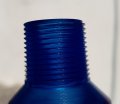
Well, I've made up my mind ... eSun's Hard and Tough blue resin is far superior to Siraya's mix (I have not yet tested Siraya's two resins separately).

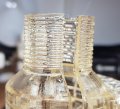
Just take a look at the neatness and resolution of the blue resin against the transparent one when I printed a part that included a 3/4" NPT thread:


25d28963-64e5-4f17-9369-43746f1998c4.jpg

6c4adfb7-12c1-4537-99bc-966688004f47.jpg


Fortunately, eSun's resin's scarcity seems to be over. I was able to purchase four 1/2 Kg bottles from a distributor (not Amazon), and they're on their way. I doubt I'll ever buy from Siraya ever again.

It's too bad that this type of resin isn't found in a transparent variety.
 

Thread Starter

cmartinez

Joined Jan 17, 2007
8,759
Those threads are impressive. Have you solved the stickiness?
It seems to be solving itself... it's been eight days now, and the parts are almost completely dry and smooth to the touch. The part I kept under water cured at the same speed as the one I left in the open (although I did expose both to a couple of hours of UV).

It's kind of a let down having to wait more than a week for the parts to be dry enough to work with them, but oh well... Also, the blue resin cures faster than the mix I made... about 30% faster I'd say.
 

Thread Starter

cmartinez

Joined Jan 17, 2007
8,759
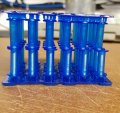
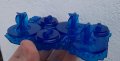
An interesting pic:

819c1373-d650-4f80-a3ae-78c7a71e9db9.jpg

  • The batch of solenoid cores at the top was immersed for a few seconds in isopropyl alcohol right after printing, in order to rinse it from any uncured resin, and then it was thoroughly dried and roasted under UV light for a couple of hours.
  • The batch at the bottom was immersed for almost 12 hours in isopropyl alcohol after printing, and then it was also dried and roasted under UV light.
Both batches were printed a little over a week ago.

It's quite evident that leaving freshly printed parts immersed in isopropyl alcohol for too long is a no no... the batch at the bottom absorbed quite a bit of the IA and swelled like a sponge, dramatically altering its dimensions.
 

jpanhalt

Joined Jan 18, 2008
11,087
I am a very few months away from needing a case for a kitchen gadget for my daughters. That is my main interest in this thread. Your results are encouraging. The transparency is a plus so they can see how hard I worked. :)
 

Thread Starter

cmartinez

Joined Jan 17, 2007
8,759
I am a very few months away from needing a case for a kitchen gadget for my daughters. That is my main interest in this thread. Your results are encouraging. The transparency is a plus so they can see how hard I worked. :)
A case? ... I hope it's not too large, because the Epax X1 has a meager capacity of 115 x 65 x 155 mm (it sells for $400 bucks), but the X10 is a much larger printer, boasting a volume of 216 x 135 x 250 mm... although it'll dent your wallet with a $1,200 dlls price...
 

jpanhalt

Joined Jan 18, 2008
11,087
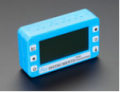
Last year, I bought one of these boxes and a set of soft buttons to put my own electronics inside:
1574836500774.png
It is 103 mm x 59 mm x 29 mm. Basically the box was designed to fit a specific GLCD that is 132x65 pixels. I need it to be about 6 mm deeper, so I am within those limits. The box is quite nicely designed and even includes a compartment for a flat lithium battery. Adafruit carried the whole instrument (https://www.adafruit.com/product/3081 ) but the supplier also sold just the components. It now appears to be out of that business. As a first project , I was thinking of making just a spacer to go between the two halves.

Of course, there are lots of similar sized boxes. One might also use the printer for making bezels, or innards, such as a battery compartment.

Surprisingly, the hardest part to source that I have found is the soft button covers. The switches are just ordinary SMD push buttons. EPAX also has some soft resins, which would probably work well.
 

joeyd999

Joined Jun 6, 2011
6,279
My wife bought me a TEVO Tarantula Pro 3D Printer DIY Kit for Christmas -- total price (not including my labor to assemble it): $229.

I have no idea how it can be sold for such a low price -- and the quality (IMHO) is exceptional.

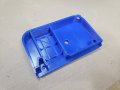
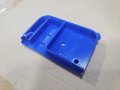
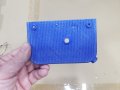
Here is my first (!) print. PLA, 210°C nozzle, 60°C bed. Designed in Solid Works and sliced with Cura using default settings for "extra fine" quality (0.06mm layers).

Note that I had to build on a raft since the three bosses extend below the bottom surface of the part -- thus, the low quality of the underside.

A big plus: All of the supports were *very* easy to remove cleanly. I just hand-sanded the bottom a bit with 150 grit sand paper.

Dimensionally, the overall wide dimension is within 0.003" of design.

20191231_093002.jpg

20191231_093006.jpg

20191231_093037.jpg
 
Last edited:

dendad

Joined Feb 20, 2016
4,637
3D printing is great fun. I am a bit of a 3Dprintaholic ;)
You have done a good job with that drawing. So far, all I have been able to manage in TinkerCAD.
thingiverse is where I hang out a lot, and post my designs there and also download others to print.
https://www.thingiverse.com/search?q=dendad51&dwh=855e0bc53d22039
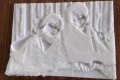
Have a look at Lithophanes. Load a jpg into Cura and see how it comes out.

Lithophane1.jpg

Then, with a backlight...
Lithophane2.jpg

This print is a fail. It lifted off the bed so I had to do another. Still, it looks pretty amazing I think!
 

joeyd999

Joined Jun 6, 2011
6,279
3D printing is great fun. I am a bit of a 3Dprintaholic ;)
You have done a good job with that drawing. So far, all I have been able to manage in TinkerCAD.
thingiverse is where I hang out a lot, and post my designs there and also download others to print.
https://www.thingiverse.com/search?q=dendad51&dwh=855e0bc53d22039
Have a look at Lithophanes. Load a jpg into Cura and see how it comes out.

View attachment 195770

Then, with a backlight...
View attachment 195769

This print is a fail. It lifted off the bed so I had to do another. Still, it looks pretty amazing I think!
My interests are more practical. Until now, I've used a 3d printing service (SLA) to prove out my designs prior to cutting aluminum injection molds (mistakes are expensive!).

I never bought my own printer because I didn't think the "cheap" hobby machines had high enough resolution or build accuracy.

I have been proven mistaken. The quality of this part is nearly as good as I would expect from SLA, and better than what I need to prove a part.

This one part would have cost me a few hundred dollars in SLA. My printer did it for $0.75.

It's a bargain at twice the price.
 
Top