Liquid Rocket Motor - Intermittent Ignition Sparking

drc_567

Joined Dec 29, 2008
1,156
... as noted above by Alec_t, it seems that you will be required to utilize an ignition coil in order to obtain the energy levels required to fire 4 spark plugs in a continuous, rapid sequence. An n-channel mosfet could be placed on the low side, in series with, the coil primary, in order to interrupt the current and generate the spark level output. The only other missing part would be some method of generating a periodic gate signal to the mosfet.
If the requirement is for 4 separate spark plugs to be fired sequentially, then additional circuitry will be necessary. The difficulty here would be distributing the 40,000 volt or so spark pulse energy, without using an automotive distributor.
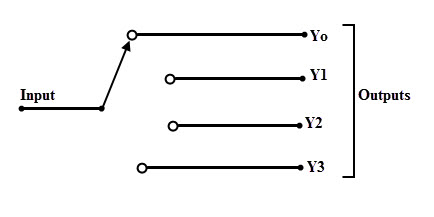
... The way around the mechanical distributor hurdle would be to obtain 4 separate ignition coils, and also 4 n-channel mosfets placed in series with the primary. Then, the remaining task would be to generate a variable clock signal as an input to a 4 bit demultiplexor, the demux being used to drive each individual mosfet/sparkplug module.

edit:
... not DEMUX ... 4 bit counter.
 
Last edited:

oz93666

Joined Sep 7, 2010
742
... as noted above by Alec_t, it seems that you will be required to utilize an ignition coil in order to obtain the energy levels required to fire 4 spark plugs in a continuous, rapid sequence.......
Brilliant idea ! I can just see a rocket going into space using the piece of scrap iron pictured above.
 

BBee

Joined Dec 6, 2018
35
Not sure if I am missing something here, but I would only need to look into the junk box (metaphorically speaking) to find an answer. Before automobile electronics became super complex there were add on units which, when switched by the points and in conjunction with a quality coil, provided really good sparks. I would have thought one of these plus good coil would deal with the high voltages (with attendant good durability to weather, moisture etc). All that would then be required would be an electronic pulse generator (maybe via opto isolation?) to trigger the circuit. A small circuit built with industrial / military spec components ought to sort that.

Tracy
 

BBee

Joined Dec 6, 2018
35
Thinking on another point, although it does not seem to be relevant here. With regard to utilising a distributor for directing a spark, it is always better to avoid reliability problems, often by duplication coil systems for each spark plug. I do know, however, that Honda for one used the spare spark system in which two plugs fire at once (one on exaust cycle so redundant) in some of their engines. Maybe more as a way to reduce cost and complexity. For the above application though it seems that if more than one plug was utilised then they may all fire at once. For multiple plugs though systems could be duplicated. A point to be remembered is that G forces may render mechanical systems unreliable.

Tracy
 

drc_567

Joined Dec 29, 2008
1,156
... unless there is a mis-understanding, the ignition assembly is separate from the rocket body, and will not be traveling anyplace. If the ignition assembly has to be attached to the rocket body, that is a completely different problem.
 
If you want something to test with try the Allison XR-700 ignition system. https://mgaguru.com/mgtech/ignition/ig207.htm

I had one back in the 1970's for a 1965 vehicle.

The idea behind the ignition system was to replace the points with a slotted disc. it was moved to another vehicle by changing the slotted thing.
I think I still even have it.

It should be fairly easy to mimic whatever signals are required. e.g. one per plug. Any processor would do. Even say www.picaxe.com for starters. An MPSP430 might be the best solution in the long run though.

Not sure how distributerless ignition works on say a 2000 ish GM car, but it's a coil per two cylinders. You can fire during the exhaust stroke.
So, use a microprocessor and generate (likely all you need is essentially a transistor switch to ground) guessing. Remember, that the ignition coil fires on the opening of the points.
 

Thread Starter

physicscafe

Joined Jan 13, 2019
7
Yes your right Ylli ..... "Specific impulse is a measure of how effectively a rocket uses propellant . By definition, it is the total impulse (or change in momentum) delivered per unit of propellant consumed "

And I'm surprised at the difference.... 450 for H2 O2 .... only 250 for the solid rockets used on the shuttle . Of course for solid you don't have to carry the extra weight of pumps to deliver the fuel and oxidizer , and the rocket engine .. but I can't imagine that would make up for such a big difference in SP ... So why use two firework rockets tied onto the shuttle??? I seem to remember it was a political decision and not based on engineering... senators wanted jobs for their voters , the solid rockets could be made far away from launch site , brought in and tied on ... One advantage was suppose to be no moving parts , very simple , nothing could go wrong ....Hmmm...
Yes indeed, solid rocket motors are very efficient, power : weight and cost wise. We have tested with a very high Isp in CFD simulation. Isp and the other factors mentioned above are all very important. Isp is the ultimate measure of a propulsion source, however.
 

BBee

Joined Dec 6, 2018
35
Since my original post I came across a book I have on jet engine design. The sort of thing being talked about is used as an igniter on jet engines, and (according to my book) often fire at one to one and a half times when set to run continuous a second using a similar idea to enhanced car ignition. Occasionally continuous run and otherwise with flameout detector for automatic restart to limit wear. Although My book give a little more, I would suggest looking into jet engines and ignition systems as they are maybe very similar with regard to design and utilisation.

Tracy
 

recklessrog

Joined May 23, 2013
985
I made an igniter for a single combustion chamber gas turbine engine that had been made by the Rover car factory, they were used to drive pumps and generators, this one was put in a Rib and drove a Hamilton water jet drive system. Worked well and the sound always attracted a lot of attention.
I used an ignition coil from a car, the one I used was actually from a renault that had four coils that directly fitted on top of the spark plugs. The circuit consisted of a simple transformer feedback oscillator with a secondary that produced around 400V that was half wave rectified with a resevoir capacitor of 4 microfarads.
This then fed a 400volt Sidac that was connected to the coil primary. as soon as the capacitor charged to the Sidac trigger voltage, it was discharged into the coil producing a very flame like arc between two electrodes in the combustion chamber. These electrodes are used in gas fires, boilers, steam washers etc and held up well under extreme heat.
Once built, the whole ignition unit less the coil was encapsulated in potting epoxy resin.
10 years on and apparently it still works!
 

wayneh

Joined Sep 9, 2010
18,122
You know, if you want sparks, why not spin a grinder wheel and turn a nail into a shower of sparks? I bet it could run 10 minutes straight for each nail and maybe a day or more before you need a new wheel.
 

MisterBill2

Joined Jan 23, 2018
27,675
One quite reliable scheme is a system that would use a commercial capacitor discharge ignition system but with a 555 timer IC in the astable mode to generate a string of pulses. There are lots of CD ignition system plans available.

And if the system would only be used on a ground-based test stand then another option is a neon sign transformer that has the grounded center tap. Each lead could power it's own spark plug, so you would need two of them. The big plus is no design work, and they are made to deliver a constant spark for hours at a time.

But the real rockets generally used a hypergolic mixture that would ignite in a vacuum. That was very reliable, but the mix is nasty to deal with because it bursts into flame when the valve is opened. No sparking needed.
 
Top