LEDs without current limiting.

Thread Starter

hp1729

Joined Nov 23, 2015
2,304
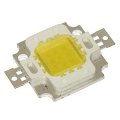
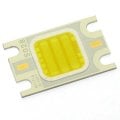
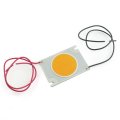
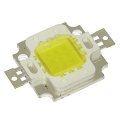
I know you schooled theoreticians are going to hate this but I have ran white LEDs on power without current limiting, not even a resistor, for maybe a year now with no problems. I have been buying surplus LED arrays rated at "12 Volts @ 1 Amp" in desk lights for about a year. I run then at 9 Volts. They draw about 500 mA and give very adequate lighting. Just because they are rated at 12 Volts does not mean you MUST drive them at 12 Volts. Yes, driving a 3.7 Volt LED by 9 Volt battery is a bad idea, but it will run at 4.5 Volts from batteries at a shorter than expected life. The internal resistance of the battery takes up the slack.
Electronic Goldmine is a cheap source for surplus LEDs of this sort.
I make LED lighting for my survivalist family members that run on 12 V DC or 120 V AC. My desk lamp consumes about 5 Watts. The two element light above my wife's sewing machine draws a whole 9 watts. I use similar stuff in my battery backup lighting. The SLA 12 Volt batteries trickle charge at a whisper of current, about 5 mA from the 120 V line.
 

Thread Starter

hp1729

Joined Nov 23, 2015
2,304
I know you schooled theoreticians are going to hate this but I have ran white LEDs on power without current limiting, not even a resistor, for maybe a year now with no problems. I have been buying surplus LED arrays rated at "12 Volts @ 1 Amp" in desk lights for about a year. I run then at 9 Volts. They draw about 500 mA and give very adequate lighting. Just because they are rated at 12 Volts does not mean you MUST drive them at 12 Volts. Yes, driving a 3.7 Volt LED by 9 Volt battery is a bad idea, but it will run at 4.5 Volts from batteries at a shorter than expected life. The internal resistance of the battery takes up the slack.
Electronic Goldmine is a cheap source for surplus LEDs of this sort.
I make LED lighting for my survivalist family members that run on 12 V DC or 120 V AC. My desk lamp consumes about 5 Watts. The two element light above my wife's sewing machine draws a whole 9 watts. I use similar stuff in my battery backup lighting. The SLA 12 Volt batteries trickle charge at a whisper of current, about 5 mA from the 120 V line.
Re: "It got so hot the solder joint melted"

Yes, use a heat sink. If it still gets warm put a fan on it. Yes 12 V fans run on 9 V, too.
In the past I have experienced this and put a bit of JB Weld over the solder joint. I find the heat sinks and fans salvaged from old computers to be good for this.

Other heat sink, G21507 from Electronic Goldmine. Good for 10 Watt LEDs but too small for the others.
.
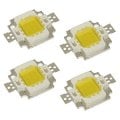
Selection of LEDs from Electronic Goldmine,
G19653, good, 10 watt
G20454, good, 10 Watt
G19948, good, 10 Watt
G20713, better, 22 Watt (CL-L220-C16N-A is close)
G21373, best (huge)

Some are warm white, some are cool white, stated in the catalog.

Search the web site for "LED". Not all of them always show up in the current catalog. They have a lot of neat LEDs.
 

Attachments

wayneh

Joined Sep 9, 2010
18,087
It may be nitpicking and I know what you mean, but you do have current-limiting, just not a fancy version. An LED requires some way to prevent over-current, whether it's staying below a critical voltage, using a resistor, or a genuine current controller.

I agree with your point that the simple techniques can be very effective.
 

ronv

Joined Nov 12, 2008
3,770
Sure if the more expensive led giving out less light satisfies your needs as opposed to a driver everybody is happy. Fact is they will last longer than running them a full spec.:D
 

DickCappels

Joined Aug 21, 2008
10,661
I've noticed that the white LEDs with higher voltage specs (for a given current) have a less sharp knee in their I/V curves. These can be driven with low resistance voltage sources directly and in that case the LED provides the needed resistance to allow it to work over a (narrow) range of voltages
 

Thread Starter

hp1729

Joined Nov 23, 2015
2,304
Sure if the more expensive led giving out less light satisfies your needs as opposed to a driver everybody is happy. Fact is they will last longer than running them a full spec.:D
I don't think so. Running them at lower than rated current and current limiting gives the longest life ... if you don't need full brightness.
 

Thread Starter

hp1729

Joined Nov 23, 2015
2,304
I've noticed that the white LEDs with higher voltage specs (for a given current) have a less sharp knee in their I/V curves. These can be driven with low resistance voltage sources directly and in that case the LED provides the needed resistance to allow it to work over a (narrow) range of voltages
Super. Thanks for the insight.
 

Tonyr1084

Joined Sep 24, 2015
9,744
OK, so what is the question? What is it you need help with? Being humble? Don't think we can help with that. At least I sure can't.
 
Top