Headband Magnifier

Thread Starter

Electronic Tek

Joined Jan 16, 2019
12
Hello, I am Electronic Tek and I am new at working with SMD repair and troubleshooting. I need Magnification on a budget something that a technician uses in SMD repair / rework. I have a desk lamp with a low magnification lens in the center of a 22W T9 bulb. I can barely make out the pins and my solder technique is a little heavy on the components leads. I did some searching in the forum about magnification and found several talking about getting this model, which is model number SE-MH1047L.

Can you give a general idea on the best magnifying headset with LED's that I can use for my electronics repair?


And this website : Headband Magnifier | Magnifying Visor | Magnifier.com
 

BR-549

Joined Sep 22, 2013
4,928
I wouldn't know about the headbands and don't mean to be distracting......but may I ask what kind of products are you repairing?
 

Thread Starter

Electronic Tek

Joined Jan 16, 2019
12
I am new at surface mount soldering. I am self taught on through hole soldering, but I have no skills in surface mount soldering. I don't have anything that I am repairing at this time. I am looking over a bad motherboard in a kindle 7 (5Generation), which I got cheap for parts. It's amazing that I have to have mag's on to work on this stuff.
 

BR-549

Joined Sep 22, 2013
4,928
It sure is. It gets smaller every year. Can you imagine the size of the circuits in the chips. Old fashion electricity seems to work fine down to the nanosize scale.

They will probably improve on nano density for a while. But sooner or later they will go for pico scale circuits.

Makes one wonder at what scale does electricity stop and quantum mechanics takes over.

There is a lot of people that are proficient with surface mount work here. If you listen and follow their advice, you should be okay. I would think the needed headgear is a matter of personal choice and price.
 

recklessrog

Joined May 23, 2013
985
As I have got older, (now in my 70's) I have progresively needed more magnification when repairing circuits, and as components get smaller, so the problem gets worse.
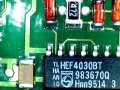
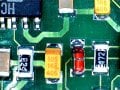
I use a headband magnifier with interchangable lenses, but sometimes identifying components became almost impossible. The solution for me was to buy a usb microscope, with this I can examine in the finest detail even the smallest parts and also trace any cracks, poor joints etc.
No need to buy an expensive model, mine cost around £35.00 and when connected to my laptop, it works extremely well.
One point I will make is if you are using win 10, you must enable "let apps access my camera" in settings, otherwise it will not allow the camera to show any video.
I find using low magnification of arount 20-40 times is all you need.
If you search Amazon, there are several from about £16.00
Have a look at the pictures below taken with the usb camera.
 

Attachments

Last edited:

MrSoftware

Joined Oct 29, 2013
2,273
I have one of these, and while it definitely helps for looking at small parts, I do not really like it for soldering. The focal length is short, so you need to have whatever you're looking at pretty close to your face, which isn't ideal for soldering.

One of the offices I work at has a stereo microscope very similar to this one. This makes SMD rework A LOT easier, and if I were doing SMD rework every day then something like this would be a necessity. If you need to work on a much smaller budget, then check out some digital microscope reviews on youtube, like this one.
 
I have one of these, and while it definitely helps for looking at small parts, I do not really like it for soldering. The focal length is short, so you need to have whatever you're looking at pretty close to your face, which isn't ideal for soldering.

One of the offices I work at has a stereo microscope very similar to this one. This makes SMD rework A LOT easier, and if I were doing SMD rework every day then something like this would be a necessity. If you need to work on a much smaller budget, then check out some digital microscope reviews on youtube, like this one.
Two points, because I have a magnifier on the list and am torn between a headband and a low-end table top "microscope".

I think the video is worth watching as it illustrates well some practical aspects of using them for soldering - things like base and soldering area and so on - the kind of things that are difficult to evaluate from the advertisements. Important because decent "looking" ones are only ~$60.

On the headband, 3.5X is not enough for me, but that is not a big deal because there are many out there with greater magnification. The aspect that I am most wary about is that cheap plastic lenses can and will scratch easily. How can you evaluate scratch resistance?
 

Externet

Joined Nov 29, 2005
2,626
Hi.
From experience; I would suggest other than the headband magnifier.
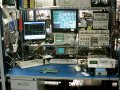
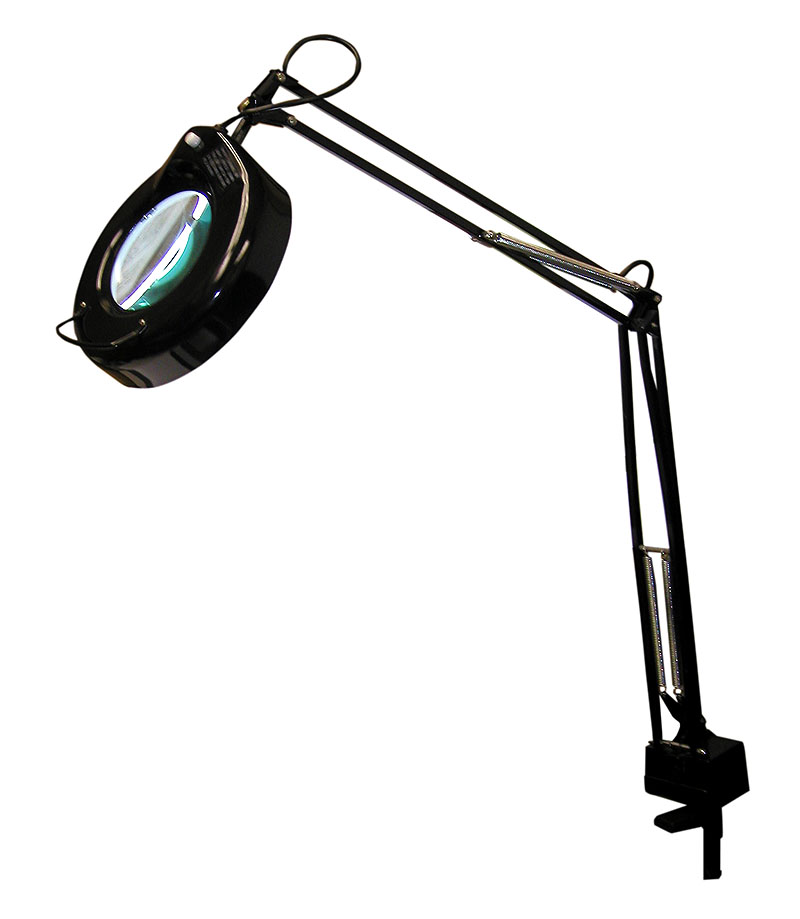
At my work place, I implemented a video camera mounted at a 'goose neck' illuminated magnifier lamp, and a monitor/TV (that can be shared with any existing monitor if already on the bench)
Soldering performed by looking at a ~400X very magnified screen instead of anything in front of my eyes. Soon, every technician wanted the same on their benches.
Here is one mounted on an instead, beheaded magnifier lamp :

Dolby bench.JPG
Above the board, see the black 'bullet' camera in front of the left keyboard. Can be positioned to any area of the bench, four inches above the target that allows soldering and probing with plenty of headroom.
Zip tied to the base of the ex-lamp at the left edge of the bench held a video to VGA converter that also selects one PC monitor to show camera or PC display. The plain NTSC camera+lens was selected for 1 inch area of the board under surgery to fill the screen with a brutal magnification with no added lights 4 inches clearance from the target. A larger monitor would produce even larger magnification. Resolution of your choice.
It may appear odd, but in few minutes you get used to soldering by looking at the huge image on the monitor instead of squinting to the board. Moves totally out of your way when not in use.

The type of repurposed/recycled lamp is

The converter, if needed if you have no NTSC display, similar to
----> https://www.aliexpress.com/item/Wii...lgo_pvid=2a4b54ba-09b4-45c6-97b8-223d426bd775

To improve your surface mount soldering skills; look at many expert videos on the web.
This method is not expensive, about $100 made it; and do not go after cheap as your quality of work and eyes deserve better.

Hope it helps.
 
Last edited:

MaxHeadRoom

Joined Jul 18, 2013
30,562
This is the Carson I picked up recently, works well for me.
Max.

Carson Optical MagniVisor™ Deluxe Head Visor Magnifier

The CP-60 MagniVisor™ Deluxe from the Carson Optical PRO Series is a Hands Free, head-worn Magnifier with 4 different lenses; 1.5x, 2x, 2.5x, and 3x. It comes with an adjustable headband.
The removable LED lamp can be used as a free standing light source.
The MagniVisor™ Deluxe Magnifier is perfect for all hobbies and crafts!
The MagniVisor™ Deluxe is the perfect Low Vision Aid.
 

MrChips

Joined Oct 2, 2009
34,629
Magnifying lamps and head visors are ok for quick inspection and searching for the SMT chips on your bench.

As others have already pointed out, I believe you have two options:

1) Inspection microscope (not the two lens biology slide inspection type)
2) video camera and LCD screen, costs about $50 for the camera. A professional inspection station can run to $5000.
 

recklessrog

Joined May 23, 2013
985
Two points, because I have a magnifier on the list and am torn between a headband and a low-end table top "microscope".

I think the video is worth watching as it illustrates well some practical aspects of using them for soldering - things like base and soldering area and so on - the kind of things that are difficult to evaluate from the advertisements. Important because decent "looking" ones are only ~$60.

On the headband, 3.5X is not enough for me, but that is not a big deal because there are many out there with greater magnification. The aspect that I am most wary about is that cheap plastic lenses can and will scratch easily. How can you evaluate scratch resistance?
The best way I have found to remove light scratches is with regular toothpaste on the tip of your finger or a small piece of cotton cloth. Just buff it up with a clean piece once the scratches have gone.
 
The best way I have found to remove light scratches is with regular toothpaste on the tip of your finger or a small piece of cotton cloth. Just buff it up with a clean piece once the scratches have gone.
I tried that method to "fix" a CD that was scratched :) I think it is based on the same idea as those headlight clarifiers...a mild abrasive and buffing to resurface.
 

Thread Starter

Electronic Tek

Joined Jan 16, 2019
12
I want to personal thank everybody on their input on this decision making time in my life. I feel the need to surface mount solder. I have a beginner kit. That I am working on now. I might get another one later. I want to make sure, I understand all the principles of soldering surface mount. So I don't damage any PCB boards. I forgot to mention. I am using a rework station and switched off from my professional Weller. I also want to thank the other's that come in later on after this post and suggestion more choices on magnification. I want to sincerely thank you all. I found some 8MB or 10MB cameras that I like. I might wait and save up the money for something else under $100.00. That way my wife can benefit from this new found knowledge too. She makes jewelry.

Thank you all from Electronic Tek
 

Thread Starter

Electronic Tek

Joined Jan 16, 2019
12
I forgot to Thank BR-549 for the insight of the Forum. Your right, I wanted to see what other technicians use. They have been surface mount soldering longer than me. I found these and wanted to see if they where recommend or popular.

Headband Magnifier with Bright LED Head Lamp with 5 Lenses and 2 Wearing Modes

I wanted to post and update on what I found from the insight on Digital Microscope Camera's.
https://www.amazon.com/Microscope-1...d=1547808880&s=Electronics&sr=1-1-spons&psc=1
Digital USB Microscope, MOFANS 4.3 inch LCD 720P Portable Microscope with 10X-1000X Magnification Zoom, 8 Adjustable LED Light, Rechargeable Battery, Camera Video Recorder, Support PC/MAC View
https://www.amazon.com/Microscope-1...d=1547808880&s=Electronics&sr=1-1-spons&psc=1

I am glad they are under $80.00 dollars. I am going to save up for this.

Moderators note : reduced font size AGAIN as large fonts are like shouting.
 
Last edited by a moderator:

bwilliams60

Joined Nov 18, 2012
1,450
Here is another option that works really well. I have a USB microscope for looking at things in general but then I picked up an ELMO P10 document camera that is similar to ones we were using at school. It has fantastic lighting, camera angles, zoom, you can take snapshots and there is plenty of room to solder if need be. I really like having this around and you can buy them off EBAY fairly cheap.
 
Top