Haier HL26P2 TV Power Supply Repair

Thread Starter

vandveuser16776

Joined Feb 21, 2026
230
Hi everyone.
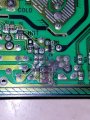
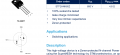
I have this power control board for the TV and the MOSFET and a 6-pin SMD are dead, in addition to a bunch of other SMD resistors. I can probably guess a close value for resistors but the MOSFET and the SMD are still need to be rectified before I get handsy with soldering stuff. The MOSFET is a rare one. I do notwant to order, I was wondering if the so-called "zener" in the datasheet is a bidirectional TVS and I can use a 600v MOSFET with a TVS from G to S. The SMD is marked 62944. Anybody knows how to decode the SMD and if the MOSFET idea is going to work?
1780968322453.png
 

Attachments

Pyrex

Joined Feb 16, 2022
526
Hi,
you can try another Mosfet and add a zener or TVS between G and S. This MOSFET needs to be chosen with roughly the same parameters as the original.
Repairing such inverters that are directly powered from the mains is usually complicated, because you need to find and replace all the damaged components before applying voltage again
 

MisterBill2

Joined Jan 23, 2018
28,029
First, consider the question of what has caused the failure!! Consider that resistors mostly fail because of excess current causing heating. Any other cause of failure is quite rare. A MOSFET may also fail due to excess voltage OR excess current. I think that I see some questionable connections near that area, so an examination for unintended briges is in order.
In a working TV, not subject to abuse, the components more likely to fail are capacitors, especially the polarized types. So those should at least be examined for bulging appearance, and maybe even checked for excessive leakage.
In addition, an examination of the circuit will reveal what controls the voltage and current in the failed devices. THAT will show where to look for failed parts. Polarized capacitors are always primary suspects in TV power sections.
 

MisterBill2

Joined Jan 23, 2018
28,029
My point of that previous post, #3, is that parts seldom burn out for "no reason". Do you have a circuitdiagram for that power supply, or for the whole set??
CERTAINLY, a part that has failed and has made an overload that caused other parts to burn up will not simply restore itself to a not-failed condition. A properly sized resistor that burned out did so because some other part drew excessive current, and until that part is replaced , the replacements for the burned resistors will also be burned .

Many years ago i was give a stereo receiver with a burned out power transformer. It was explained to me that the owner had replaced burned out resistors in the power supply with higher wattage rated resistors. So after the receiver was put back to operation, in about half an hour, the power transformer burned out instead. The cost of an exact replacement power transformer was close to the price they had paid for the receiver. So the receiver was given to me, to use for parts. It happened that I had a similar transformer on hand, and so I replaced the burned up transformer. WhenI powered up the receiver I noticed vwery soon that the resistors in the power supply were getting hot quickly. So I switched it off before any parts over heated. I started investigatinginside the receiver to find the cause. I noticed that one low power tube in the IF section of the receiver had two five watt resistors, screen grid and cathode, newly installed. I checked that tube and found that it was short circuited from the screen grid to the cathode. THAT was the reason that the two resistors had burned out. I replaced that shorted tube and the receiver worked and nothing overheated. Knowing that resistors seldom overheat and burn for no reason solved the mystery.
I offered it to the pprevious owners, but they had already purchased a replacement receiver. So I keep it as a reminder that resistors do not burn out for no reason.
 
Top