Facebook
 Google
 GitHub
 Linkedin

Hello
Recently tried a "new to me" style of GFCI tester. The tester is a Klein RT250. It has several interesting features vs the ones I have when working as a maintenance electrician.
Tested several GFCI receptacles around the house. According to the manual a successful test will result in the display showing "000" (voltage) and "Open Hot".
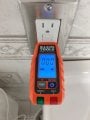
A couple of the GFCIs did not test successfully as far as the reading on the tester. After pressing the test button the GFCI tripped but the result is a red indicator light and open neutral ground.
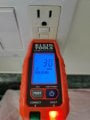
After further investigation with my Fluke DMM there is no actual voltage or open ground and neutral. I believe the tester is reading an induced voltage and giving a false reading (similar to when a volt tick gives a false reading).
Finally, with the tester showing the false reading and my Fluke DMM inserted into the same receptacle the false reading changes to "000" and "open hot". I believe this has to do with meters high impedance which is now in parallel with the tester.
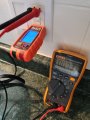
Hoping someone could offer a more technical explanation of the last scenario.
Thank-you
Recently tried a "new to me" style of GFCI tester. The tester is a Klein RT250. It has several interesting features vs the ones I have when working as a maintenance electrician.
Tested several GFCI receptacles around the house. According to the manual a successful test will result in the display showing "000" (voltage) and "Open Hot".
A couple of the GFCIs did not test successfully as far as the reading on the tester. After pressing the test button the GFCI tripped but the result is a red indicator light and open neutral ground.
After further investigation with my Fluke DMM there is no actual voltage or open ground and neutral. I believe the tester is reading an induced voltage and giving a false reading (similar to when a volt tick gives a false reading).
Finally, with the tester showing the false reading and my Fluke DMM inserted into the same receptacle the false reading changes to "000" and "open hot". I believe this has to do with meters high impedance which is now in parallel with the tester.
Hoping someone could offer a more technical explanation of the last scenario.
Thank-you