Facebook
 Google
 GitHub
 Linkedin
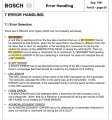
I've been gone through the CAN protocol specifications, and I'm a bit confused about how error detection and correction works in CAN.
From what I understand, in the CAN protocol, one node transmits a message, and other connected nodes receive it. If the receiver node detects an error in the message, it sends an error frame to other nodes to notify them about the error.
I need you to clarify whether the sender node also checks for errors in the message before transmitting it, such as if the message is not following the rules or contains incorrect information.
So, my question is: does only the receiver node check for errors, or do both the sender and receiver nodes check for errors? In other words, does the sender node also check for errors before transmitting a message on the bus?
I'd appreciate any clarifications on this topic. Thank you in advance for your help!
@Papabravo
From what I understand, in the CAN protocol, one node transmits a message, and other connected nodes receive it. If the receiver node detects an error in the message, it sends an error frame to other nodes to notify them about the error.
I need you to clarify whether the sender node also checks for errors in the message before transmitting it, such as if the message is not following the rules or contains incorrect information.
So, my question is: does only the receiver node check for errors, or do both the sender and receiver nodes check for errors? In other words, does the sender node also check for errors before transmitting a message on the bus?
I'd appreciate any clarifications on this topic. Thank you in advance for your help!
@Papabravo