electrical wiring in the flat - design / how to approach

Thread Starter

thor21

Joined Sep 29, 2024
424
hello,
might sounds odd, but i am completely lost... how to design electrical wiring ie position of the wall sockets (230V) and their number.

Do i have to firstly completely design flat interior, what exactly will be placed where and as the last phase is to count devices/ and their position for design of the wall sockets?

Thank you for any ideas.
 

MaxHeadRoom

Joined Jul 18, 2013
30,557
You need to consult the electrical regulations in you area as to cable size and how many sockets allowed per circuit.
The norm here is to place wall sockets up to around a max of 18" above floor level, except kitchens, of course, where they are placed just above counter level.
Also the exact placement of sockets depends on intended room use, i.e. Bathroom, Den, Kitchen etc.
 

Thread Starter

thor21

Joined Sep 29, 2024
424
Also the exact placement of sockets depends on intended room use, i.e. Bathroom, Den, Kitchen etc.
still if u say its Living room ... i believe there is no generic socket placement ... its mostly based on what u have placed where? maybe i am wrong.
 

MaxHeadRoom

Joined Jul 18, 2013
30,557
Living rooms are generally come under the 12" to 18" above-floor-level range, unless there is an intended dedicated spot for a certain piece of equipment.
In other words, you plan for the environment that the room is generally going to be used for and the type of equipment intended therein.
 

Thread Starter

thor21

Joined Sep 29, 2024
424
@MaxHeadRoom well, i have specific living room, there is Audiophile rack, and HT and corner with computer.

So i was thinking to place 4x230V (instead old two 2x230 modules); and many DC devices, i want to run wire to other room where i have kind of all stuff as NAS, PSUs etc.. and install DC psu there... so there is no mess with many PSUs etc in the living room.
 

Externet

Joined Nov 29, 2005
2,624
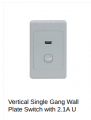
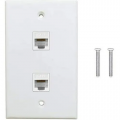
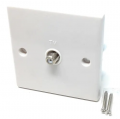
I would add a second circuit for illumination on DC12V at every room with 5V USB-A outlets. And ethernet networking where deserved. Perhaps TV antenna outlets too. After walls are finished you do not want to create ideas.

1761080831033.png1761080921748.png1761081097368.png
In my previous house, I installed bipolar white LED in ceilings of bathroom, kitchen and aisles, to walk at night without turning the blinding ones.
Do not forget under cabinets, exterior illumination, garden paths, video ringbell, cameras...
Illuminated outlet/switch plates do not need extra wiring.
 

Thread Starter

thor21

Joined Sep 29, 2024
424
I would add a second circuit for illumination on DC12V at every room with 5V USB-A outlets. And ethernet networking where deserved.
these are good points.

I am still not sure if for illumination i have to go DC12V or DC24V (already have 2 led circuits in diff rooms, one 12V strips, other 24V so messy)

USB-A 5V for what purpose?
Ethernet yes thinking about 3 separate lines (cat5e,5e,6)

The problem on top of everything mentioned remains - how to design where to place these sockets. To wait for a designer to design interior - i think that never happen ;/, and approach it agile way - its not that easy at all.
 

MaxHeadRoom

Joined Jul 18, 2013
30,557
As above:

Applying the dictated safety rules, GFI etc as dictated to in your jurisdiction!

By room
Kitchen
  • Place outlets every 2 feet along countertops, or no more than 4 feet apart.
    Install an outlet on a kitchen island, as required by code.

  • Add outlets inside cabinets or pantries.

  • Place outlets near the refrigerator and within 2 feet of the sink and oven.

  • Consider outlets above cabinets or beneath them for a cleaner look.
Bedrooms
  • Place an outlet on each side of the bed for lamps, phone chargers, and other devices.

  • Install an outlet in a walk-in closet for a steamer or iron.

  • Consider placing an outlet inside an entryway cubby for charging devices.
Living Room
  • Distribute outlets evenly along walls to accommodate anticipated furniture placement.

  • Place outlets near entertainment centers for TVs, game consoles, and sound systems.

  • Consider floor outlets in the center of the room for furniture that may be placed away from the walls.
Home Office
  • Place outlets on every wall to allow for the greatest flexibility in furniture arrangement.
  • Ensure there are enough outlets to power your computer, printer, and other devices.
Bathroom
  • Place outlets near the counter but away from the bathtub to prevent water hazards.

  • All bathroom outlets must be GFCI (ground-fault circuit interrupter) protected to prevent shock.

  • Consider a discreet outlet inside a bathroom drawer for hair dryers or other appliances.
All sockets mounted on exterior walls each require GFI type outlet.
Why is this responsibility falling to you if you have no prior experience in this type of work??
 

Externet

Joined Nov 29, 2005
2,624
USB-A 5V for what purpose?
Outlets for charging.

Locations... Picture furniture in rooms, and you do not want outlets behind a bed head / dresser / open door... or put one every ~2 metres everywhere as customary.
12V has abundant accessories as shares with automotive. But I do not know if a fully separated 12V low voltage installation (as solar) is subject to your local electrical building regulations.
 
Last edited:

Reloadron

Joined Jan 15, 2015
7,855
A Google of "Germany electrical code" pretty much covers what you can and can not do. In part:
Germany's electrical code is based on DIN VDE standards, which are national implementations of European and international IEC standards. Key aspects include a standard voltage of
1761097724565.gif
230V230 cap V
at
1761097724584.gif
50Hz50 cap H z
, the use of type F (Schuko) plugs and sockets, and strict requirements for qualified electricians to perform installations and inspections. These standards focus on safety, with regulations for electrical installations, protection against electric shock, and the proper use of wiring and equipment.
Ron
 

MisterBill2

Joined Jan 23, 2018
27,164
Given that utilities do not distribute lower voltage DC power in residential or other areas because of poor efficiency, ALL DC wiring is a custom installation, at least in grid-connected housing in the US. Those folks living off-grid are not subject to utility regulations, and many times no regulations at all.
So for DC installations in a private dwelling it would be a custom installation. IN A MULTIPLE FAMILY RESIDENCE there are undoubtedly a whole lot of rules intended to avoid fires and electrocutions.
 
Top