earth & neutral voltage detection

Thread Starter

ajitnayak

Joined Feb 22, 2013
49
Dear all,
>
I am looking for simple circuit which will turn on relay when earth to neutral voltage >3v. I know RCD ,
Residual current circuit breaker can be used for application. But is there any circuit available to implement i hardware that can take care of protection in case of energy meter Or fault detection application.

If i would like to detect fault b/w neutral & ground , to inform end user be aware of shock how can i create circuit. Is there any IC avilable for such application.

Some people uses CT and drive the relay. If any suggestion and circuit please guide
 

Dodgydave

Joined Jun 22, 2012
11,395
The way an RCD works is to monitor the current in the Phase and Neutral with a dual CT, the only other way would be to use a Transformer across the Neutral and Earth to measure any voltage difference, and feed it into an amplifier/detector circuit using an op amp or micro.
 

mcgyvr

Joined Oct 15, 2009
5,394
Are you just asking for the schematic of an RCD (GFCI in the US) device so you can implement it in your own device and not rely on an external RCD?
Or something else.. Its really not clear to me..
 

marcf

Joined Dec 29, 2014
299
There are simple circuits that will detect a 'ground fault' on an isolated power supply. There are reasons why you would not want an isolated dc circuit making any contact with earth ground (a building's neutral, water pipes, wet floor, etc) In cases such as fire alarms a path to building ground would indicate a crushed wire. Knowing there was the slightest possibility that a piece of medical equipment was not isolated, etc

Is this the type of circuit you are looking for.?
 

MisterBill2

Joined Jan 23, 2018
27,182
Depending on what is connected there may be no current flowing between a specific neutral point and ground, (Defined here as the "green wire" connection to "earth"). So a current transformer may not help at all.
So just like a lot of other posts we need more information about what you are intending to accomplish.

In some cases the problem is solved by solidly connecting the neutral and ground, in other cases, such as some inverters, that will not work at all.
 

Thread Starter

ajitnayak

Joined Feb 22, 2013
49
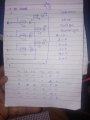
Simple circuit got from here. But is there any way to create same application using OPAMPs,or using any hardware.

Yes its main supply. if there any existence of fault . there will be flow of current from phase to ground. or if phase is unblance..
I would like to detect the voltage & indicate there is danger.
Is there any hardware avilable to detect it

http://www.ti.com/lit/an/sboa199/sboa199.pdf
 

Attachments

MaxHeadRoom

Joined Jul 18, 2013
30,561
Yes its main supply. if there any existence of fault . there will be flow of current from phase to ground. or if phase is unblance..
I would like to detect the voltage & indicate there is danger.
The voltage will tell you nothing, the current is what is required to detect.
Why do you need to replicate a RCD when it is already easily available?
Max.
 

MisterBill2

Joined Jan 23, 2018
27,182
What I think you are asking for is two different functions. One function being the same as a GFCI, operating if there is an unbalanced current, meaning that some current is not returning through the same neutral as is paired with the line circuit. The other fault condition is when the supply neutral voltage is different from "the earth ground". This second type of fault is more challenging because the voltage can vary from just a volt or two up to the maximum line voltage if there develops a short circuit connection between the line and the ground circuit. That could be up to 220 volts, depending on what country it is in..
Thus an op-amp detection circuit will need a lot of over voltage protection added. The non-opamp method would use a fairly sensitive relay that would operate at perhaps 2 or 3 volts AC in series with a medium wattage light voltage incandescent light bulb to serve as a current limiter. The resistance of the incandescent light bulb is much lower when it is not illuminated, so that the relay would operate in the event of a small voltage but not burn up if there was a large voltage.
 
Top