Duplicating a "no longer available" transistor relay, vintage motorcycle, How to identify parts?

Thread Starter

atownbrg

Joined Jan 14, 2019
19
I have an older (1981) motorcycle that uses a couple unique components. One of those is referred to the "Change Relay". This device works in conjunction with the bikes CDI unit for ignition. This part is no longer available and I would like to duplicate the component as I believe my ignition system to be aging and causing issues. I would also like to duplicate the bikes CDI unit as it is also no longer available, but will save that for another thread!
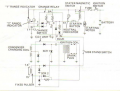
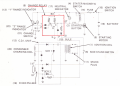
I have a schematic for the change relay, I will assume it is accurate for now! I will attach that with the posting, and also will show the CDI unit etc. The change relay will be outlined in red.
So! I plan to start by removing the potting compound as gently as possible. I hope to be able to see the resistor values and any other identifying marks on the diodes and transistor. Wishful thinking? I think resistor testing will be easy enough if I desolder them, but any recommendation on how to identify the transistor used ? What about the diodes? The bike uses a 12v system, and i've seen the voltage at the battery as high as appx. 14.3v dc.
I know the transistor is of the NPN type, but there are so many different kinds with different specifications I am totally lost. Looking for help on how to proceed to get the right components for this application! change relay outlined.png
Thanks
Pete
 

MrChips

Joined Oct 2, 2009
34,626
Welcome to AAC!

You might be able to find someone here on AAC that can give you some recommended values for the transistor and the resistors. There is no need to try and determine what component values were actually used. It looks like a straight forward circuit design.
 

dl324

Joined Mar 30, 2015
18,216
Welcome to AAC!

Need to know the resistance of the starter solenoid coil. I'd put a snubber diode across the coil to protect the starter button.

Resistor values don't seem very critical.
 

Thread Starter

atownbrg

Joined Jan 14, 2019
19
DL324, I can check the resistance of the coil and post results. I was reading up on snubber diodes (I will most likely have to google search all recommendations, my electronics knowledge is practically none) and understand it will protect the starter button contacts. Would you place it in circuit here like this? I plan on designing a circuit board using ExpressPCB designstarter solenoid diode.png . Made a schematic already but now realize I need actual component specs in order to place pads for components.
 

dl324

Joined Mar 30, 2015
18,216
understand it will protect the starter button contacts. Would you place it in circuit here like this?
Yes. Good job searching on your own instead of asking to be spoon fed.

A downside of snubbing with a diode is that it'll take longer for the field to collapse. That will slow motor disengage. If it causes problems, just remove the diode

Made a schematic already but now realize I need actual component specs in order to place pads for components.
If the transistor isn't a power variety, you could use 1/4W for all of the resistors (the most common size). In that case, changing resistor values wouldn't affect footprint.
 

Thread Starter

atownbrg

Joined Jan 14, 2019
19
Couldn't find anything on google about power vs non power type transistors. How can I find out which is being used?
I did read that Mofet are more commonly used now instead of transistors in general? So perhaps that would be considered a modern upgrade for this application. I gather if they run cooler = longer lifespan.
Also can handle more current = more robust.
Hopefully tomorrow I can get a resistance of starter coil!
 

dl324

Joined Mar 30, 2015
18,216
How can I find out which is being used?
The transistor package will give you some clues. If it's in TO-92, it's not a power transistor. Power transistors will have a lower beta (unless it's a darlington), so the base resistor value would need to be lower.
I did read that Mofet are more commonly used now instead of transistors in general?
MOSFETs are generally more advantageous when current available for base drive is an issue. But they need to be driven hard enough to get low ON resistance.

EDIT: Corrected quoting.
 
Last edited:

shortbus

Joined Sep 30, 2009
10,050
Just being nosy here. What kind of motorcycle? What are these "ranges" doing? Just never seen anything like this on a bike.
 

Thread Starter

atownbrg

Joined Jan 14, 2019
19
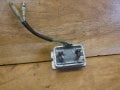
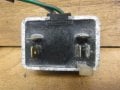
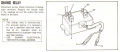
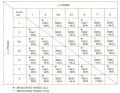
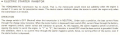
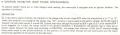
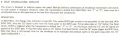
Ok, here's some more info to answer some questions. This is a 1981 Honda CM400a "Hondamatic". The ranges basically stand for 1st gear or 2nd gear. The bike is more like a "clutch-less two speed" rather than what you would think of as true automatic operation. It has extra safety measures so you cant start the bike in gear or when the side stand is down while also being in gear. The base timing is normally at 7.5 degrees advance, but once you put the bike in gear the extra load of the torque converter necessitates more timing advance to keep idle speed up. The change relay allows the the CDI to know if the bike is in gear or neutral, and also what timing signal to fire at. I will include the test specs of the relay in case it helps suggest resistor values needed. Thanks very much to all for the questions, comments and knowledge! The potting compound is super dark, almost black and is hard like epoxy. Fingernail wont leave an impression!change relay 1.jpg change relay 2.jpg change relay bw pic.PNG change relay spec chart.PNG
 

Thread Starter

atownbrg

Joined Jan 14, 2019
19
dodgydave, thanks for the recommendation. Is that series of the Darlington type? Would that be beneficial in this situation?
 

jpanhalt

Joined Jan 18, 2008
11,087
If you are 100% convinced it needs to be replaced, as I think you are, you could grind (abrasive cut-off) through the box and possibly pull it open. Paint removers with methylene chloride (like so-called "Aircraft Paint Remover") will soften/swell epoxy after soaking and you may be able to pry and chip enough away to get a look at the transistor.

Even heat may soften it enough to pull it out without damaging the box, which you can reuse.
 

shortbus

Joined Sep 30, 2009
10,050
Probably the thing to concentrate on to design a replacement for this is in Post #13, the last paragraph. The one named, "operation", it explains what and how it works.

atownbrg, thanks for giving the information on the bike and the pages from the manual.
 

Thread Starter

atownbrg

Joined Jan 14, 2019
19
Ok folks, the starter coil resistance is 3.3 ohms.
So even though the bike is not started with the peak running charging voltage of say 14.3v, if we use that number anyway then roughly the current through that circuit should not exceed 4.3 amps?
 
Top