Drive multiple electromagnets with only one current source

Thread Starter

Vinnie90

Joined Jul 7, 2016
86
Hi everybody,

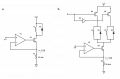
for an educational project I'm building a system composed of 20 electromagnets which are supposed to show the coupling between an induced magnetic field and permanent magnets. The EMs need 100 mA each to displace the permanent magnets and to drive them I built the circuit attached in figure a. That works with one EM but of course this system would be just too huge to be replicated 20 times, also because since each of the cell draws 0.1A the full design will require 2 A. I was thinking of a way of driving all the electromagnets at the same time with only one current source. For simplicity I have drawn only the case of two EM. The system is basically the same but there are two p-mos used as switches to connect one or the other EM. The first question is about the discharging of the inductors. Let's say that I close the switch 1 and the inductors L1 charges to it maximum value, how would the current through the inductor discharge when I disconnect it and connect the other inductor L2?

Second question is: if I switch between the two inductors fast enough, can the inductors self sustain their magnetic field such that both attracts in the same way the permanent magnets?

Thanks a lot for the help
Vinceschematic.png
 

crutschow

Joined Mar 14, 2008
38,322
The first question is about the discharging of the inductors. Let's say that I close the switch 1 and the inductors L1 charges to it maximum value, how would the current through the inductor discharge when I disconnect it and connect the other inductor L2?
The current decays due the LR time-constant between the inductor value and its series resistance (ignoring the effect of the diode forward drop which would reduce this time somewhat).
Second question is: if I switch between the two inductors fast enough, can the inductors self sustain their magnetic field such that both attracts in the same way the permanent magnets?
If you switch fast enough the average current through each coil will be 1/2 the total.

You talk about putting the inductors in series but you show them in parallel.

What is the resistance of the electromagnet coils?
What power supply voltage do you have?
 

Sensacell

Joined Jun 19, 2012
3,768
100 mA seems modest enough that you could just use some humble resistors and switching transistors to control 20 units?

The added complexity of trying to share current or multiplex them would not be worth the trouble?

Maybe we are missing some important details?
 

Thread Starter

Vinnie90

Joined Jul 7, 2016
86
The current decays due the LR time-constant between the inductor value and its series resistance (ignoring the effect of the diode forward drop which would reduce this time somewhat).
If you switch fast enough the average current through each coil will be 1/2 the total.

You talk about putting the inductors in series but you show them in parallel.

What is the resistance of the electromagnet coils?
What power supply voltage do you have?
I see, so that means, that the time constant would be the internal resistance of the coil by its inductance. I was thinking what happens if I added right after the inductors a resistor that is connected only during the discharge cycle while during the charging cycle I have a short circuit. The different time constant while charging and discharging wouldn't help in getting an average current of 100 mA?

The coil resistance is about 50 ohms. I have a programmable power supply which can supply up to 36V and 3.3 A.

100 mA seems modest enough that you could just use some humble resistors and switching transistors to control 20 units?

The added complexity of trying to share current or multiplex them would not be worth the trouble?

Maybe we are missing some important details?
Well, let's say that I might need to scale this guy up (64 ca)
 

Thread Starter

Vinnie90

Joined Jul 7, 2016
86
It probably provides a more reliable current source than what I've designed. But maybe I was not that clear during my explanation.

I need the electromagnets to be ON at the same time. I'm trying to figure out a way to do that with only one current source and multiplexing between the electromagnets. I'm thinking of slowing down the demagnetization of the electromagnets so that if I'm fast enough in multiplexing them the average current will be 0.1 A
 

crutschow

Joined Mar 14, 2008
38,322
......what happens if I added right after the inductors a resistor that is connected only during the discharge cycle while during the charging cycle I have a short circuit. The different time constant while charging and discharging wouldn't help in getting an average current of 100 mA?
A series resistor will reduce the time-constant, not increase it as you want. This is opposite of an RC time-constant.
You want minimum resistance for the maximum (L/R) time constant.

But I was mistaken. :oops:
You will get more than 1/2 the current through each when switching between them.
It depends upon the ratio of on-to-off time, and the inductance versus the resistance of the coil.
Using a Schottky diode across the coil will increase the decay time-constant some and help maintain a higher average current.

If you can determine the inductance of the magnet coil, we can better determine how well this will work.
 

Thread Starter

Vinnie90

Joined Jul 7, 2016
86
A series resistor will reduce the time-constant, not increase it as you want. This is opposite of an RC time-constant.
You want minimum resistance for the maximum (L/R) time constant.
right! One using only one inductor the time constant will be given by the inductance and resistance of the coil and the on resistance of the diode.

But I was mistaken. :oops:
You will get more than 1/2 the current through each when switching between them.
It depends upon the ratio of on-to-off time, and the inductance versus the resistance of the coil.
Let's say I have a duty cycle of 1/20? Am I gonna get 1/20 of the current I impose? If I slow down the inductive discharge shouldn't I get a little bit more than that?

Using a Schottky diode across the coil will increase the decay time-constant some and help maintain a higher average current.
This is actually very interesting; why would a schottky slow down the discharge?

If you can determine the inductance of the magnet coil, we can better determine how well this will work.
The Inductance of the coil is 1.4 H
 

crutschow

Joined Mar 14, 2008
38,322
Let's say I have a duty cycle of 1/20? Am I gonna get 1/20 of the current I impose? If I slow down the inductive discharge shouldn't I get a little bit more than that?
Yes you can, depending on the L/R time-constant.
his is actually very interesting; why would a schottky slow down the discharge?
Because it has a lower forward drop than a standard diode, thus increasing the time constant.
The Inductance of the coil is 1.4 H
So the discharge time-constant is about 28ms.
If you applied the full 36V to the coil it would reach 100mA in about 4ms.

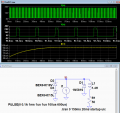
Below is an LTspice simulation showing the coil current with a 1/6 duty-cycle (6 coils) by having the constant current applied for 100μs with a period of 600μs.
Current source I1 and the zener diodes D2 and D3 simulate a 100mA constant current with a 33V source.
Is shows that if you pulse each coil for 100μs it will achieve a current of near 100mA if it's pulsed every 600μs.
Anything longer than that and the current doesn't reach 100mA, so muxing 6 at a time is the most you can do if you want to achieve near 100mA on each coil.

upload_2017-5-31_12-1-17.png

Another option is putting more than one coil in series with the constant current source.
Or do you want to be able to switch all of them on and off separately?
 
Last edited:

Thread Starter

Vinnie90

Joined Jul 7, 2016
86
Yes you can, depending on the L/R time-constant.
Because it has a lower forward drop than a standard diode, thus increasing the time constant.

So the discharge time-constant is about 28ms.
If you applied the full 36V to the coil it would reach 100mA in about 4ms.

Below is an LTspice simulation showing the coil current with a 1/6 duty-cycle (6 coils) by having the constant current applied for 100μs with a period of 600μs.
Current source I1 and the zener diodes D2 and D3 simulate a 100mA constant current with a 33V source.
Is shows that if you pulse each coil for 100μs it will achieve a current of near 100mA if it's pulsed every 600μs.
Anything longer than that and the current doesn't reach 100mA, so muxing 6 at a time is the most you can do if you want the achieve near 100mA on each coil.

View attachment 127957

Another option is putting more than one coil in series with the constant current source.
Or do you want to be able to switch all of them on and off separately?
I got pretty similar results, what I was actually missing was the average increase in current that you show in the last graph. I'm gonna built up a prototype and keep you posted :D

Thanks a lot again
 

Kjeldgaard

Joined Apr 7, 2016
476
With 50 Ω coils and a desired current of 100 mAmp, so I get it to 5 Volts over the coils.

Is there a demand for a highly accurate current control, or can a standard 5 Volt / 2 Amp Power Supply do the task?
 

Thread Starter

Vinnie90

Joined Jul 7, 2016
86
With 50 Ω coils and a desired current of 100 mAmp, so I get it to 5 Volts over the coils.

Is there a demand for a highly accurate current control, or can a standard 5 Volt / 2 Amp Power Supply do the task?
Well point is that the magnetic field created by each EM has to be the same, so I think I need to drive them in current rather than in voltage
 
Top