direction of current flow

WBahn

Joined Mar 31, 2012
32,873
To make matters worse, in almost all cases of the use of electron flow, the users get it wrong.

Using the traditional electron flow view, they would claim that a current of 12 A is flowing out the negative terminal of a 12 V battery connected to a 1 Ω load. But they are wrong. Saying that is exactly the same as saying that 12 coulombs per second of charge are flowing out the negative terminal. But charge is inherently a signed quantity and the electron has a negative charge. Hence what they should be saying is that there are -12 coulombs of charge flowing out the negative terminal every second, or a current of -12 A. Thus you can see that, properly done, electron flow is identical to conventional flow since -12 A flowing in one direction is the same as 12 A flowing in the other.
 

studiot

Joined Nov 9, 2007
4,998
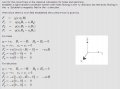
For those who might be interested here is a classical analysis of the Hall development of the Hall voltage.

Note that if we assign a direction of conventional current electron flow will be negative (against the current) and hole flow positive (with the current), but both are also charged and it is this charge as well as the direction of flow that counts in the Lorenz force.

hall3.JPG
 
Last edited:

Thread Starter

sharanbr123

Joined Sep 29, 2014
49
Thank you all very much. One the main reasons for asking the question is whether a voltage source (like the one shown in figure above) which is meant to source current through its positive terminal can ever have current flowing into its own positive terminal. If it does not, whether a circuit designer has to take care that such a situation never occurs (e.g. like a basic design guideline or a constraint that should always be taken care of).
 

WBahn

Joined Mar 31, 2012
32,873
Thank you all very much. One the main reasons for asking the question is whether a voltage source (like the one shown in figure above) which is meant to source current through its positive terminal can ever have current flowing into its own positive terminal. If it does not, whether a circuit designer has to take care that such a situation never occurs (e.g. like a basic design guideline or a constraint that should always be taken care of).
The answer to your questions are: It depends. As already noted, some sources are capable to be back driven and some aren't. If they aren't, then a circuit designer should ensure that it won't happen, at least not in normal operation of the circuit. You don't ALWAYS have to do it -- consider a typical old flashlight; the batteries used should not be recharged because they might explode, yet no special effort was made to ensure that current couldn't flow the wrong direction. Similarly, in dual battery systems, even though both batteries might be rechargeable and, indeed, recharged as part of normal operation it would be common to design the circuit so that the weak battery couldn't inadvertently be charged by the strong battery and thus drain it.
 
The question is just plain "wrong" on many accounts.
1. Most everyone uses "conventional current"
2. Electrons go the "other way"
3. The answer will come out in the wash.
4. Teach will probably get the "wrong answer"

The only way you could get it right is by saying "Based on the analysis, conventional current is in the direction of xxx. Electron "flow", by definition go in the opposte direction of "conventional current". "Conventional current" flows from + to -.
 

GopherT

Joined Nov 23, 2012
8,009
The circuit is idealized. The chemistry in some batteries is not I tended for recharging. Also, no battery is just a conductor when current is pushed through the 'wrong' way if too much voltage is present.

Unless you have a battery charging circuit and sufficient over-charging protection in place, do not connect any battery to a circuit that supplies more voltage than the battery is rated. It will likely damage the internals of the battery and start heating, possibly melt the case or breach the seals and let the goodies out.
 

WBahn

Joined Mar 31, 2012
32,873
The question is just plain "wrong" on many accounts.
1. Most everyone uses "conventional current"
2. Electrons go the "other way"
3. The answer will come out in the wash.
4. Teach will probably get the "wrong answer"

The only way you could get it right is by saying "Based on the analysis, conventional current is in the direction of xxx. Electron "flow", by definition go in the opposte direction of "conventional current". "Conventional current" flows from + to -.
The OP's question appears to be defined in terms of conventional current, the direction that electrons go is irrelevant to the question, and on what basis do you think the instructor will get the answer wrong?
 
Not really, but "electron flow" was brought up as early as post #2. I misinterpreted a post or two instead of paying attention to the OP's post.

Just sometimes it matters. It may matter with battery chemistry, not charging. Sorry.
 
Last edited:
Top