Different Impedance of Different Protocols

Thread Starter

praveen_aj

Joined Jan 9, 2025
5
Hi,

We all know that the impedance should be matched for max power transfer and SI, but how they are choosing this is the value for particular protocol or signal, like generally we are using 50 Ohms, for USB 90 Ohms, ethernet and DDR 100Ohms. Why this values are different with each other, why not common for all and what basis they are deciding this values foe speicific.
 

MrChips

Joined Oct 2, 2009
34,700
Hi,

We all know that the impedance should be matched for max power transfer and SI, but how they are choosing this is the value for particular protocol or signal, like generally we are using 50 Ohms, for USB 90 Ohms, ethernet and DDR 100Ohms. Why this values are different with each other, why not common for all and what basis they are deciding this values foe speicific.
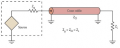
Impedance matching is not necessary in every application. For example, we often drive a high impedance load from a low impedance source.

When driving long lines at high frequencies, it is critical to match the impedance of the transmission line both at the source and at the load. This is to avoid having reflections of the signal.

1753772472293.png
 

WBahn

Joined Mar 31, 2012
32,760
Hi,

We all know that the impedance should be matched for max power transfer and SI, but how they are choosing this is the value for particular protocol or signal, like generally we are using 50 Ohms, for USB 90 Ohms, ethernet and DDR 100Ohms. Why this values are different with each other, why not common for all and what basis they are deciding this values foe speicific.
There's LOTS of information about this out there. What has your searching turned up thus far? Then we have something to work with to fill in gaps.
 

Papabravo

Joined Feb 24, 2006
22,065
Protocols do not have impedance. That is not one of their properties.
Transmission lines do have impedance. In particular, every transmission line has a characteristic impedance which is normally a function of the dimensions of the conductors and the relationship of the conductors to each other.

As @ericgibbs pointed out the characteristic impedance allows you to combine a cable with suitable source and termination impedances to suppress reflections on the transmission line. The reason why there are different characteristic impedances for different protocols all comes down to the cable.

To understand how reflections can affect data transmission you need to look at the mechanism of extracting digital data from an analog signal. You start with the partial differential equation for a transmission line and then you ask: "What happens at an impedance discontinuity?" Impedance discontinuity is a mathematical name for an "impedance mismatch". For example, you have a 90Ω cable with no termination. What happens to the transmitted signal?
 

WBahn

Joined Mar 31, 2012
32,760
As @ericgibbs pointed out the characteristic impedance allows you to combine a cable with suitable source and termination impedances to suppress reflections on the transmission line. The reason why there are different characteristic impedances for different protocols all comes down to the cable.
The TS is asking what it is about the cable that makes it so that we don't use the same characteristic impedance for all of them.

It's less about the cable and more about the purpose and constraints. Are we wanting to transfer lots of power with low loss, or are we trying to minimize voltage attenuation in a signal? Different goals will move us in different directions as far as the "best" transmission line impedance for our application. Then there are the physical constraints. Designing a transmitter, transmission line, and receiver to all have the same impedance imposes requirements on things like cable thickness and trace widths and separations. Any of those might force us to accept a different impedance than we would ideally choose because of compromises we have to make in the real world. Also, in an ideal world, we could specify whatever impedance we decided on and then manufacture the cables accordingly. In the real world, we would only do that if we absolutely could not live with any of the available options already out there; so, in practice, we limit our designs to the set of commonly available cable offerings. Finally, we may not have much of a choice because we have to be compatible with other components or adhere to established and/or defacto standards. No matter how much I might want to use something other than, say, 100 Ω differential impedance for HDMI, if I'm designing an HDMI interface, I'm stuck with it because it is what it is.
 

panic mode

Joined Oct 10, 2011
4,935
We all know that the impedance should be matched for max power transfer...
i disagree... in most cases impedance matching is done to improve signal to noise ratio, not to optimize power transfer. by matching impedance one dramatically reduces or eliminates reflections. when transferring data over USB or Ethernet, nobody cares if power transfer is 10% efficient - everyone cares that there are fewer lost packets that need to be retransmitted. if possible one would like to reduce power consumption but that is another story.

so when someone designs the transmission line for some type of network, they need to consider actual construction and materials available. then this is released and the obtained characteristic impedance becomes standard - for that type of transmission.

one example of this are legacy fieldbus networks that are all derived from same RS485 (CanBus, DeviceNet, ProfiBus, CC Link, CompoBus, DH+...). because each became popularized by different company, they all got their own version of "standard cable" and have different impedance. They all need bus terminating resistors at the ends of the trunk and the terminator values are different.
 
Last edited:

crutschow

Joined Mar 14, 2008
38,415
In summary, Impedance matching is to prevent reflections on a transmission line that sends the signal in the examples you mentioned, and different types of lines have different impedances.
For example coax is usually 50 or 75 ohms, and twisted pair are around 90-100 ohms, depending upon the size of the wire and insulation thickness, and how the pair are wound.

This matching is only related to maximum power transfer by the fact that no reflections in the line means all the signal power ends up in being dissipated in the receiving impedance.
 

Papabravo

Joined Feb 24, 2006
22,065
The TS is asking what it is about the cable that makes it so that we don't use the same characteristic impedance for all of them.

It's less about the cable and more about the purpose and constraints. Are we wanting to transfer lots of power with low loss, or are we trying to minimize voltage attenuation in a signal? Different goals will move us in different directions as far as the "best" transmission line impedance for our application. Then there are the physical constraints. Designing a transmitter, transmission line, and receiver to all have the same impedance imposes requirements on things like cable thickness and trace widths and separations. Any of those might force us to accept a different impedance than we would ideally choose because of compromises we have to make in the real world. Also, in an ideal world, we could specify whatever impedance we decided on and then manufacture the cables accordingly. In the real world, we would only do that if we absolutely could not live with any of the available options already out there; so, in practice, we limit our designs to the set of commonly available cable offerings. Finally, we may not have much of a choice because we have to be compatible with other components or adhere to established and/or defacto standards. No matter how much I might want to use something other than, say, 100 Ω differential impedance for HDMI, if I'm designing an HDMI interface, I'm stuck with it because it is what it is.
That would presume that given an impedance we could use an arbitrary set of materials and dimensions to achieve that impedance. In reality, given a method of cable construction there is a limited range of impedances that can be realized.
 

WBahn

Joined Mar 31, 2012
32,760
That would presume that given an impedance we could use an arbitrary set of materials and dimensions to achieve that impedance. In reality, given a method of cable construction there is a limited range of impedances that can be realized.
How does it make any such presumption? It sounds more like physical constraints resulting in compromis that we have to make in the real world leading us to accept a different impedance than we would ideally choose, doesn't it?
 

MisterBill2

Joined Jan 23, 2018
27,316
i disagree... in most cases impedance matching is done to improve signal to noise ratio, not to optimize power transfer. by matching impedance one dramatically reduces or eliminates reflections. when transferring data over USB or Ethernet, nobody cares if power transfer is 10% efficient - everyone cares that there are fewer lost packets that need to be retransmitted. if possible one would like to reduce power consumption but that is another story.

so when someone designs the transmission line for some type of network, they need to consider actual construction and materials available. then this is released and the obtained characteristic impedance becomes standard - for that type of transmission.

one example of this are legacy fieldbus networks that are all derived from same RS485 (CanBus, DeviceNet, ProfiBus, CC Link, CompoBus, DH+...). because each became popularized by different company, they all got their own version of "standard cable" and have different impedance. They all need bus terminating resistors at the ends of the trunk and the terminator values are different.
The mechanism by which impedance matching can improve a signal to noise ratio is by providing the most efficient power transfer of the signal. So the improvement is a secondary result, which is often very convenient.

As for the choices of available impedance, reality has a strong effect on the choice. Consider that selection of a conductor is governed by the intended current , and the insulation is determined by the voltage, as well as other factors. AND, in many cases the impedance is related to the driving source circuit. Besides that, experience over the years has shown that for different application requirements, different impedance values provide either the best performance or the best efficiency.
 
Last edited:
Top