DC motor field current

Thread Starter

ghorrocks

Joined Jul 17, 2025
11
Hi, I have a DC shunt motor on a wire drawing machine that stopped being able to pull the load. I was checking a bunch of things after finding out the drive was only putting out 6V to the motor (230V arm and field), and saw the negative field wire was showing 2A and the positive was showing 1.2A. The motor field rating is 3.4A and the field demand from the drive was 50%. Any ideas why the two leads are showing different current?

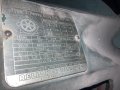
I did check the resistance of the field wires at the drive and at the motor and both read ~67ohms, which I believe is what it should be? However, the motor nameplate has a section "Field Rheostat" which has two designations: 335ohms and 1320rpm. For reference, the motor's rated rpm is 500-1320.
 

MisterBill2

Joined Jan 23, 2018
27,513
I am wondering how there would be two different current readings at the opposite ends of the field coil. OR, are there two field coils, connected in series?? The current at opposite ends of a coil should be the same. The explanation I would guess is that there is an accidental connection in the coil so that one section is not getting enough current. Certainly inadequate power to the motor will provide inadequate torque.

For any of us to provide useful suggestions we will need more description of the motor circuit.
 

Thread Starter

ghorrocks

Joined Jul 17, 2025
11
Right? I do not believe there is 2 fields based on the nameplate, so the rheostat would be the only thing in series with the field. My original assumption was the field had an issue but I do not know how to check that other than resistance wire to wire and wire to ground.
 

Attachments

MisterBill2

Joined Jan 23, 2018
27,513
Since the field of a motor is usually not supposed to be grounded, the resistance check is a good choice. If the field is not supposed to be grounded, but is grounded, you have located at least part of the problem.
 

Thread Starter

ghorrocks

Joined Jul 17, 2025
11
Yeah, I did check resistance and 0L to ground and 67ohms between the wires. I guess the next step is going to be megging the wires from the cabinet to the motor.
 

MisterBill2

Joined Jan 23, 2018
27,513
Certainly we are missing some important information. That is based on the statement: " and saw the negative field wire was showing 2A and the positive was showing 1.2A. " AND:" The motor field rating is 3.4A and the field demand from the drive was 50%".
One possible explanation is that the polarity of the ammeter was reversed for the measurements, and that the field is being fed AC instead of DC. That would also explain the lack of torque.
The TS should measure the field voltage while the motor is running, both polarities as well as AC.
My guess is a failed diode in the field supply.
 

Thread Starter

ghorrocks

Joined Jul 17, 2025
11
Ok that makes sense, I will do that next.

I am just now seeing I missed your point about having more information on the motor circuit. Unfortunately it is a very old machine and the prints I have do not include the motor circuits. It is basically just a dc drive(parker 590P) with the field wires run straight out to the motor and the arm wires go through one contactor then to the motor. Speed feedback is arm volts and the speed ref is a 5kohm rotary pot. I did check that and it seemed fine.
 

schmitt trigger

Joined Jul 12, 2010
2,088
Yeah, I did check resistance and 0L to ground and 67ohms between the wires. I guess the next step is going to be megging the wires from the cabinet to the motor.
Exactly!
Most times the voltage output of a DMM in the ohms mode is not sufficient to find an insulation breakdown.
 

MisterBill2

Joined Jan 23, 2018
27,513
I suspect a failure in the field DC supply more than a failure in the field insulation at this point.
Consider that if there is not the full field strength present that the motor will not be able to deliver full torque. So it makes sense to check the field voltage for an AC component instead of it being DC, either filtered or not. And a field voltage check is quite simple to do.
In addition, if the field voltage is only six volts, that verifies a problem with the field supply part of the drive system.
 

Thread Starter

ghorrocks

Joined Jul 17, 2025
11
The wiring megged fine. I checked the field voltage at the drive terminals and at 50% field demand it showed 118V when checking dc and it was ~162V when checking ac. I am assuming that would be the correct dc reading at 50% demand?
 

MisterBill2

Joined Jan 23, 2018
27,513
That does not seem quite right, so I am guessing that there is an open diode in the field supply. That is with my guess that it has not suddenly started working full power again.
 

Thread Starter

ghorrocks

Joined Jul 17, 2025
11
Ok. Just to clarify as I see I did not specify this in my original post, the 6vdc the drive was putting out was to the armature. The field was getting 118vdc then as well.
 

Thread Starter

ghorrocks

Joined Jul 17, 2025
11
I was looking into the field circuit because that was mentioned in my research as a possible cause of the drive not putting out enough volts to the armature. That was the lead-up to finding the odd amperage on the field wires.
 

MisterBill2

Joined Jan 23, 2018
27,513
I would guess that checking both armature volts and field volts would be the simplest tests to do. UNless there is a built in meter with a selector switch. to do the checking.
AND, my experience is that if a motor has anything burned out, the smell is a giveaway clue.

Look at the tag again!!It states :Field Volts:230, Field Amps, 3.4 . That agrees with 167 ohms fairly close. The problem is in the field supply part of the drive package. It also tells that the max armature amps is 185 at 230 volts. So there is another problem with the drive package.
So you are totally looking at the wrong part of the system.
FIRST! switch off the disconnect switch and pull the fuses. Check the fuses just in case.
THEN, with the disconnect still off and the fuses still out, open the drive and look for things that are obviously failed, possibly burned out. OR maybe one or two of the phases are open. Big rectifier diodes do sometimes fail. And if they fail open it might not show.

AND, that is a 40HP, 230 volt motor!! BIG!! It probably has three big 200 amp fuses. Or more like 250 amp fuses.
 
Last edited:

MaxHeadRoom

Joined Jul 18, 2013
30,658
I would apply rectified 230v directly to the field, which should cause it to operate at the lower RPM, but highest torque.
My guess is the problem is in the controller!? ;)
 

Thread Starter

ghorrocks

Joined Jul 17, 2025
11
Fuses are all good, yeah I would think it is something in the drive. Monday I will have our local controls contractors here for something else, so I will have them take over while they are here. Ill let you know what cause they arrive at. Thanks for information and explanations, much appreciated.
 

MisterBill2

Joined Jan 23, 2018
27,513
I made my recommendation so that a VISUAL inspection could be safely done. The power in those drives can evaporate the wrench out of your hand, with SERIOUS DAMAGE to the hand. THat is why my cautions: switch it off, lock it off, and pull the fuses. I pull the fuses based on my experience.
 
Last edited:

Thread Starter

ghorrocks

Joined Jul 17, 2025
11
I made my recommendation so that a VISUAL inspection could be safely done. The power in those drives can evaporate the wrench out of your hand, with SERIOUS DAMAGE to the hand. THat is why my cautions: switch it off, lock it off, and pull the fuses. I pull the fuses based on my experience.
Yes, I understand you're caution. I definitely will not be messing around with the internals of a drive while it is powered on.
 
Top