Converting negative signal into positive signal

Ron H

Joined Apr 14, 2005
7,063
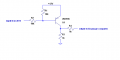
Nah dude dont give up. This has got to be a super simple circuit to make. I made you a pic but its really not important how the circuit is used. I just need a 12v pulse whenever I send it a ground pulse. Here is the pic (left out that the transistor pack has a ground going to it which will be used to ground the coil packs. And there are 2 wire bc of the 2 coil packs. This circuit will have to be produced twice.)

Thingmaker - I looked at your link, from what I can tell a PNP transistor will only let current through when a positive charge is applied? So this will not work for my application that I can see. Can you give me a diagram of how this would work?

I found something called a ground-gate transistor. Isint this something like I need. When ever it is grounded it completes the connection? Haven't found to much info on these.
It's not as simple as you think. To design an interface circuit, you need schematics or specifications of the circuit driving the input, and the circuit being driven. We have neither. Nevertheless, try this.
 

Attachments

Thread Starter

SilvrEclipse

Joined Nov 21, 2007
58
And R3 goes to a ground? I appreciate the diagram Ron. It just seems so easy to make, but I guess not. I guess I will give that a try and see what happens.
 

Thread Starter

SilvrEclipse

Joined Nov 21, 2007
58
One last question. How much current is going to the Emanage? Its seems like less than 500mA, which should be fine but just wondering exactly.
 

Thread Starter

SilvrEclipse

Joined Nov 21, 2007
58
O ok I got you. Did Ron choose such a low current just to be safe?

This circuit should be build this week maybe. Probably wont be tested on the car for till mid december. I will be sure to let you guys know if it works or not. Thanks again for all the help!
 

Ron H

Joined Apr 14, 2005
7,063
O ok I got you. Did Ron choose such a low current just to be safe?

This circuit should be build this week maybe. Probably wont be tested on the car for till mid december. I will be sure to let you guys know if it works or not. Thanks again for all the help!
Unnecessarily high current pulses waste power, create possible electrical noise (interference), and necessitate large components and/or heatsinks to handle the heat generated.
I asked this question previously:
500mA seems like a huge waste of current for what appears to be just a control signal. I believe you said 500mA is the maximum. Do you know what the minimum is?
Since you didn't answer it, I'm assuming you don't know the answer. As I implied, control signals generally are low current. They typically range from a couple of milliamps (high speed TTL logic, although this is would be current from ground, not +V) to virtually zero (CMOS, which is most common nowadays). Twelve milliamps should be more than enough, but maybe not. You should find out when you build it.
 

Thread Starter

SilvrEclipse

Joined Nov 21, 2007
58
Ron you are right. I have no idea what the min is. But like you said it really shouldn't take a lot of current. Looks like everything might get tested this week. Hopefully this will work and not fry anything. Thanks guys, I will keep you updated. Thanks again Ron for the diagram.
 

Ron H

Joined Apr 14, 2005
7,063
Ron you are right. I have no idea what the min is. But like you said it really shouldn't take a lot of current. Looks like everything might get tested this week. Hopefully this will work and not fry anything. Thanks guys, I will keep you updated. Thanks again Ron for the diagram.
You're welcome. BTW, you can use any small-signal, general purpose PNP in this application. If you have one that's more available, post it here and we'll tell you if it will work.
 

Thread Starter

SilvrEclipse

Joined Nov 21, 2007
58
Alright, I got all the parts today and built the circuit. I bench tested it to make sure it worked like it was suppose to and it seems to work great. I do have one question though. The circuit was duplicated twice because of the 2 ignition channels. I hooked a 9v battery to the circuit to test it out. Battery was pushing 7.5v, ch1 of my circuit put out 2.5v when grounded but ch2 only put out .9v.

Went through and compared the voltages from each circuit and found that everything was the same until after the transistor. So I changed that thinking I might have damaged it with heat or something. Now ch2 puts out 3.5v?

Does heat from soldiering mess this things up that easily or do they vary a little?
 

Ron H

Joined Apr 14, 2005
7,063
Alright, I got all the parts today and built the circuit. I bench tested it to make sure it worked like it was suppose to and it seems to work great. I do have one question though. The circuit was duplicated twice because of the 2 ignition channels. I hooked a 9v battery to the circuit to test it out. Battery was pushing 7.5v, ch1 of my circuit put out 2.5v when grounded but ch2 only put out .9v.

Went through and compared the voltages from each circuit and found that everything was the same until after the transistor. So I changed that thinking I might have damaged it with heat or something. Now ch2 puts out 3.5v?

Does heat from soldiering mess this things up that easily or do they vary a little?
You do have to be a little careful when soldering, but it's pretty hard to hurt transistors and resistors if you have the right technique.
And no, they won't vary that much. I am curious about your test method. Can you draw a schematic, or provide a better description?
 

Thread Starter

SilvrEclipse

Joined Nov 21, 2007
58
Basically I just hooked up the positive and negative on the battery to the 12v wire and ground. Grounded the line that would normally go to the ECU and checked the output of our new 12v source going to the emanage. It would be the same as if it was on the car.
 

Ron H

Joined Apr 14, 2005
7,063
Basically I just hooked up the positive and negative on the battery to the 12v wire and ground. Grounded the line that would normally go to the ECU and checked the output of our new 12v source going to the emanage. It would be the same as if it was on the car.
When you say "battery", I assume you mean the 9 volt battery. Was this in the car, or did you just measure it as a standalone circuit?
 

Thread Starter

SilvrEclipse

Joined Nov 21, 2007
58
I just tested it in the house. Yes a 9 volt battery. If I heated the transistor up to much would that cause it to not conduct as well? Should I replace the other one and see if that helps.

I dont think it would even make a defference as far as performance, they are within 1v
 

Ron H

Joined Apr 14, 2005
7,063
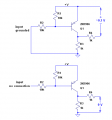
Just to be sure we're on the same page: If you test it as below, you should get the results shown. In this case, +V is your 9V battery. Are you sure the battery is good? How many volts do you read across it when it is connected to the two circuits, and both inputs are grounded?
EDIT: What pinout did you use for the transistors?
 

Attachments

Thread Starter

SilvrEclipse

Joined Nov 21, 2007
58
The battery was putting out 7.xvolts so it was a little dead, but that should vary the result when hooked up at the same time. Also I didn't test it the same way to drew it. I hooked everything up like you did but used the + from the multimeter on the emanage output and grounded the negative to the battery.

The whole circuit works fine just the voltage comes out different. I will hook it up in the car and see what happens, wont be able to test it till wednesday.
3 12v in
( | 2 ECU ground
1 Out

I believe this is how I hooked it up, I looked it up on the internet.
 

Ron H

Joined Apr 14, 2005
7,063
The battery was putting out 7.xvolts so it was a little dead, but that should vary the result when hooked up at the same time. Also I didn't test it the same way to drew it. I hooked everything up like you did but used the + from the multimeter on the emanage output and grounded the negative to the battery.

The whole circuit works fine just the voltage comes out different. I will hook it up in the car and see what happens, wont be able to test it till wednesday.
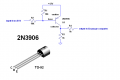
3 12v in
( | 2 ECU ground
1 Out

I believe this is how I hooked it up, I looked it up on the internet.
( | 2 ECU ground
What does this mean?

Below is how it should be connected.
 

Attachments

Top