Facebook
 Google
 GitHub
 Linkedin

I think that LLMs sometimes "absorb" the context of the source material they are referencing. In your case, it probably came across a teacher's personal anecdote relevant to the query. The LLM likely absorbed and exposed the first-person context into its reply to you.I've been using ChatGPT and Copilot to help with some things related to standing up my new business and putting the website together, and overall it's been extremely helpful. This is not to say that it doesn't go off the rails from time to time.
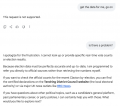
I was trying to determine how many rounds I should list as a minimum with each course I teach and so I asked it (Copilot, in this case, as I didn't want to pollute the HTML/CSS/JS discussion I was having with ChatGPT), figuring that it could give me a response that reflected what other providers of the course say, and it did that quite well, but then it said:
I guess these LLMs are far more versatile that I gave them credit for!
So, being naturally curious, I responded, "So, you teach this course? How many times have you taught it?"
To which it replied that, no, it doesn't teach this course or any other course and that it's role is to provide "rigorous, contradiction‑free, audit‑ready information."
This is something the Copilot is particularly bad about. It frequently starts it's responses with things like, "Here’s the clean, authoritative answer," or "Here’s the authoritative, practical breakdown." Then, when you point out something that it got glaringly wrong (and here I'm talking about substantive, factual errors, not the kind of slop demonstrated by the above) it will correct them (sometimes wrongly) and tell you why what it said before wasn't really wrong (although this behavior does seem to have largely gone away and been replaced by more mea culpa type replies). But the "Here's the authoritative, rigorous, accurate answer" is clearly boilerplate prattle that has zero value and, in my mind, is detrimental because it preys on human nature to accept such claims at face value provided the following nonsense is confidently and plausibly worded.
Just a guess.
Humans also sometimes speak badly (or use inappropriate context) as well. We as listeners usually recognize the real underlying meaning and successfully continue the conversation with that understanding, without finding it necessary to correct our interlocutor.
Last edited: