Charging three 18650 in parallel ?

Thread Starter

nelers

Joined Jan 30, 2018
4
Hello guys,

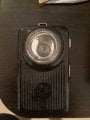
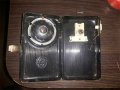
I have an old flashlight with incandescent bulb (take a look at photos from attachment). It is using old 3LR12 (4.5V) battery, so I wanted to replace it with three Li-ion batteries connected in parallel... I want to integrate a charger in flashlight, so it can be charged without any external charger and without any need of removing a battery every time when it needs to be charged.

My question is - which charger is the best for my application, to purchase from Ebay/Aliexpress?
So I need Li-ion charger to charge three 18650 batteries in parallel, but all chargers I see online are meant to be used for charging in serial...

Thanks!


Note from moderator: Please consider those with slow connections, upload the minimum size file necessary to serve its purpose.
 

Attachments

Last edited by a moderator:

-live wire-

Joined Dec 22, 2017
959
Please replace that incandescent bulb unless your goal is to radiate heat! They are SO inefficient. You can probably multiply the battery life by 10 if you use an LED! You can get an extremely bright LED that only draws 100mA or so. It would also not be more that $1-2 for the LED and resistor. I'm sorry, but I cannot stand to see so much power being wasted.
 

dl324

Joined Mar 30, 2015
18,267
So I need Li-ion charger to charge three 18650 batteries in parallel, but all chargers I see online are meant to be used for charging in serial...
Charging batteries in series or parallel is a compromise.

When charging batteries in series, the weakest battery will spend more time in overcharge. The following is an excerpt from this Battery University article on cell matching.
upload_2018-4-28_9-35-10.png

Charging batteries in parallel will also abuse the weakest battery. How much depends on the charging algorithm, pack construction, and the nature of the weak battery. There's always going to be a cell that's weaker than the others. That cell is going to discharge first and potentially be abused during charging.

If the weak cell fails open, the only problem is loss of capacity. If it fails short, bad things can happen. The following is an excerpt from this Battery University article on series and parallel.
upload_2018-4-28_10-16-52.png
 

-live wire-

Joined Dec 22, 2017
959
You can also charge and discharge them independently and have them be isolated. There are some obvious disadvantages, but it may be the only way.
 

ebp

Joined Feb 8, 2018
2,332
If the cells are nominally identical to start with, charging in parallel is generally quite safe with one notable exception. The maximum current into a cell during charging should be limited. If you have 3 cells in parallel, and all are absolutely identical, then the current would divide equally. If they aren't all identical, the current will not divide equally, and in the worst case the full current from the charger will all go into just one cell at some point during charging. If the maximum current from the charger is no more than the rated maximum for one cell, no damage will result. If the current from the charge is any higher, all the risks of excessive charging current in lithium ion cells arise. Unless you need fast charging, simply reducing the charge current to the maximum safe for a single cell is the simplest solution and spares you from having to open the box, take out the cells, stuff them into a charger (and a cheap charger might treat your cells badly), et cetera. Depending on the cell type, a safe charging current may be as little as 1/5 of the nominal capacity (e.g. 100 mA if the nominal capacity, "C", is 500 mA·H) but may exceed C/2 (250 mA for out 500 mA·H cell).

Lithium ion cells MUST have protection that is independent of the charger circuit. A good charger will accurately regulate the maximum voltage applied to the cell(s), but even a good charger can fail and apply excessive voltage. This can be catastrophic with lithium ion cells. An independent over-charge prevention circuit adds a second level of safety (still not disaster-proof, just greatly lowered probability of disaster), however it is common that the cell protection circuit will allow the maximum charge voltage to be somewhat excessive. Even a few cycles of excessive charging to a voltage that is not dangerous but still too high can greatly shorten the life of the cells. Cells also need to be protected for over-discharge, which similarly can grossly shorten lifetime. A protection IC typically takes care of both issues.
 

Thread Starter

nelers

Joined Jan 30, 2018
4
Wow... Thank you so much guys for your effort into answering on my topic. I will have in mind all of the things you said.

Please replace that incandescent bulb unless your goal is to radiate heat! They are SO inefficient. You can probably multiply the battery life by 10 if you use an LED! You can get an extremely bright LED that only draws 100mA or so. It would also not be more that $1-2 for the LED and resistor. I'm sorry, but I cannot stand to see so much power being wasted.
Hahaha, yes I know perfectly well what are you talking about. Who else is using those old bulbs!? -Well, it is my grandpa... This is his flashlight and he want me not to use LED, because he don't like that "white and unnatural light" LED is producing... :( :D :D

If the cells are nominally identical to start with, charging in parallel is generally quite safe with one notable exception. The maximum current into a cell during charging should be limited. If you have 3 cells in parallel, and all are absolutely identical, then the current would divide equally. If they aren't all identical, the current will not divide equally, and in the worst case the full current from the charger will all go into just one cell at some point during charging. If the maximum current from the charger is no more than the rated maximum for one cell, no damage will result. If the current from the charge is any higher, all the risks of excessive charging current in lithium ion cells arise. Unless you need fast charging, simply reducing the charge current to the maximum safe for a single cell is the simplest solution and spares you from having to open the box, take out the cells, stuff them into a charger (and a cheap charger might treat your cells badly), et cetera. Depending on the cell type, a safe charging current may be as little as 1/5 of the nominal capacity (e.g. 100 mA if the nominal capacity, "C", is 500 mA·H) but may exceed C/2 (250 mA for out 500 mA·H cell).

Lithium ion cells MUST have protection that is independent of the charger circuit. A good charger will accurately regulate the maximum voltage applied to the cell(s), but even a good charger can fail and apply excessive voltage. This can be catastrophic with lithium ion cells. An independent over-charge prevention circuit adds a second level of safety (still not disaster-proof, just greatly lowered probability of disaster), however it is common that the cell protection circuit will allow the maximum charge voltage to be somewhat excessive. Even a few cycles of excessive charging to a voltage that is not dangerous but still too high can greatly shorten the life of the cells. Cells also need to be protected for over-discharge, which similarly can grossly shorten lifetime. A protection IC typically takes care of both issues.
A lot of things to keep in mind... However, what do you think what is the best thing to buy from eBay to accomplish this task with the best results? I've seen a lot of charger PCBs, where it's said that it has all kinds of protection - temperature protection, over-current protection, under-voltage protection. Prices are going from 0.70$ and so on... Now I'm thinking about the whole setup and I'm not really sure what to buy. Can you help me with that a little? I have a lot of experience with electronics, but not so much with Li-ion charging procedure...

Thank you!
 

-live wire-

Joined Dec 22, 2017
959
Hahaha, yes I know perfectly well what are you talking about. Who else is using those old bulbs!? -Well, it is my grandpa... This is his flashlight and he want me not to use LED, because he don't like that "white and unnatural light" LED is producing... :( :D :D
There are plenty of LEDs that have filters and stuff to produce better light. Just look around.

If the cells are different in voltages and/or capacities, try just charging and discharging them separately. You don't want to risk it.
 

Thread Starter

nelers

Joined Jan 30, 2018
4
There are plenty of LEDs that have filters and stuff to produce better light. Just look around.

If the cells are different in voltages and/or capacities, try just charging and discharging them separately. You don't want to risk it.
Batteries are from the same manufacturer, ripped out from the same battery pack. So - same age, capacity and hopefully the condition. I understand that I have to use the batteries which are in the same condition and state, but I'm looking for the safest and most efficient way to charge it (without need to use external charger). But it seems that parallel charging is not really trusty without some expensive charging solution. In this case I also need something that is going to fit in this small metal flashlight enclosure.

Thanks.
 

-live wire-

Joined Dec 22, 2017
959
Try getting a cheap battery management system that has charge and protection features. You can probably find one on ebay. Even if the cells are very similar, over many charge/discharge cycles they will drift apart in voltages and that will lead to issues (fire, explosion, etc.). So please invest in one.
 
Top