Capacitor protection boards - How do they work?

Status
Not open for further replies.

Thread Starter

Bob James

Joined Feb 22, 2017
15
Have you considered the idea that the board turns the charging current off when the capacitors are full?
No but as I charge them at 4 amps I connect to the first and last terminals on the capacitors themselves . To have it cut off by the board there would need to be circuitry on the board to connect to . I do not see any The first and last board teminals appear to be connected directly to ground and Positive.
 

Sensacell

Joined Jun 19, 2012
3,785
I think they are just shunt regulators in a series string, they hard limit the voltage on the caps.
If you try to push heavy current through once the Vmax is reached, the board gets nice and warm.
 

Thread Starter

Bob James

Joined Feb 22, 2017
15
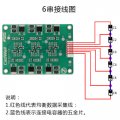
On the link above slide the pics across for a connection circuit. Don't have a circuit or it would be easy wouldn't it ! Been trying to put a pic n but site won't take it .

Here is another of similar ilk .but a single board
http://www.ebay.com.au/itm/381851790000?_trksid=p2057872.m2749.l2649&ssPageName=STRK%3AMEBIDX%3AIT

I see this is one of those silly sites that won't let you change your post.!

(Moderator's note: Offensive comments removed. You will gain the ability to edit your posts after you have been active for a while, that is if you can refrain from offending those trying to help you and play nice. -dc)
 
Last edited by a moderator:

Thread Starter

Bob James

Joined Feb 22, 2017
15
s-l1600.jpg
I think they are just shunt regulators in a series string, they hard limit the voltage on the caps.
If you try to push heavy current through once the Vmax is reached, the board gets nice and warm.
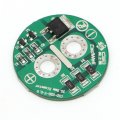
A single board shows three one ohm or so resistors on one side of the positive terminal. Neg seems to pass through a transistor or diode marked D1804 a Q1 marked "y2" and a "u1" marked 431. Resistors to neg are 12K 615 ohm and 180K . .

CapacitorChargeBoard.JPG
 
Last edited:
Status
Not open for further replies.
Top