Facebook
 Google
 GitHub
 Linkedin

Hello everyone!
Recently we had an issue with a electronic board production that some capacitor exploted and destroy the PCB. There were PCB working with no problem and others may failed in 2 weeks, 1 month or even several months. Well, after some months of confusion and trying to solve the problem searching in the design, we found that our electronic assembler used a 2.2uF/25V instead of 2.2uF/100V. Thus, this capacitor is connected to a 65V and there are some other capacitors in parallel with the right voltage rate.
So, my question could be:
1.How is the effect of using a undervoltage rated capacitor with right rated voltage capacitor in parallel??
2.Is there an effect of having the Cs1 and Cin2 and Cin3 very closed??
I'm attaching some details about schematic and capacitor's position in the PCB with effect of its explosion.
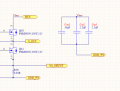
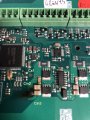
Csn1: 33nF/100V - Cin2: 2.2uF/25V - Cin3: 2.2uF/25V
There 3 branches of an ACIM inverter with the same battery package.
I'm curious understanding it because I never could not reproduce the issue in my lab and I would like to know why this happened in some other conditions.
Thank you.
Best regards,
daniel
Recently we had an issue with a electronic board production that some capacitor exploted and destroy the PCB. There were PCB working with no problem and others may failed in 2 weeks, 1 month or even several months. Well, after some months of confusion and trying to solve the problem searching in the design, we found that our electronic assembler used a 2.2uF/25V instead of 2.2uF/100V. Thus, this capacitor is connected to a 65V and there are some other capacitors in parallel with the right voltage rate.
So, my question could be:
1.How is the effect of using a undervoltage rated capacitor with right rated voltage capacitor in parallel??
2.Is there an effect of having the Cs1 and Cin2 and Cin3 very closed??
I'm attaching some details about schematic and capacitor's position in the PCB with effect of its explosion.
Csn1: 33nF/100V - Cin2: 2.2uF/25V - Cin3: 2.2uF/25V
There 3 branches of an ACIM inverter with the same battery package.
I'm curious understanding it because I never could not reproduce the issue in my lab and I would like to know why this happened in some other conditions.
Thank you.
Best regards,
daniel