Facebook
 Google
 GitHub
 Linkedin
Hello there.
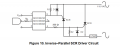
I am designing a circuit that will phase control 240VAC at 12A. The snubber diode is a VS-15ETH06-M3. The characteristics of this are as follows:
Forward voltage at If 15A = 2.2 (Max)
Maximum junction and storage temperature range TJ, TStg = -65 - 175 °C
Thermal resistance, junction-to-case Rjc = 1.0 (Typ) 1.3 (Max) °C/W
Thermal resistance, junction-to-ambient per leg Rja = 70 (Max)
Thermal resistance, case-to-heatsink Rcs = 0.5 (Typ)
Unfortunately, I do not have the exact specifications of the heatsink, as I'm purchasing from LCSC (heatsink category here), and the heatsinks don't appear to give any thermal specifications.
So, worst case:
Pd * (Rjc+Rcs+Rsa+Ta) = (2.2 * 12) * (1.3+0.5+20+25) = 1235 C/W
Yes the above is the worse case, it still seems excessive for such thermals. Surely if this is correct such components like this diode are all but useless as they could never thermally achieve their ratings.
I'm clearly missing some piece of the puzzle here, would you mind pointing me in the right direction.
Thank you.
I am designing a circuit that will phase control 240VAC at 12A. The snubber diode is a VS-15ETH06-M3. The characteristics of this are as follows:
Forward voltage at If 15A = 2.2 (Max)
Maximum junction and storage temperature range TJ, TStg = -65 - 175 °C
Thermal resistance, junction-to-case Rjc = 1.0 (Typ) 1.3 (Max) °C/W
Thermal resistance, junction-to-ambient per leg Rja = 70 (Max)
Thermal resistance, case-to-heatsink Rcs = 0.5 (Typ)
Unfortunately, I do not have the exact specifications of the heatsink, as I'm purchasing from LCSC (heatsink category here), and the heatsinks don't appear to give any thermal specifications.
So, worst case:
Pd * (Rjc+Rcs+Rsa+Ta) = (2.2 * 12) * (1.3+0.5+20+25) = 1235 C/W
Yes the above is the worse case, it still seems excessive for such thermals. Surely if this is correct such components like this diode are all but useless as they could never thermally achieve their ratings.
I'm clearly missing some piece of the puzzle here, would you mind pointing me in the right direction.
Thank you.