Calculating LED series resistance

Thread Starter

andrew74

Joined Jul 25, 2022
242
Hello everyone, I’d like to ask for your opinion on which resistor to choose for this LED
https://look.ams-osram.com/m/357e7fcde66d9629/original/LG-Q396.pdf

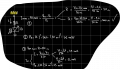
1) Calculating R based on Imax and the Vf range that the LED can have
2) Calculating power
3) Selecting a standard resistor, and determining the new current and power values

In this case, is point 3) of the selection of the series resistor carried out correctly?

The choice of 120 ohms implies a current in the range [7.5 – 15] mA … less than half the LED’s Imax --> does this mean the brightness will be halved? And that I should therefore use a slightly lower resistance?
SmartSelect_20260715_112416_Samsung Notes.png
 

ericgibbs

Joined Jan 29, 2010
21,500
hi andrew,
Most LED's have finite life span for their specified 'luminosity', if you run them at 30mA you will most likely shorten their life span.
What is the LED project application.?
E
 

MrAl

Joined Jun 17, 2014
13,738
Hello everyone, I’d like to ask for your opinion on which resistor to choose for this LED
https://look.ams-osram.com/m/357e7fcde66d9629/original/LG-Q396.pdf

1) Calculating R based on Imax and the Vf range that the LED can have
2) Calculating power
3) Selecting a standard resistor, and determining the new current and power values

In this case, is point 3) of the selection of the series resistor carried out correctly?

The choice of 120 ohms implies a current in the range [7.5 – 15] mA … less than half the LED’s Imax --> does this mean the brightness will be halved? And that I should therefore use a slightly lower resistance?


View attachment 369571
Hi,

You have to be more careful when you are using a series resistor with an LED with characteristic voltage that is close to the supply voltage. LEDs run better with constant current sources, and a voltage source with series resistor only mimics a current source when the supply voltage is a lot higher than the LED voltage, or at least it looks better that way. The main problem is that the LED voltage is not constant and so it can vary. With a constant current source is does not matter as much because it will always have the same current, but with a voltage source and series resistor when the LED voltage goes higher it gets less current, and when it goes lower it gets more current. You want to design so that the max current does not exceed the rating of the LED, but staying below that can increase the life span of the LED dramatically.
We can look into this more if you like.
 

dl324

Joined Mar 30, 2015
18,428
The choice of 120 ohms implies a current in the range [7.5 – 15] mA … less than half the LED’s Imax --> does this mean the brightness will be halved? And that I should therefore use a slightly lower resistance?
You need to take a step back and define the problem.

What is the LED going to be used for? An indicator or illumination?

As an indicator, a few mA would likely be sufficient.

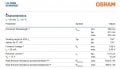
If it's for illumination, operating the LED at 20-30mA will affect longevity. I noted in the datasheet that there are 4 different brightness bins. If you want brighter at a lower current, choose a higher brightness category:
1784119370187.png

Regarding your choice of Vf to use for calculations. About 68% of the LEDs will be within 1 sigma of the typical value for Vf, so I'd use that as the starting point. If this is a one-off situation, you can measure the forward voltage at the operating current you selected and adjust the series resistor accordingly.

If this is a situation where millions of units will be manufactured, you need to define what's more important. Operating current/longevity or brightness?
 
Last edited:
Perfect, thank you.

Why do I have to use 20mA and not the maximum value of 30mA?
Well for one, the Vf figures are stated in the datasheet for a 20mA current, at 30mA the Vf will be slightly different, so your calculations for the resistors is already wrong, because diodes are not linear, also the 30mA is the absolute maximum rating, operating at or very close to that is never intended really.
 
Last edited:

BobTPH

Joined Jun 5, 2013
11,582
Modern LEDs at 20 mA are blindingly bright. I usuall design for 5mA, or as little as 1. The other advantage of this is that there is lots of room for error, so you can use the typical Vf and it will not matter if the LED you have is actually at the extreme.

Unless you plan on using this for illumination or in a very bright environment, I would not design for 20 mA.
 
Hello everyone, I’d like to ask for your opinion on which resistor to choose for this LED
https://look.ams-osram.com/m/357e7fcde66d9629/original/LG-Q396.pdf

1) Calculating R based on Imax and the Vf range that the LED can have
2) Calculating power
3) Selecting a standard resistor, and determining the new current and power values

In this case, is point 3) of the selection of the series resistor carried out correctly?

The choice of 120 ohms implies a current in the range [7.5 – 15] mA … less than half the LED’s Imax --> does this mean the brightness will be halved? And that I should therefore use a slightly lower resistance?

View attachment 369571
No, the brightness will not be halved. The LED’s maximum current is a limit, not the required operating current. LED brightness does not scale linearly with current.

Choosing 120 Ω and getting 7.5–15 mA is a valid and safer design if the LED is rated for a higher maximum current. A lower resistor would increase brightness but also increase power and reduce safety margin.

Point 3 is correct: select the standard resistor value, then recalculate the actual current and power to confirm the LED and resistor remain within limits.
 

Thread Starter

andrew74

Joined Jul 25, 2022
242
You need to take a step back and define the problem.

What is the LED going to be used for? An indicator or illumination?

As an indicator, a few mA would likely be sufficient.

If it's for illumination, operating the LED at 20-30mA will affect longevity. I noted in the datasheet that there are 4 different brightness bins. If you want brighter at a lower current, choose a higher brightness category:
View attachment 369576

Regarding your choice of Vf to use for calculations. About 68% of the LEDs will be within 1 sigma of the typical value for Vf, so I'd use that as the starting point. If this is a one-off situation, you can measure the forward voltage at the operating current you selected and adjust the series resistor accordingly.

If this is a situation where millions of units will be manufactured, you need to define what's more important. Operating current/longevity or brightness?
Hi, the LED indicates that there are 3.3V at the output of the DC-DC
 

MrChips

Joined Oct 2, 2009
34,973
You can do the math as a starting point. A lot depends on the efficiency of the LED.
Half the max current does not make the LED half as bright.

I prefer to start with 1k-ohm resistor (or even higher) and gradually reduce the resistance until I get the desired brightness.
To confirm the final result, measure the voltage across the series resistor and calculate the current.
 
LEDs vary greatly in brightness with same current. the old LEDs could tolerate up to 20mA, so driving them with 20mA is causing them to have very short life. this is why most of the time current is set to be within safe limits, not at the very end of that is survivable. so 5-15mA is default (safe value) when you do not have sufficient info... (this works for any indicator LED)

the newer LEDs are ok with up to 30mA and at the same time are more efficient. 5-10mA sill give similar brightness as old LEDs at 20mA.

the newest LEDs are also ok with up to some 30mA but are much more efficient and at 10-20mA they are blindingly bright.

that may be acceptable for single LEDs but if there are several of them, side by side (like IO indicators), it is too much. repair or troubleshooting of the board becomes impossible unless they are blocked off by masking tape or similar. in such case 0.3-1mA is plenty. the point is that simply reading datasheet and seeing VI curves, max limits etc may not convey what brightness is practical. so the best is to do some experimenting like suggested by MrChips.

keep in mind that perceived brightness is not very linear. one can easily tell the difference when brightness is on low end, but this is not so on the other end of range. so using 15mA through LED may look only barely brighter than same LED with just 5mA. this becomes important for cases where power consumption matters (battery operation), or used voltage is higher (series resistor power) etc.
 
Last edited:
A rule of thumb I learned is that you take the voltage of the source and multiply it by 100, and there you have the resistance, in ohms.
What it tends to do is ignore the V_forward of the LED and calculate the current to be 10 mA. So the V_forward does the job of lowering it further. The lower the source voltage, the lower the current. Realistically, you're never going under 3 V of power supply driving a LED for obvious reasons, although 2.5 V is still doable and have fixed LDOs that do that.
Other than that, I agree with what was said by others.
 

MrAl

Joined Jun 17, 2014
13,738
No, the brightness will not be halved. The LED’s maximum current is a limit, not the required operating current. LED brightness does not scale linearly with current.

Choosing 120 Ω and getting 7.5–15 mA is a valid and safer design if the LED is rated for a higher maximum current. A lower resistor would increase brightness but also increase power and reduce safety margin.

Point 3 is correct: select the standard resistor value, then recalculate the actual current and power to confirm the LED and resistor remain within limits.
Hi,

Just to note, it is often estimated to be half when the current is halved. It's not exact and varies with operating point, but it's a starting point for understanding what the LED is doing.
Since the efficiency goes down with current, when we increase above a certain threshold the light does not double for double the current it's a little less, it's not too far off though. When we decrease below a certain threshold, the light does not halve for half the current it's actually a little bit higher. This last behavior is interesting because that means that two LEDs run with 1/2 the current each as a third LED has, there is more light output for the same total currents in each set because the two LEDs put out more total light than the single LED being run at the same total current as the set of two. It's not usually going to be a lot more though. The approximation does not show this behavior, but it's still used to get a basic idea how the LED works.
 
Top