Bootlegging LEM Connectors

Thread Starter

mbferguson

Joined Apr 23, 2017
94
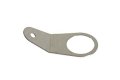
I've got the following "lemo" plugs, which I am fairly certain are the S-series.

This datasheet shows some fixed sockets which I'm interested in, but they are all around $30/each.

Would it cause too many problems if I simply soldered the pins to some wires...

I'll be damned if I give those greedy gatekeepers any of my inheritance money!

https://www.mouser.com/datasheet/2/232/unipole_multipole-973098.pdf (S-series Pg.73)

To be honest, I don't even think the manufacturer of this part used genuine lem plugs. They don't have the logo.


I'm fairly certain these are what I'm looking for
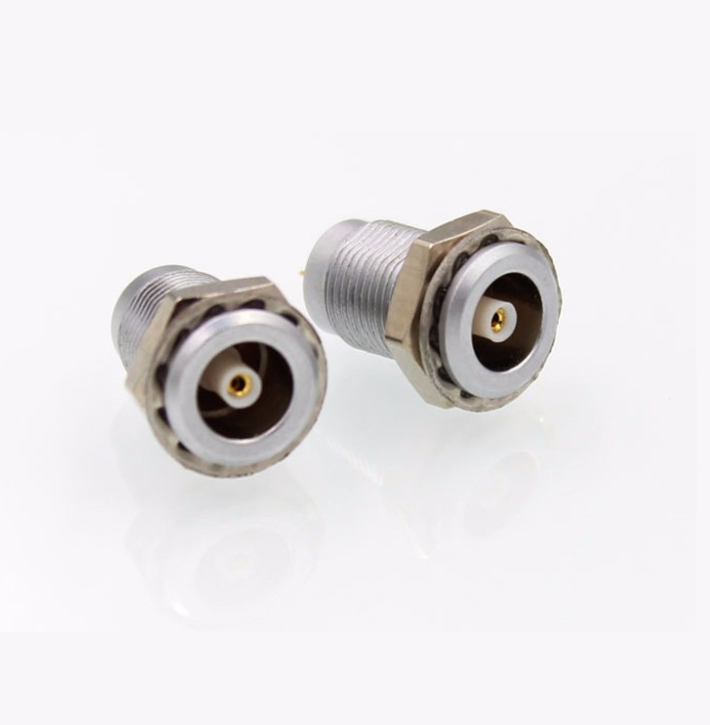


One thing I'm confused about is where I'd solder the ground/signal pins to on the back of these female sockets. There's just that one gold piece.
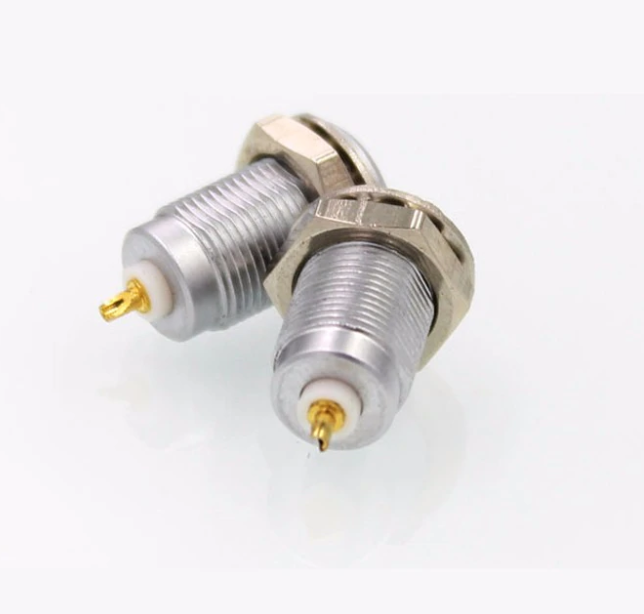
 
Last edited:

ericgibbs

Joined Jan 29, 2010
21,439
hi mb,
You have marked the pins on the images as Pos and Neg, if it is really only a power plug, I would solder the wires as you propose.
If its HF/Vid etc signals, I would buy a low cost connector pair, male/female and replace both.
E
 

Thread Starter

mbferguson

Joined Apr 23, 2017
94
hi mb,
You have marked the pins on the images as Pos and Neg, if it is really only a power plug, I would solder the wires as you propose.
If its HF/Vid etc signals, I would buy a low cost connector pair, male/female and replace both.
E
The plugs go to a transducer which carries a 100ns pulse at 220V. There are two cables because it is a dual element device. One cable carries the input pulse, the other receives any sort of sound that is reflected backwards towards the probe.
 

Thread Starter

mbferguson

Joined Apr 23, 2017
94
hi mb,
You have marked the pins on the images as Pos and Neg, if it is really only a power plug, I would solder the wires as you propose.
If its HF/Vid etc signals, I would buy a low cost connector pair, male/female and replace both.
E
When you say replace the connector pair, are you suggesting I take the fake lemo connectors off, resolder something from Lowe's onto them?
 

ericgibbs

Joined Jan 29, 2010
21,439
hi mb,
I am having a small problem with posting today.:mad:

If its only DC wire, connect directly by soldering.
If its HF signals buy a low cost pair of connectors, not lemo's
E

EDIT:

Is this Thread related to the 10MHz Ultrasonic project.? If so, quality connectors are important.
 

ericgibbs

Joined Jan 29, 2010
21,439
hi mb,
It appears that you have 4 Threads running on sub topics for the same basic project.?
Many of the questions and replies are being duplicated by the helpers on the different Threads.

For example, the question regarding the connector could have been answered immediately, had it been asked on the main Ultrasonic thread.
ie: for 10MHz signals with pulse durations in the order of nano-sec's, impedance matching at inter connections is important.

I would advise you to not to create a new thread for each aspect of the main project.

Eric
 

Thread Starter

mbferguson

Joined Apr 23, 2017
94
hi mb,
It appears that you have 4 Threads running on sub topics for the same basic project.?
Many of the questions and replies are being duplicated by the helpers on the different Threads.

For example, the question regarding the connector could have been answered immediately, had it been asked on the main Ultrasonic thread.
ie: for 10MHz signals with pulse durations in the order of nano-sec's, impedance matching at inter connections is important.

I would advise you to not to create a new thread for each aspect of the main project.

Eric
Yea I was worried someone would get annoyed by that. I do not mean to be cross posting so many posts. It's not my fault people respond to them so quickly! They start off on a specific topic like the mosfet, or "can I use this wire", and people ask specific quetions which end up being cross posting.

I can keep any further questions limited to only one thread in the future.

I'd thought it would be quicker to understand if I limited the amount of information in my question, instead of someone having to read through an enormous 60+ response thread.
 

ericgibbs

Joined Jan 29, 2010
21,439
hi mb,
Its not annoying, its inefficient and time wasting, it also slows down your project.
Ask your questions in a more structured way, so that we can help you.;)
E
 

MisterBill2

Joined Jan 23, 2018
27,513
There is a company name UDO that makes a number of LEMO compatible connectors. They are less expensive and provided me with good customer service a few years ago.
The really terrible news is that once you solder to the pins on those expensive connectors they will be totally useless.
So I suggest that you cut them off, leaving about an inch of cable to allow neatly unsoldering the cables when you get the mating connectors eventually, and solder on some standard BNC connectors made for that sized cable. BNC connectors are made by many different companies and are often available as surplus items as well.
 

Thread Starter

mbferguson

Joined Apr 23, 2017
94
Hello friends ;) I wanted to go ahead and let all of you know I appreciate the help I've received so far. I'm essentially done with the project at this point, only need to put things together and polish the GUI software. I'll be posting a sneak peak of that pretty soon I hope.

Anyways, I did have one question regarding some calculations I did when I was worried about that old dV/dt parameter-ish.

I had used the equation for voltage of a capacitor with respect to time: Vc(t) = Vo * e^(-t/tau)

Vc(25ns) = 76.44V
Vc(50ns) = 26.56V
Vc(75ns) = 9.22V
Vc(100ns) = 3.2V

I then used the above voltages to get the dV/dT values.

25ns --> dV/dT = (220V - 76.44V)/25ns = 5.7424E9 V/s
50ns --> dV/dT = (220V - 26.56V)/50ns = 3.8688E9 V/s
75ns --> dV/dT = (220V - 9.22V)/75ns = 2.8104E9 V/s
100ns --> dV/dT = (220V - 3.2V)/100ns = 2.168E9 V/s

Giving us the currents

ic(1ns) = 470pF x 9.11E9 = 4.28A
ic(25ns) = 470pF x 5.7424E9 = 2.69A
ic(50ns) = 470pF x 3.8688E9 = 1.82A
ic(75ns) = 470pF x 2.8104E9 = 1.32A
ic(100ns) = 470pF x 2.168E9 = 1.02A

But I was thinking.. hmm. What if I did the dV/dT calculation wrong?

25ns --> dV/dT = (220V - 76.44V)/25ns = 5.7424E9 V/s
50ns --> dV/dT = (76.44V - 26.56V)/25ns = 1.9952E9 V/s
75ns --> dV/dT = (26.56V - 9.22V)/25ns = 6.936E8V/s
100ns --> dV/dT = (9.22V - 3.2V)/25ns = 2.408E8 V/s

(Something smells calculus-y)

ic(1ns) = 4.28A
ic(25ns) = 2.69A
ic(50ns) = 0.93A
ic(75ns) = 0.33A
ic(100ns) = 0.11A

So which way would be the correct method of calculating the response of the capacitor?
 

Thread Starter

mbferguson

Joined Apr 23, 2017
94
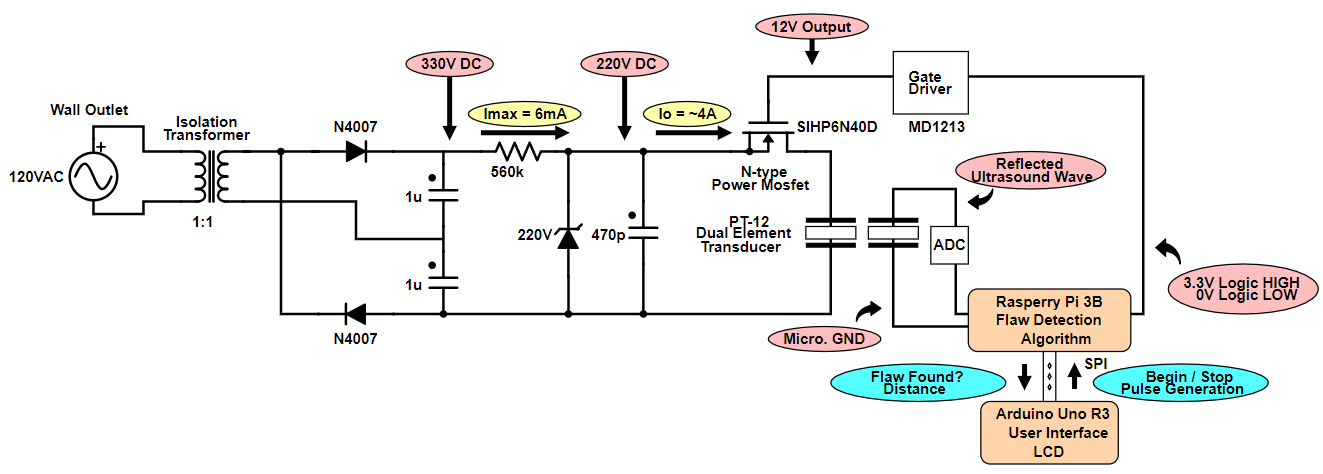
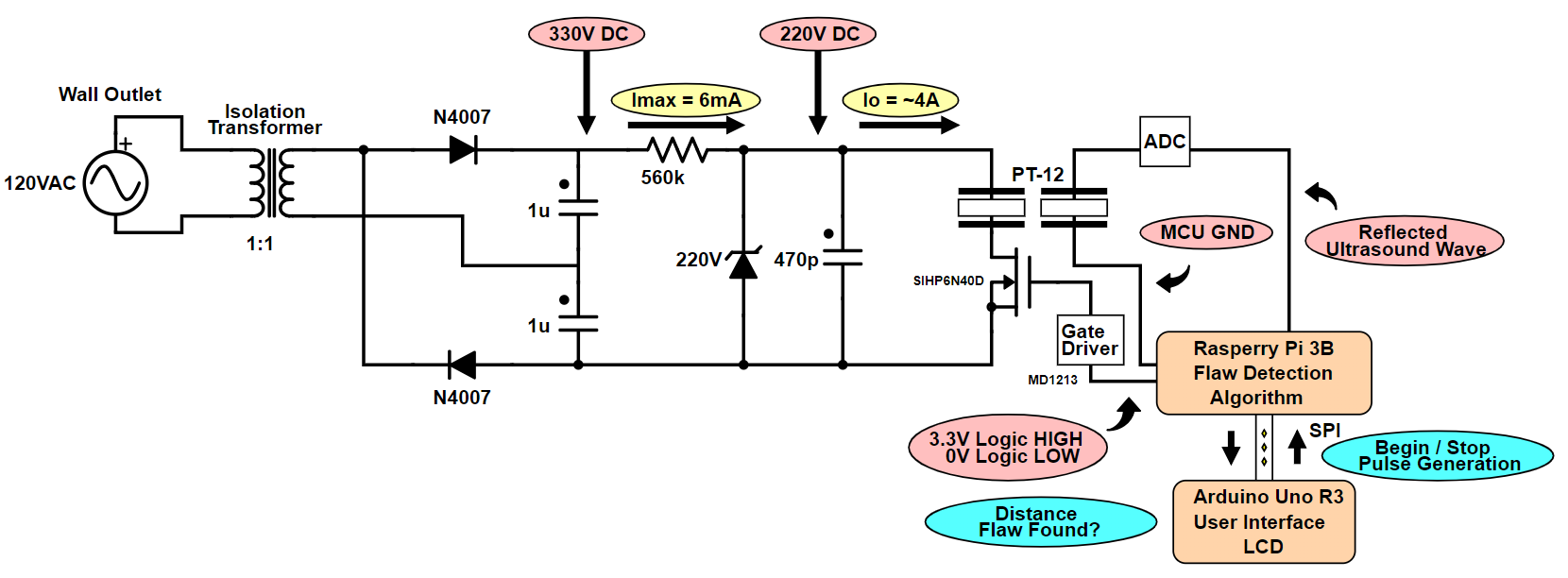
I've also made a schematic that is a bit more legible than my hand drawings. I'm unsure about which location for the mosfet will be best, which is why there are 2 schematics shown. I've heard conflicting views from both my professor and another professional about which of theses circuits will work. The schematic shown above has an issue with the mosfet gate source being at 220V. That means that Vgs would need to be at 230V to activate the gate. My idea was to simply flip the mosfet horizontally, so that Vgs = 10V from the gate driver would still enable the mosfet. I was told that would not work by one, and told it would work by another. Both of whom I have reason to believe know what they are talking about.


Part of the reason I asked about the current calculations in the comment above is due to the 2nd schematic. I am worried that since the transducer will actually be attached to the 220V node it would never be able to resonate as efficiently if the mosfet immediately shut off the voltage being the case shown above.
 
Last edited:

MisterBill2

Joined Jan 23, 2018
27,513
The second, (lower) circuit should resonate a little bit better because once the mosfet switches off the thing will be isolated from ground, and the opposite side will be at a higher impedance point than the first, in which one side of the transducer is solidly grounded. In addition the driver should be simpler because of not being so far off ground.
 
Top