Boat, engine oil pressure sending unit dual station wiring modify ohms to use single station sender instead?

Thread Starter

sdowney717

Joined Jul 18, 2012
801
I had an engine get partially submerged and after restarting, the oil gauge is reading twice as much PSI, so maybe the sending unit got water inside.
Looking at buy prices, a dual helm station sending unit costs is 100% higher. One sender connects 2 gauges, versus a single station connects one gauge.
$40 versus maybe $15

Difference is the ohms are half on a dual station sender vs single station sender unit.
Was thinking could a resistor be put in parallel to the sending unit to make it function like the dual station sending unit?
Which would lower the ohms.
And what resistance value could work?

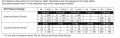
Here is a chart explaining sending unit differences. Mine is first column 80psi, American marine sender.
Charts says dual station has 1/2 the resistance values. Basically, sending units provides a var resistance ground path to the oil PSI gauge.
oil sender units.png
 

Alec_t

Joined Sep 17, 2013
15,103
Putting a single resistor in parallel with the sender would result in a very non-linear response, correct at only one point.
An electronic circuit could be used to emulate the dual sender more accurately, but the cost of construction would likely outweigh the price difference you've found.
 

Thread Starter

sdowney717

Joined Jul 18, 2012
801
Putting a single resistor in parallel with the sender would result in a very non-linear response, correct at only one point.
An electronic circuit could be used to emulate the dual sender more accurately, but the cost of construction would likely outweigh the price difference you've found.
Makes sense. And actually the absolute pressure results are not important on such a gauge, just relative readings. Most engines run between 30 to 40 psi except when idling can go down.

The oil pressure port has a brass T, one side goes to the 7 psi minimum fuel pump safety switch, other goes to the sender unit for the gauge. If oil psi falls below 7psi, the fuel pump turns off. And it can be overridden. There is also an idiot light for oil pressure.

I also have a standard mechanical gauge on the remote oil filter which gives me the absolute oil PSI. Have to lift engine hatch to take a peek.
 

sparky 1

Joined Nov 3, 2018
1,218
Depending on how much water may have got into the engine you have to see how it goes. If mechanic says
I don't know until I get it apart, you have to live with uncertainty and just observe how things are going which is better than encountering the perfect storm.

Leaving the helm to go check compartment gauges, changing a dual sending unit and every remedy to maintain engine oil pressure has best chances with a marine diesel mechanic having experience with a compromised situation. Being able to explain fuel pump, idiot lights, oil filter shows you understand that pressure is how much slop and your system is well thought out. If bearing clearance exceed the engine specs even the best sending unit may show low reading. The amount of fine material when changing oil along with knowing over time that the absolute PSI will remain stable is an approximation of the remaining hours, possibly there is a way to put a dial indicator on output shaft and valve train while applying leverage.

Its alway a good idea to check ground or floating ground which ever. We had a fireman in a small town on here years ago needed to fix issues in the back end of the fire truck. There are alot of ground connections. The absolute PSI that does not need a ground and is stable over time suggest that a fuel cut off overide is a sound logical choice. On most electrical sensors, the most likely location is where vibration weakens the wires near connections.
 
Last edited:

Thread Starter

sdowney717

Joined Jul 18, 2012
801
Are you wanting to feed two oil pressure gages?? That part is not at all clear.
Yes.
One sender unit on engine, 2 gauges.
I can pull old sender off and measure the ohms, shake it or see if its heavy with water.
Both engines survived the partial submersion, I got it running. Water got in by way of the exhaust valves.
I have an electric oil pump with the hose fitted to the engine drain plug. Apparently, it is positioned well as it sucked out all the water from the crankcase. Filled up a 5 gallon bucket with water. Internal engine parts are coated with and covered in oily carbon, they will reject water for a time as long as engine was not running when submerged, oil and water do not mix.

First thing did was
pull spark plugs
suction out water in cylinders using wet vac and a 3/8 hose
disconnect exhaust risers to drain water from the log style exhaust manifold
drained out the oil using pump, water always sits below oil
spray in PB Blaster oil
Crank over engine which blows leftover moisture out
put in new spark plugs, well they are cheap and needed to be done.
put in new oil
Engine started and ran ok, oil not milky. Ran like it did before.
These engines take 2 gallons of oil each.

When running, I think oil sender unit is not sending right ohms. Mechanical gauge did not get submerged, water only came up to the exhaust ports on the cylinder heads, so at the exhaust manifold level. I suppose possible some water siphoned in by way of the transom exhaust, but it has tall exhaust manifold risers, so that would seem to not be why engines got water inside. I would have thought the exhaust manifold connections were all watertight.
 
Last edited:

MisterBill2

Joined Jan 23, 2018
27,176
Here is another possible condition, which would be that not both gauges are connected. and so the reading is doubled. Since I am guessing that the sensor that was in use was a half-resistance value device intended to feed two gauges. So my very first suggestion now is to verify that both gages are connected and indicating If one has lost it's ground connection that also would affect the operation of both of them, with the other showing a higher pressure. So I see a fair chance that the problem is an opened connection. So the first thing will be to verify that all is connected as they should be.
 

Thread Starter

sdowney717

Joined Jul 18, 2012
801
Here is another possible condition, which would be that not both gauges are connected. and so the reading is doubled. Since I am guessing that the sensor that was in use was a half-resistance value device intended to feed two gauges. So my very first suggestion now is to verify that both gages are connected and indicating If one has lost it's ground connection that also would affect the operation of both of them, with the other showing a higher pressure. So I see a fair chance that the problem is an opened connection. So the first thing will be to verify that all is connected as they should be.
I turned the sender unit and lots of water came out of it. There is a hole on the bottom side, I guess that hole should have been pointing down.
Maybe it can dry out enough to work again. Iffy though.
 

MisterBill2

Joined Jan 23, 2018
27,176
The one mechanical resistor oil pressure sender I experimented with could easily work with water in it. Strictly 1935 technology.A metal diaphram, a lever, and a resistance wire with a slider. AND STILL, if the pressure is reading 2X what it should read, it seems like one gage is not connected.
 

Thread Starter

sdowney717

Joined Jul 18, 2012
801
The one mechanical resistor oil pressure sender I experimented with could easily work with water in it. Strictly 1935 technology.A metal diaphram, a lever, and a resistance wire with a slider. AND STILL, if the pressure is reading 2X what it should read, it seems like one gage is not connected.
The water is brackish so it is salty and that will lower the resistance.
 

Alec_t

Joined Sep 17, 2013
15,103
If water got into the sender it should also be possible to get all the water out after rinsing it thoroughly to get rid of any salts/crud. Perhaps heat the sender gently in an oven on a low setting?
 

Thread Starter

sdowney717

Joined Jul 18, 2012
801
If water got into the sender it should also be possible to get all the water out after rinsing it thoroughly to get rid of any salts/crud. Perhaps heat the sender gently in an oven on a low setting?
Yes, think so. I also disconnected it's wire as when currents flow in wet salty metal, the corrosion gets much worse.
The 'drain' hole is big enough that all the water drains out fast, so it should have pointed down when installed originally.
And pointing down may have helped keep water out too.
 

Thread Starter

sdowney717

Joined Jul 18, 2012
801
Went out there to find the reason for a voltage drop to the helm, and I found it in the ground wire connected to a 100 amp shunt for the ammeter. Removed wire then used a SS wire brush to clean the connection, voltage drop gone, It had been dropping 2 volts which is bad because the 12 volt helm switches and breakers run many things.
Will dielectric grease be a good idea on the connection?
Would you coat the connectors then bolt together?

Now the oil sender unit, I found out has a decayed rubber cover over the metal can. Underneath is like new shiny metal. Salt water was trapped between rubber cover and metal can all the way to the connection stud for the wire. Dumb idea rubber cover.
Reason one had a hole is must be cracked. I could tear it with my hands. And senders about impossible to get at, sit under exhaust manifold, so that must be removed first. It could be the senders are mostly ok, forgot to check resting ohms. but it was 90% humidity, 90*F out there today. Tried getting wrench behind it but it bumps over it then wrench fell into the bilge and have to remove batteries to reach it. Tried 12 inch pliers but that turned the can not the mount bolt.
So now hope it won't leak oil out. What it needs is a brass extension to a joiner coupler, that way the senser sticks out far enough from block to get wrench on it. So a poor install from long ago.
 

MisterBill2

Joined Jan 23, 2018
27,176
A speaker magnet on a rope can often retrieve a dropped steel tool, when there is no other hope of recovery. Use a ring magnet with a hole for the rope and a couple tight square knots so as to not lose the magnet.
If you can get an extension tube/hose that can stand the heat then the sensor can be mounted in "a more civilized" location and be less likely to get wet. After drying it with alcohol then it may be usable again. And it might even be cheaper to have separate sensors for each gage.
 

Thread Starter

sdowney717

Joined Jul 18, 2012
801
I may have to bend an open end wrench to get the right position on the sender unit to turn it.
Like take a flat wrench and bend it up. Like use a torch to heat it and bend it as the metal is pretty strong.

Or perhaps remove the remote oil adapter on the block or remove the OIL TEE that runs the idiot light and fuel pump safety switch. As for now there is little room to fit a wrench straight onto the sender as they get in the way.

Will know more if I actually have to remove it. The sender without its rubber cover looks like new, so it is a sealed unit.
 

Thread Starter

sdowney717

Joined Jul 18, 2012
801
A speaker magnet on a rope can often retrieve a dropped steel tool, when there is no other hope of recovery. Use a ring magnet with a hole for the rope and a couple tight square knots so as to not lose the magnet.
If you can get an extension tube/hose that can stand the heat then the sensor can be mounted in "a more civilized" location and be less likely to get wet. After drying it with alcohol then it may be usable again. And it might even be cheaper to have separate sensors for each gage.
The rubber cover was actually placed over a typical metal can entirely sealed sender unit. I suppose to help it from corroding, which it did until it got old and the rubber rotted. The stud end for the wire protrudes from sender end has a nut and a phenolic like washer holding it to the metal shell, then rubber sleeve over top and another nut to seal the rubber sleeve end, then the wire, then another nut to hold on the wire.
There is space between rubber and steel shell of sender and it was fully loaded with salt water.

I am thinking the retained salt water shorted the stud to ground causing the gauge psi to read super high.
The fact that when engine ran it still moved the needle higher as it revved means the sender inside was still functioning.
 

Thread Starter

sdowney717

Joined Jul 18, 2012
801
Actually have a pic of it when I rebuilt engine a few years ago
You can see the sender for the gauge with its cover, and the TEE with 2 oil pressure sensors, idiot light and electric fuel pump

1724878481106.png
 

Thread Starter

sdowney717

Joined Jul 18, 2012
801
So how did it get wet inside?
It did not get wet inside the sender electronics AFAIK
It got wet between the loose rubber cover and the senders metal shell.
The electric stud for wire sticks out the end, the salt water created a path to ground causing gauge to read 65psi.

That is what I am thinking happened. Maybe does have water in it, if it can leak in by way of the wire stud.

Weather too hot today, but this weekend will figure out more, the resting ohms if it is a dual station sender should be 120.


Sierra Catalog (sierraparts.com)

Thread Size: 1/8-27

Terminal Type: 10-32 stud

Range: 80 psi DS

Sender Code "C"

Range-2 Gauge: 120 Ohms at 0 PSI

Range-2 Gauge: 98 Ohms at 10 PSI

Range-2 Gauge: 77 Ohms at 20 PSI

Range-2 Gauge: 62 Ohms at 30 PSI

Range-2 Gauge: 50 Ohms at 40 PSI

Range-2 Gauge: 45 Ohms at 50 PSI

Range-2 Gauge: 32 Ohms at 60 PSI

Range-2 Gauge: 25 Ohms at 70 PSI

Range-2 Gauge: 17 Ohms at 80 PSI
 
Top