bessel filter as a differetiator question

Thread Starter

yef smith

Joined Aug 2, 2020
1,447
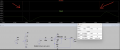
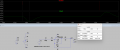
Hello, A circuit below presents bessel filter which is acting as differentiator .
few question:
1. How the denominator of a transfer function is defining the group delay?
2.given the configuration below how did they know to choose the following opamp configuration to implement the transfer function?
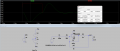
3.My pluses are smeered ,how do I make them sharper?
Ltspice file is attached.
Thanks.
1741429397083.png
1741429369494.png
 

Attachments

Thread Starter

yef smith

Joined Aug 2, 2020
1,447
I am trying to design a bessel filter . I need some example of how we calculate group delay it’s transfer function .
 

Papabravo

Joined Feb 24, 2006
22,058
A Bessel Filter is basically a lowpass filter, not a differentiator. You can formulate a condition on the transfer function which results in constant group delay in the passband. The condition is that the coefficients of the constant term and first order term in the denominator must be the same and be equal to a particular value depending on the order of the transfer function. The derivation is given by:

Van Valkenburg, M.E., Analog Filter Design , Oxford University Press, Oxford, pp. 279-285

It is approximately

\( \cfrac{1}{\omega_0} \text{ at }\omega \text{=0} \)

where

\( \omega_0 \text{ is the normalization (corner) frequency} \)
 
Last edited:

LvW

Joined Jun 13, 2013
1,998
I am trying to design a bessel filter . I need some example of how we calculate group delay it’s transfer function .
Definition of group delay is based on the filters phase response phi(jw) - it is defined as tau=-d(phi)/dw.
 

Thread Starter

yef smith

Joined Aug 2, 2020
1,447
Filters perform a filter function, typically of AC signals.
Why the comments about a differentiator and the pulse shape?
I am trying using the oroperty of filtering to get a good differentiator as shown in the simulation I posted.

regarding group delay :
I can build a filter with group delay of 0.5 sec and 120nano second .
I was told that to get a good differentiator I need a constant group delay so what are the advantages of having larger group delay In my “filter” (differtiator )
Thanks .
 

Papabravo

Joined Feb 24, 2006
22,058
Here is a simulation of a Bessel Filter. Normalized for unit group delay the transfer function has a very recognizable form. Normalized for unity corner frequency the form is less recognizable. I see no relationship to a differentiator in the magnitude respone of these transfer functions. The phase response of both the low pass Bessel Filter and a differentiator look similar (constant) in the passband.
1741458830050.png
If you want to see the characteristic of a differentiator, I can show that to you, but IMHO you need to lose the idea that there is ANY differentiation going on here.
 
Last edited:

Thread Starter

yef smith

Joined Aug 2, 2020
1,447
Hello,I have rising edge of 1n and falling edge of 1n second these edges are separates by 2usec at the input as shown below, the filter I built roughly does differntiation a little.
Turning a pulse into two spikes.

I want sharp peaks with the same amplitude.
What group delay should I use for this case?

1741458900701.png
 

LvW

Joined Jun 13, 2013
1,998
@ Yef Smith

I don`t know what your simulation really shows. Do you want to differentiate a pulse function?
However, I can tell you the following:
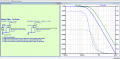
* The shown filter circuit is, of course, not a Bessel lowpass. It has a third-order function and looks similar to a bandpass (centered at app. 1 MHz).
* Starting at very low frequencies, the Bode diagram shows a constant positive gain slope up to app. 10 kHz with a (nearly) constant phase shift of 90 deg.
* That means: Indeed, you can use this part of the transfer function for differentiating an input signal.
* Question: Why are you interested in the group delay? In the frequency range of interest (for differentiating) the group delay (slope of the phase response) is zero.

EDIT/UPDATE: For R1, C1 and R2 as given (all other parts removed) the circuit equals a classical 1st-order highpass with a transfer function which is nealy identical to the response of your original circuit up to 10 kHz .
 
Last edited:

Thread Starter

yef smith

Joined Aug 2, 2020
1,447
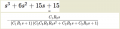
Is there some example on how this polynomial was made?
I am looking for learning the process of building these polynomial.
1741548261600.png
 

Papabravo

Joined Feb 24, 2006
22,058
Is there some example on how this polynomial was made?
I am looking for learning the process of building these polynomial.
View attachment 344155
Yes, I gave you the reference in post #4. If you lack access to that reference, I can maybe sketch out the development for you. You can also check the Wikipedia page for information on Bessel and reverse Bessel polynomials. It is the reverse Bessel polynomials that are used in filter design.

Some readily accessible resources
Bessel polynomials - Wikipedia
Bessel filter - Wikipedia
 
Last edited:

Papabravo

Joined Feb 24, 2006
22,058
"Our objective is to find a family of transfer functions Tj(s) that will give approximately constant time delay for as large a range of ω as possible. The strategy to be followed is to (1) assume a form for the transfer function, (2) compute the corresponding delay, (3) expand in the form of a Taylor series about ω = 0, and (4) find the conditions that will cause as many coefficients in the series expansion to vanish as possible. These conditions will then be used to determine the required form of the transfer function."

A general purpose all-pole 2nd order transfer function looks like:

\[ T_2(s)\;=\;\cfrac{a_0}{s^2+a_1s+a_0} \]

for this function the phase is:

\[ \theta\;=\;-tan^{-1}\left(\cfrac{a_1\omega}{a_0-\omega^2}\right) \]

Differentiating with respect to ω gives:

\[ D\;=\;-\cfrac{d\theta}{d\omega}\;=\;\cfrac{a_1}{a_0}\cfrac{1+\omega^2/a_0}{1+(a_1^2/a_0^2-2/a_0)\omega^2+\omega^4/a_0^2} \]

Dividing the numerator by the denominator gives a result in Taylor series form as

\[ D\;=\;\cfrac{a_1}{a_0}\left[1+\left(\cfrac{1}{a_0}-\cfrac{a_1^2}{a_0^2}+\cfrac{2}{a_0}\right)\omega^2+\cdot\cdot\cdot\right] \]

For the second term to vanish we require that:

\[ \cfrac{a_1^2}{a_0^2}\;=\;\cfrac{3}{a_0} \]

or

\[ a_1^2\;=\;3a_0 \]

In order to normalize D so that it has the value of D = 1 which we require, we set

\[ a_0\;=\;a_1 \]

which then requires that

\[ a_0\;=\;a_1\;=3 \]

So, we have determined the form of the transfer function as

\[ T_2(s)\;=\;\cfrac{3}{s^2+3s+3} \]

The corresponding delay is given by

\[ D_2(\omega)\;=\;\cfrac{3\omega^2+9}{\omega^4+3\omega^2+9} \]
 

LvW

Joined Jun 13, 2013
1,998
I am trying to design a bessel filter . I need some example of how we calculate group delay it’s transfer function .
Just for information: Your circuit does NOT realize a "Bessel filter".
The transfer function has one real pole and a pole pair with a quality factor of Qp=0.679 (Bessel: Qp=0.577)
When you try to design a Bessel lowpass you must - as a first step - specify the following data:
* Order of the filter
* Gain requirement (active/passiv ?)
* End of the passband - either in the freqency domain (3dB cut-off) or in the time domain (group delay requirements)
 

Thread Starter

yef smith

Joined Aug 2, 2020
1,447
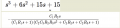
Hello LVW,The following guidance showing in the quotes I am trying to understand.
As I see It each 1 nano second rise and fall of the pulse has the same spectral data values.
each frequency tone needs to subjected to the same group delay to be preserved on the output of the pulse.
So we have rising edge (data 1) pause by 0.5usec falling edge (data 2) the filter gets "activated" twice at two time points.
We will have two pulses on the output .(simetrical because group delay is constant)

why pulse width is (ideally) twice the group delay?
my pulse is just a delay between two events(DC spectral data is the pulse width) why the delay which each spectral component feels has to do with distance between the rising and falling edge?
What will be the difference if the time distance between rising and falling edge will be much larger?
My intution tells me that we are going to get two spikes with the pulse width appart. Thats it.
Where am I going wrong?
Thanks.


"If the group delay is perfectly constant, the resulting pulse will be symmetrical. For a symmetrical pulse, the peak is in the middle, at a time delayed by the group delay. So, the pulse width is (ideally) twice the group delay. A finite-order filter isn't perfect, but Bessel is pretty good: even this third-order filter yields a reasonably symmetric pulse."

1741628155194.png
 
Last edited:

Thread Starter

yef smith

Joined Aug 2, 2020
1,447
update:
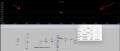
As you can see pulse width just separates theoutput spikes , I cant see how pulse width plays a role in the shape of each spike regarding how sharp each spike
1741637369705.png
 
Top