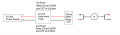
No that would be simple they are just switched on for x duration then off. Ideally I can find something that would be inline of the power susply and motor that every time the ac timer powered the dc power susply ot would automatically reverse polarity.
2 poles reverse the polarity.
1 each pole enables and disables the limit switches.
Each timer event changes the state of the relay...reverses the polarity and activates the proper limit switch.
The system does not rely on the timers to stop the activator.
The system is basically fail-safe as when the polarity tells the actuator "UP" the "UP" limit is active" when the polarity tells the actuator "DOWN" the "DOWN" limit is active.
The only issue is toggling the relay, this could be something off the shelf or perhaps a circuit could be built.
The limit switches are internal in the motor so only need a DPDT relay to reverse the polarity. The Timer is used to switch the relay but the power supply would need to be on 24/7 in this configuration unless a second timer is used to activate the power supply when required.
Certainly this exact design has been described in this forum more than once. The circuit has opened and closed chicken coops at least twice. and why would a DPDT real be used for reversing the motor when "stopped" is also a required condition??
Of course the fact that the thread poster has presented their solution to achieve the desired motion has confused several folks. And certainly LQC did point this out.
But please search "motor reversal" or "DC motor reversal" for those threads that already have the solution described in detail.
The limit switches are internal in the motor so only need a DPDT relay to reverse the polarity. The Timer is used to switch the relay but the power supply would need to be on 24/7 in this configuration unless a second timer is used to activate the power supply when required.
Likely there's a diode across the switch contacts that allows current flow in the opposite direction across the open contacts when the voltage is reversed.
The diode only has to conduct current until the motor moves, closing the switch contacts.
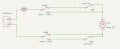
Here's the proposal suggested with the components from post #12.
It starts with the motor UP and OFF via the limit switches.
At 5:00AM the timer starts Event 1 which activates the relay reversing the motor connections and the motor runs DOWN.
After appx 10 minutes the motor stops via the limit switches but the relay stays energized until 6:30AM.
At 6:30AM Event 1 ends and the timer deactivates the relay reversing the motor connections allowing the motor to return UP
until it hits the limit switches.
Event 2 repeats the operation at 6:30PM til 8:30PM.
Likely there's a diode across the switch contacts that allows current flow in the opposite direction across the open contacts when the voltage is reversed.
The diode only has to conduct current until the motor moves, closing the switch contacts.
Yea, that came to me about 3 seconds after I hit the post button, then it actually occurred to me that I had used that exact method years ago when I built a small ram.
How does what allow the motor to switch off? The motor runs until it hits the limit switch, turning the motor off. The diode bypassing the limit switch doesn’t conduct until the polarity to the motor reverses. The same occurs for operation in the opposite direction.
You have a motor driving maybe a linear actuator or similar. The motor has limit switches. I don't get why or what you expect the timer to do? You travel to a limit and reverse. You can, as mentioned use a H Bridge or DPST relay.
You have a motor driving maybe a linear actuator or similar. The motor has limit switches. I don't get why or what you expect the timer to do? You travel to a limit and reverse. You can, as mentioned use a H Bridge or DPST relay.

 Facebook
 Google
 GitHub
 Linkedin
 76.2 KB Views: 16