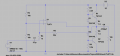
I implemented all that changes with parts that I have in hand and put in LTspice and that is what I got. Something is really bad, did I get it all wrong or what?
I put it right now. The circuit is fully functional giving me close to 1W pp power. I need to ask how do I put more power into this circuit? Any improvements in the circuit or something else?
Your amplifier uses the opamp to turn off the output transistors and r7 and R8 weakly turn them on. When they need the most base current then R7 and R8 give them no current.
PP power is fake power. Power from an amplifier is a sinewave RMS voltage squared then divided by the speaker impedance, at a level low enough to prevent the amplifier from clipping. PP fake power is 8 times the amount of real power.
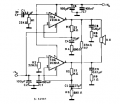
Your supply is 15V so a proper amplifier design will produce about 13V pp which is 4.6V RMS. Then its power into a 4 ohm speaker is (4.6V squared)/4 ohms= 5.3W. If you make proper amplifiers and make one produce an inverted signal and connect the speaker between their outputs then the voltage swing is almost doubled and the current is also almost doubled and the output power will be about 18.5 real watts into the 4 ohm speaker. Then the output capacitor is not needed. It is called a "bridged" amplifier or BTL (Bridge Tied Load). Most ordinary car radios use it.
The amplifier output power can also be increased if you use a 2 ohm speaker like used in some cars or if you use a higher supply voltage and beef up the transistor currents.
Sometimes a picture helps. Below is the method of which Audiioguru wrote. It gives you about twice the P-P voltage across the speaker. This configuration in which the load is connected between two outputs that go in the opposite direction is called a bridge, more specifically in this case a full bridge.
You could substitute your transistor amplifiers for the integrated amplifiers shown.

 Facebook
 Google
 GitHub
 Linkedin