Facebook
 Google
 GitHub
 Linkedin
We've got a circuit board which uses the CTS 742C083103JP resistor array as pull up resistors for 4 microcontroller inputs. There are pin headers on the board so that you can use a shunt/jumper to pull an input to ground, and this is used to select one of four IDs for the board (there are up to a maximum of four these boards per machine, so this system provides each board with a unique address.)
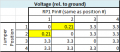
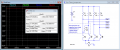
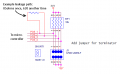
The problem is that a small, but significant number of these boards fail to properly recognize the shunt position and instead go into their default "no address selected" test mode. It's usually an intermittent fault - very few of them have consistently failed all of the time. It's happened for years now, but I always failed to identify the cause of the problem. Just recently I found that two of the inputs are, for lack of a better term, "partially shorted" together. What I mean by that is that there is a substantial leakage path as shown below:
So far, I've only been able to detect and measure this fault on two failed boards, and one of them stopped having a measurable fault within hours of when I first discovered it. We sent it back to our board assembly house and they did x-rays to look for loose solder balls, etc. but didn't find anything wrong. The second one has tested consistently bad for three days in a row now, but I haven't gotten it back to the assembly shop yet.
There are only a few ways I can see this failure happening:
I'm just having a hard time accepting this. It seems like a resistor pack would be an excruciatingly simple thing to build well. If microcontrollers can be made reliably for incredibly low prices with really low failure rates, why would resistor packs be hard to get right?!?!?
Any thoughts on this? Does the resistor pack failure seem like a reasonable explanation? Has anyone else had problems with resistor packs? Any opinions on brands? Are we just dealing with a crummy manufacturer here?
The problem is that a small, but significant number of these boards fail to properly recognize the shunt position and instead go into their default "no address selected" test mode. It's usually an intermittent fault - very few of them have consistently failed all of the time. It's happened for years now, but I always failed to identify the cause of the problem. Just recently I found that two of the inputs are, for lack of a better term, "partially shorted" together. What I mean by that is that there is a substantial leakage path as shown below:
So far, I've only been able to detect and measure this fault on two failed boards, and one of them stopped having a measurable fault within hours of when I first discovered it. We sent it back to our board assembly house and they did x-rays to look for loose solder balls, etc. but didn't find anything wrong. The second one has tested consistently bad for three days in a row now, but I haven't gotten it back to the assembly shop yet.
There are only a few ways I can see this failure happening:
- solder bridges
- failure in PCB traces
- failure at header pin block
- failure at resistor pack
- failure in microcontroller
I'm just having a hard time accepting this. It seems like a resistor pack would be an excruciatingly simple thing to build well. If microcontrollers can be made reliably for incredibly low prices with really low failure rates, why would resistor packs be hard to get right?!?!?
Any thoughts on this? Does the resistor pack failure seem like a reasonable explanation? Has anyone else had problems with resistor packs? Any opinions on brands? Are we just dealing with a crummy manufacturer here?