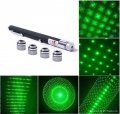
Anyone know anyhting about Optics?

Thread Starter

sirch2

Joined Jan 21, 2013
1,071
I know this is an electroncis forum so I hope you don't mind me asking an optics question but it turns out to be really difficult to google this question and there are lots of people on here with broad and deep knowledge of a range of subjects.

So the question is does anyone know of a way of generating and projecting grid of points or lines on to a surface. Ideally the grid would project in the range 600mm to 5m?

I could presumbably do it mechanically by scanning a laser diode across the surface but I was wondering if there was any optical method of doing it - i.e. something I can put in front of a laser or bright LED that would give me a grid of points or lines?

If you are wondering it's for a LIDAR type project.
 

Brownout

Joined Jan 10, 2012
2,390
So the question is does anyone know of a way of generating and projecting grid of points or lines on to a surface. Ideally the grid would project in the range 600mm to 5m?

I could presumbably do it mechanically by scanning a laser diode across the surface but I was wondering if there was any optical method of doing it - i.e. something I can put in front of a laser or bright LED that would give me a grid of points or lines?
Sure. Use a lense.
 

Thread Starter

sirch2

Joined Jan 21, 2013
1,071
Thanks, that is the kind of thing, not sure about the min order of 10 but at least I now know what to google for though
 

strantor

Joined Oct 3, 2010
6,875
My high school teachers used such a device. They called it a projector. They used it so that they could write in regular sized print and it would appear on the wall in very large print. They were also able to illagally print/copy onto transparent sheets to display copyrighted material on the wall. it looked like this:
 

Thread Starter

sirch2

Joined Jan 21, 2013
1,071
:) my teachers, or at least university lecturers, used those, however I was after something a bit more portable.

I remember at one time, probably in the late 90s, there was a laptop that allowed the back to be taken off the screen so that the screen became transparent and could be placed on the OHP
 

Thread Starter

sirch2

Joined Jan 21, 2013
1,071
Thanks for the suggestion but a laser with some kind of optics in front is a lot simpler and more rugged
 

John P

Joined Oct 14, 2008
2,060
In theory, there's no need to use a grid. You could use any pattern, provided that you know what it is, which you can do by "calibrating" your system by projecting onto a flat surface at a variety of distances, then recording what the pattern looks like. You might actually not want a grid at all, because one vertical line could be mistaken for another.
 

Thread Starter

sirch2

Joined Jan 21, 2013
1,071
Actually I would ideally use a pattern of dots and you are quite right that I don't care about regularity.

I have been doing some investigations into ways of mapping cave passages and one option I looked at a while ago was using optical flow. The problem I ran into was that optical flow doesn't work well with a moving light source - i.e. if you are moving along a cave passage and videoing as you go the lighting moves as well and this confuses the optical flow software.

It struck me the other day that if I projected a fixed set of dots on to the surface then the optical flow may work, especially if the optical flow is set up to only consider points of the colour of the dots
 

John P

Joined Oct 14, 2008
2,060
If you have a budget for the project, you could try a 2-camera stereo vision approach, like this:
http://www.youtube.com/watch?v=oGFhc9SnBFg

They say, "Typically around 200 stereo ranges are returned for each image pair...It's only sparse stereo, since the DSPs and the very limited bandwidth between them can't handle much more than that."

But that implies real-time processing. If you could make videos with 2 cameras with locked pixel clocks, with subsequent processing on a computer, it must be possible to do a lot more. Surely someone has done it!
 

wayneh

Joined Sep 9, 2010
18,104
Thanks for the suggestion but a laser with some kind of optics in front is a lot simpler and more rugged
And you know this how? You've put every available hand-sized projector into the field and assessed their ruggedness? Are you aware that some of these projectors ARE a laser with optics in front? :rolleyes:
 

Thread Starter

sirch2

Joined Jan 21, 2013
1,071
If you have a budget for the project, you could try a 2-camera stereo vision approach, like this:
http://www.youtube.com/watch?v=oGFhc9SnBFg

They say, "Typically around 200 stereo ranges are returned for each image pair...It's only sparse stereo, since the DSPs and the very limited bandwidth between them can't handle much more than that."

But that implies real-time processing. If you could make videos with 2 cameras with locked pixel clocks, with subsequent processing on a computer, it must be possible to do a lot more. Surely someone has done it!
I had looked into stereo vision but under the skin it still uses optical flow and as I noted previously optical flow fails with a moving light source. Add to that the fact that it is looking at grey, muddy surfaces which, whilst they are rough often have indistinct features and the software struggles. Also you are right about budget being an issue.
 
Top