Am I lucky or a hidden soul directs me ?

Status
Not open for further replies.

Thread Starter

ilker06

Joined Jun 26, 2018
34
Hi all,

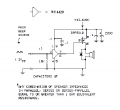
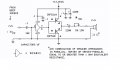
I made a siren amplifier as seen below. I used TC4429 instead of TC1411 since 1411 can not be found in my country. I removed the R Vol and connected the Horn Speaker directly to 2200 uF.
When I powered it on and pushed the siren button it just sound a very short " wrop " for a second then stoped.

I don' t know how but an inner voice said to me that I should remove the 100 nF placed to the input. I removed it and connected the siren output directly to the pin 2 of TC4429. It worked immediately and perfect. No heat on the MOSFETS, no feedback, no buzz when it empty.

It works OK but I want to know the reason. Original drawing has this condenser but does not work with it.

The siren output has one MJE 2955 shows approximately 12 v on the multimeter when push the button.

The horn speaker is 16 ohm type so the sound is lower than I expected. The author says below circuit gives about 115 dB. I thought that it has more powerful than the bridged TDA 2005 but it is almost the same.

If you have any suggestion for higher dB for 13.6 v and 16 ohm HS It will welcome also.
Siren Amplifier.jpg
  • This circuit accommodates the most common situation where a logic-level (TTL, microcontroller, etc) squarewave beep/siren signal is available from the alarm equipment. The circuit requires a minimum 3 volt peak-to-peak amplitude input signal. Five watts of squarewave 'beep power' from a horn loudspeaker is VERY loud - something like 110-115 dB, loud enough to be easily heard a quarter mile (400m) away or more.

Thank you for your comments in advance.
 

mvas

Joined Jun 19, 2017
539
You said, "... when I pushed the Siren Button ..."
Unfortunately, you provided no information about the Siren Signal.

The input capacitor is present for "AC Coupling" of the input signal
 

wayneh

Joined Sep 9, 2010
18,096
Does the beep source share ground with your circuit and is it as large as shown? If the input signal stays within the safe range for the driver, you don't really need to protect the driver with the capacitive coupling. The driver requires a minimum input voltage of ~2V to ensure a logic high. A 3V p-p may not do it if not referenced properly.
 

AnalogKid

Joined Aug 1, 2013
12,085
With an AC coupled signal, the chip input sees a positive peak signal of 1.5 V. The datasheet says the chip requires a minimum of 2.0 V. That is why it does not work when AC coupled.

When first turned on the DC voltage across the input cap is 0 V, so the first cycle appears at pin 2 as 0 V to 3 V. As the cap charges up to the average DC equivalent of the square wave, the signal at pin 2 gradually shifts downward until it is swinging from +1.5 V to -1.5 V. This is why the first few cycles produce an output, decreasing to no output. With the cap removed, the input is always 0 V to 3 V, exactly what the chip requires.

0.1 uF and 10K is a time constant of 1 ms. It takes several time constants for the signal to shift far enough to be outside the range of the particular chip you have, long enough for a few cycles of input to make it through to the output.

ak
 

Thread Starter

ilker06

Joined Jun 26, 2018
34
Does the beep source share ground with your circuit and is it as large as shown? If the input signal stays within the safe range for the driver, you don't really need to protect the driver with the capacitive coupling. The driver requires a minimum input voltage of ~2V to ensure a logic high. A 3V p-p may not do it if not referenced properly.
Thank you for your reply.

Yes the siren circuit and MOSFET amplifier share the ground. From the unique 13.6 v DC battery.
Siren circuit has an embedded amplifier contains 1 MJE 2955 and without MOSFET amplifier, it sounds half of the total dB which MOSFETS have if I directly connect a horn speaker.

I made the MOSFET amplifier in order to have much more dB but I am dissapointed. A little bit more compared to a single MJE 2955 :(

Will it be a problem for MOSFET driver when I use without input condenser ( I guess about 13 v comes to driver' s input directly ) But this is the only way to get it worked.
 

Thread Starter

ilker06

Joined Jun 26, 2018
34
With an AC coupled signal, the chip input sees a positive peak signal of 1.5 V. The datasheet says the chip requires a minimum of 2.0 V. That is why it does not work when AC coupled.

When first turned on the DC voltage across the input cap is 0 V, so the first cycle appears at pin 2 as 0 V to 3 V. As the cap charges up to the average DC equivalent of the square wave, the signal at pin 2 gradually shifts downward until it is swinging from +1.5 V to -1.5 V. This is why the first few cycles produce an output, decreasing to no output. With the cap removed, the input is always 0 V to 3 V, exactly what the chip requires.

0.1 uF and 10K is a time constant of 1 ms. It takes several time constants for the signal to shift far enough to be outside the range of the particular chip you have, long enough for a few cycles of input to make it through to the output.

ak
Thank you for your reply.

As much as I understand I can safely use it without input cap. Right ? ( I measured 13 v on the output of the siren. Is this voltage safety for the driver' s input pin 2 ? )
 

wayneh

Joined Sep 9, 2010
18,096
Thank you for your reply.

As much as I understand I can safely use it without input cap. Right ? ( I measured 13 v on the output of the siren. Is this voltage safety for the driver' s input pin 2 ? )
According to the data sheet, yes. You could put a 10K in series with the input signal to cut its voltage in half. As I understand the driver, that change shouldn't affect your output volume. You get some extra protection of your driver for the price of a resistor.
 

Thread Starter

ilker06

Joined Jun 26, 2018
34
According to the data sheet, yes. You could put a 10K in series with the input signal to cut its voltage in half. As I understand the driver, that change shouldn't affect your output volume. You get some extra protection of your driver for the price of a resistor.
Yes, the serial resistors does not affect the output volume even if I put a 33K. Actually I think I should buy a 8 ohm horn driver to get it louder.
I could not found a powerful amplifier circuit which will be able to work with 13.6 v and without output transformer. I have tried many TDA series integrated circuits as bridged, power transistor amplifiers like 2N3055, mosfet amplifiers but the output levels are almost same. There is no such technology for the time being to get police car siren loudness without output transformer I guess.
 

sghioto

Joined Dec 31, 2017
8,634
Actually I think I should buy a 8 ohm horn driver to get it louder.
That would double the power but increase the db level by only 3 which is only a 23% increase in perceived volume. Might as well stay with the 16 ohm speaker.
SG
 
Last edited:

ian field

Joined Oct 27, 2012
6,536
Hi all,

I made a siren amplifier as seen below. I used TC4429 instead of TC1411 since 1411 can not be found in my country. I removed the R Vol and connected the Horn Speaker directly to 2200 uF.
When I powered it on and pushed the siren button it just sound a very short " wrop " for a second then stoped.

I don' t know how but an inner voice said to me that I should remove the 100 nF placed to the input. I removed it and connected the siren output directly to the pin 2 of TC4429. It worked immediately and perfect. No heat on the MOSFETS, no feedback, no buzz when it empty.

It works OK but I want to know the reason. Original drawing has this condenser but does not work with it.

The siren output has one MJE 2955 shows approximately 12 v on the multimeter when push the button.

The horn speaker is 16 ohm type so the sound is lower than I expected. The author says below circuit gives about 115 dB. I thought that it has more powerful than the bridged TDA 2005 but it is almost the same.

If you have any suggestion for higher dB for 13.6 v and 16 ohm HS It will welcome also.

View attachment 170731
  • This circuit accommodates the most common situation where a logic-level (TTL, microcontroller, etc) squarewave beep/siren signal is available from the alarm equipment. The circuit requires a minimum 3 volt peak-to-peak amplitude input signal. Five watts of squarewave 'beep power' from a horn loudspeaker is VERY loud - something like 110-115 dB, loud enough to be easily heard a quarter mile (400m) away or more.

Thank you for your comments in advance.
If you want seriously loud - do full bridge PWM. Its more or less class D, but not Hi Fi.

I loosely copied the dead time interleave circuitry from an off the shelf push pull SMPSU control chip.
 

Tonyr1084

Joined Sep 24, 2015
9,744
but the output levels are almost same
Do you realize it takes four times the power to get twice the volume? Inverse square law dictates this to be true. A favorite example I like to use is that of a one inch square versus a two inch square. The one inch square has 1 square inch, whereas a two inch square has 4 square inches.

Going with a lower impedance speaker (or horn) means it's going to draw more power, and thus, more heat. If you were to go with a 4 ohm speaker you might notice a significant increase in volume, but keep in mind inverse square law. Your FET's will possibly be getting four times hotter than now. That's not to say they will heat up significantly; since you detect no additional heat four times zero is still zero. However, to be frankly honest, you're not seeing "Zero" heat increase. You're just not able to detect the amount of heating going on.
 

sghioto

Joined Dec 31, 2017
8,634
Do you realize it takes four times the power to get twice the volume
Actually it takes 10X the power. A 10db increase in sound pressure is considered twice the volume.
Four times the power is a 6db increase and 50% louder.

EDIT: My point is (and before we get into discussing sound pressure levels) if the TS is getting a 110-115 db sound level that is easily heard at a 1/4 mile then do you really need any more volume?
SG
 
Last edited:

Tonyr1084

Joined Sep 24, 2015
9,744
Actually it takes 10X the power. A 10db increase in sound pressure is considered twice the volume.
Four times the power is a 6db increase and 50% louder.
SG
Could have sworn years ago I heard four times the power for twice the volume. May be wrong. If so, what you say shows the situation to be even worse. 10 times the power for twice the volume? If anything I would have guessed cubed power; that is to say a one inch cube has 1 cubic inch. A two inch cube has 8 cubic inches. In that case we're not talking about the surface area of a square but we're talking the volume of a cube. But all I'm doing is repeating something I heard a long time ago. Either way - four times or eight times the power for twice the volume - the point is that changing speakers may make hardly a noticeable difference. IF noticeable at all.

Anyone else wanna weigh in on this subject?
 

AnalogKid

Joined Aug 1, 2013
12,085
Do you realize it takes four times the power to get twice the volume? Inverse square law dictates this to be true.
No, it doesn't.

Inverse-square is a way to predict changes in energy density as a function of distance from the source. It has nothing to do with the efficiency *or the linearity* of whatever is sensing the energy.

Do not confuse energy density with the perception of loudness; they are two very different things. Human hearing is WAY non-linear, so the correlation between energy and volume is anything but simple.

For example:

https://en.wikipedia.org/wiki/Equal-loudness_contour

ak
 
Last edited:

Audioguru

Joined Dec 20, 2007
11,248
The 13.6V battery allows the output Mosfets to produce a squarewave that is about 13.2V p-p. The RMS voltage is 13.2V/2 x root of 2= 4.7V RMS
The output power is 4.7V squared/16 ohms= 1.38W which is not much. Bridged into 4 ohms= 20W.

I agree that 10 times the power sounds twice as loud. 2 times the power is barely noticeable.
 

sghioto

Joined Dec 31, 2017
8,634
Why can't you drive the speaker directly using one FET?
50% duty cycle....13.6/2 = 6.8 volts / 16 = .425 amp X 6.8 volts = 2.89 watts
SG
EEE TC4429 speaker driver.PNG
 
Last edited:

AnalogKid

Joined Aug 1, 2013
12,085
You can, but the speaker will be a bit louder if you have a second FET to suck the current out of it rather than let it float for 1/2 cycle.

Staying with one FET, it will be a bit louder if you replace the diode with a 15 V zener.

ak
 
Status
Not open for further replies.
Top