Facebook
 Google
 GitHub
 Linkedin
Hi all,
I have been trying a few different approaches over the last week in an attempt to create a circuit to "safely" supply power to my NVIDIA Jetson Nano.
The issue arose when I realized that a voltage regulator I was switching with an n-channel mosfet, is actually switching through the VIN t VOUT, when
the ground is floating. Since then I have been using an n-channel to switch a p-channel mosfet that then switches the positive voltage.
Having nt yet felt comfortable enough to supply voltage this way to my (precious) Jetson Nano, I'm looking for an alternative, secondary circuit to ensure the voltage getting through never
exceeds the safe voltage range of 5.2V max.
The approaches I have taken are:
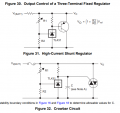
1. Built a circuit similar to the one in this image:
https://www.maximintegrated.com/content/dam/images/design/tech-docs/760/di66fig01.gif
However this does have a limitation on the power that can be switched. My Jetson Nano requires about 2.5A during normal operation.
So a circuit being capable of switching currents of up to 3.5A is needed.
For a while I have been testing a similar circuit with some of the BJTs I have available. I have tried multiple variations of the circuit using both NPN and PNP transistors and a mix thereof in conjunction with a zener diode 5.1V to realize this circuit.
(BC557, BC558, 2N2222, 2N3904, BC547, BC549)
What I have noticed is that I needed about 8V before I was able to get the diode to get conductive in the opposite direction and switch the transistor stage.
2. I have also come across the circuit below, using a triac. I have not been able to give this a try yet, as I'm waiting for parts (4 weeks and counting).
https://www.instructables.com/Over-Voltage-Protection-for-5V-Circuits/
My question to experts in this forum is, do you have knowledge or insight into a circuit, that can achieve over-voltage protection, switching off at voltages > 5.1V, while still being able to switch a load (ideally positive switching) of about 3A?
The following components are available, I just have no clue how to make a viable circuit and after spending more than a week trying on a breadboard, I finally have come to my senses.
BJT's:
24 value standard NPN/PNP transistor assortment with most common BJTs (such as BC517, 547, BC549, BC556, BC557, BC558, S-series, 2N-series, A nd C-Series)
MOSFETs:
IRF1405 n-channel
ZT2467 p-channel
Zener Diodes: 5.1V
Resistors (all sorts)
Please let me know what information is needed, or maybe you even have a schematic from a past similar circuit!?
Thank you!
I have been trying a few different approaches over the last week in an attempt to create a circuit to "safely" supply power to my NVIDIA Jetson Nano.
The issue arose when I realized that a voltage regulator I was switching with an n-channel mosfet, is actually switching through the VIN t VOUT, when
the ground is floating. Since then I have been using an n-channel to switch a p-channel mosfet that then switches the positive voltage.
Having nt yet felt comfortable enough to supply voltage this way to my (precious) Jetson Nano, I'm looking for an alternative, secondary circuit to ensure the voltage getting through never
exceeds the safe voltage range of 5.2V max.
The approaches I have taken are:
1. Built a circuit similar to the one in this image:
https://www.maximintegrated.com/content/dam/images/design/tech-docs/760/di66fig01.gif
However this does have a limitation on the power that can be switched. My Jetson Nano requires about 2.5A during normal operation.
So a circuit being capable of switching currents of up to 3.5A is needed.
For a while I have been testing a similar circuit with some of the BJTs I have available. I have tried multiple variations of the circuit using both NPN and PNP transistors and a mix thereof in conjunction with a zener diode 5.1V to realize this circuit.
(BC557, BC558, 2N2222, 2N3904, BC547, BC549)
What I have noticed is that I needed about 8V before I was able to get the diode to get conductive in the opposite direction and switch the transistor stage.
2. I have also come across the circuit below, using a triac. I have not been able to give this a try yet, as I'm waiting for parts (4 weeks and counting).
https://www.instructables.com/Over-Voltage-Protection-for-5V-Circuits/
My question to experts in this forum is, do you have knowledge or insight into a circuit, that can achieve over-voltage protection, switching off at voltages > 5.1V, while still being able to switch a load (ideally positive switching) of about 3A?
The following components are available, I just have no clue how to make a viable circuit and after spending more than a week trying on a breadboard, I finally have come to my senses.
BJT's:
24 value standard NPN/PNP transistor assortment with most common BJTs (such as BC517, 547, BC549, BC556, BC557, BC558, S-series, 2N-series, A nd C-Series)
MOSFETs:
IRF1405 n-channel
ZT2467 p-channel
Zener Diodes: 5.1V
Resistors (all sorts)
Please let me know what information is needed, or maybe you even have a schematic from a past similar circuit!?
Thank you!