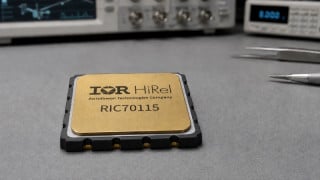
48VDC to 12V~15V DC, 100A~150A

panic mode

Joined Oct 10, 2011
5,114
I didn’t ask anyone to do it for me, I asked how I should do it.
i would say start by providing some details. all we see is voltage and current. if you did shared more, i did not see it (i only check from time to time and easily lose track). i am under impression that battery chemistry question is not yet answered. then tell us how you would try making it work... topology... switching... circuit ideas... you will get plenty of feedback.
 

Thread Starter

Deepfried

Joined Nov 24, 2024
20
i would say start by providing some details. all we see is voltage and current. if you did shared more, i did not see it (i only check from time to time and easily lose track). i am under impression that battery chemistry question is not yet answered. then tell us how you would try making it work... topology... switching... circuit ideas... you will get plenty of feedback.
The batteries are EG4 48v 100AH (https://eg4electronics.com/categori...er4-48v-100ah-lithium-iron-phosphate-battery/)

Here is a converter I’ve used before but it only does 9A output.

Amazon Link

There is a higher output version (30A) but it is really over priced.. and above all like I’ve said, I’ve been working with all this stuff installing it I want to learn how they work… I want to understand all of it.
 

boostbuck

Joined Oct 5, 2017
1,057
Well, it IS fun to understand it. I really enjoyed taking a journey into switch-mode converter theory and design, and it's certainly very rewarding to get something working with acceptable efficiency. Even so, I would not attempt to design high-power, high-efficiency converters such as you propose, for reasons already stated.

My question regarding battery chemistry was in regard to the 12V batteries on the output of the conversion, not the 48V on the solar side.
 

Thread Starter

Deepfried

Joined Nov 24, 2024
20
Well, it IS fun to understand it. I really enjoyed taking a journey into switch-mode converter theory and design, and it's certainly very rewarding to get something working with acceptable efficiency. Even so, I would not attempt to design high-power, high-efficiency converters such as you propose, for reasons already stated.

My question regarding battery chemistry was in regard to the 12V batteries on the output of the conversion, not the 48V on the solar side.
These are the 12V batteries.

https://www.litime.com/products/litime-12v-100ah-tm-deep-cycle-lifepo4-battery-for-trolling-motors
 

MisterBill2

Joined Jan 23, 2018
27,809
As an engineer I was certainly interested in the operation of switcher power supplies when they became more available. And also, then,it became clear to me that the creation of an efficient and reliable switcher would require a lot more effort that would be much better solving the unique problems for my clients. I can use a ready made module as a part of a special machine to meet an unusual requirement, OR I could spend more time and effort creating the power supply that was a commodity item element in a system built of many elements, filling a specific requirement set. All for a much lower cost to my client, and our company.
 

Thread Starter

Deepfried

Joined Nov 24, 2024
20
As an engineer I was certainly interested in the operation of switcher power supplies when they became more available. And also, then,it became clear to me that the creation of an efficient and reliable switcher would require a lot more effort that would be much better solving the unique problems for my clients. I can use a ready made module as a part of a special machine to meet an unusual requirement, OR I could spend more time and effort creating the power supply that was a commodity item element in a system built of many elements, filling a specific requirement set. All for a much lower cost to my client, and our company.
Having a live problem that you want to solve equals unlimited motivation to learn, at least for me. That’s how I began programming to begin with.
 

MisterBill2

Joined Jan 23, 2018
27,809
Having a live problem that you want to solve equals unlimited motivation to learn, at least for me. That’s how I began programming to begin with.
I wish you success, and I hope that you do not run out of resources before then.
Possibly someone who has become an expert at switcher supply design can provide the TS with more help.
 

MisterBill2

Joined Jan 23, 2018
27,809
Some sellers have a much greater markup than other sellers of the identical product. Ebay is notorious for high prices, among others. and a few manufacturers will sell direct, which might even get a discount if you bought 4 of the 25 amp supplies.
 

drjohsmith

Joined Dec 13, 2021
1,623
The batteries are protected by BMS.
This is an interesting thread
Your commitment is amazing.
You implied you learnt to program in a similar way.
Not enough people learn now days, just wanting to get the code on line.
One big thing though @Deepfried , is the difference in risk,
You get a bit of code wrong, the first that can happen is you crash the PC.
These sort of currents and batteries are just dammed dangerous.
Short the wrong bit out , and the spark can blind you,
The heat can cause pcbs to catch fire ,
The batteries can explode , yes even those with "protection" ,
I think I can say that we are all worried for your and others safety,
Switch mode supplies are basically big radio transmitters. That sort of amps, could well block most all radio and phones in a large area,
That's why we keep pointing at off the shelf ideas, and ideas to let you build up to what you want.
For instance , you mentioned about parallel power supplies , you can't just join the outputs of small switchers to make a big one .
You also talked about pcb for the 150A , have you looked at what size pcb trace you would need for that ?
There are many things in this that can injure you or others, and it worries us.
 

MisterBill2

Joined Jan 23, 2018
27,809
This is an interesting thread
Your commitment is amazing.
You implied you learnt to program in a similar way.
Not enough people learn now days, just wanting to get the code on line.
One big thing though @Deepfried , is the difference in risk,
You get a bit of code wrong, the first that can happen is you crash the PC.
These sort of currents and batteries are just dammed dangerous.
Short the wrong bit out , and the spark can blind you,
The heat can cause pcbs to catch fire ,
The batteries can explode , yes even those with "protection" ,
I think I can say that we are all worried for your and others safety,
Switch mode supplies are basically big radio transmitters. That sort of amps, could well block most all radio and phones in a large area,
That's why we keep pointing at off the shelf ideas, and ideas to let you build up to what you want.
For instance , you mentioned about parallel power supplies , you can't just join the outputs of small switchers to make a big one .
You also talked about pcb for the 150A , have you looked at what size pcb trace you would need for that ?
There are many things in this that can injure you or others, and it worries us.
I suggested separate switchers, NOT PARALLELED, but one for each battery group. That eliminates a few pesky issues, like load sharing and voltage drops in the interconnect wiring. In addition, it is possible that the four battery groups are not perfectly identical. So four separate converters make sense.

I anticipate that the TS is skilled enough to avoid injury, although I understand that we are obligated to deliver the warnings. I often start my warnings with the statement: You already know this, but I am obligated to remind you that........ And often the response is: YES. You are obligated.
Thanks.
 

drjohsmith

Joined Dec 13, 2021
1,623
I suggested separate switchers, NOT PARALLELED, but one for each battery group. That eliminates a few pesky issues, like load sharing and voltage drops in the interconnect wiring. In addition, it is possible that the four battery groups are not perfectly identical. So four separate converters make sense.

I anticipate that the TS is skilled enough to avoid injury, although I understand that we are obligated to deliver the warnings. I often start my warnings with the statement: You already know this, but I am obligated to remind you that........ And often the response is: YES. You are obligated.
Thanks.
Hay , deep breaths please , no need for the capitals.
Was I getting at you ? I can't see how, read the sentence again, it was "from memory " a summary if you like , more than anything , I read that we all on this thread seem to be saying it's dangerous , worrying , going to take a lot of skill and here are other ideas.
It's an appeal to the OP to be careful and take step back .. that's all .
 

MisterBill2

Joined Jan 23, 2018
27,809
The danger would be from working with live wires connected to high current sources, such as batteries, which do not switch off. ( I have a recurring purchase order for replacing batteries in some 134 volt 800 amp battery packs that a now-out-of-business employer sold a few years ago.) It is always a slightly tense task because there is only one fuse, 800 amps, on the positive lead into the control box. The batteries are the LARGE size 150 amp hour yellow ones, mostly used for backup battery installations. So each job involves removing 24 charged batteries and installing and connecting 24 new ones. The assembly is two strings of twelve, paralleled between each pair of batteries. So it is vital to stay fully focused on the task. None of their service people are willing to do the job.
The batteries can deliver well over 1000 amps for several minutes if there is ever a short circuit. The loads are banks of 1000 watt flood lights used to illuminate automotive crash test impacts. High speed cameras need a lot of light.
 
Or parallel those circuits to a single output, right?

I have multiple of these 12v loads should I run 4 of them in series? Is there something I’m not thinking about using that configuration?

So 48v battery wired to 4x 12v loads in series?
If the loads are all the same and resistive loads otherwise the voltage sharing will not be ideal or worse.
In all honesty, the advice you are getting on here already is pretty good and accurate. I have been designing things like this for many years and it really really is not a newbie project. The voltages are relatively small and the currents are substantial and both things will conspire to make the small parasitic capacitance and inductance a nightmare until you eventually work out where they come from, how to minimize them and effectively deal with what is left of them (they are always there, lurking to rain on your parade). You will need to deal with the dynamics of the switches, the dynamics of the rectification, the magnetic components will be challenging, the control and stability if it is closed loop or the protection if it is not.
Having said all that, be careful but if you are set on doing it, then go for it! You may or may not get it to work but you will learn from it. A project does not necessarily have to work to be worthwhile. Just be careful, at those power levels lots of things that are usually no problem can be dangerous. Excessive ripple current in capacitors for example. Smaller caps can pop in spectacular fashion while bigger ones should vent. Neither thing is good to be near.
Either way you decide to go, I wish you luck!
 
I wish you success, and I hope that you do not run out of resources before then.
Possibly someone who has become an expert at switcher supply design can provide the TS with more help.
I have that experience and all I can say is that I hardly know where to start with the advising. Now I gave read more of the thread and know better what the OP is seeking to do I would point out that as an engineer with a project like this I would expect, working full time, to have a prototype of just the guts of the converter in 4 to 6 months but it would be over 12 months before it was finished to a commercial standard. And I have a lot of power electronics experience.
I don't want to rain on the parade though. If the OP wants to have a go, then have a go! Just be careful and be prepared to discover that it may be a touch on the wild side at this stage of your experience.
 

Ya’akov

Joined Jan 27, 2019
10,263
Welcome to AAC.

There is absolutely nothing wrong with being an autodidact. You can be very successful at a lot of things by self-teaching, but, there is a reason people attend universities and seek other formal learning—and its not because they are suckers, or "can't do things on their own".

Technology is a social construct. The many layers of human effort, as a group, that gets us to this point came from the cooperative work of many, many people. Universities are places where people can steep themselves in these traditions (and even though it all comes down to physics, the complexity means tradition is critical to progress of technology).

Mentors are an alternative to formal education in some cases, but one thing many, if not most, autodidacts miss is a grounding in fundamentals. In particular, things that don't seem to have immediate practical application (e.g.: math, circuits, theory in general) are bypassed to "get things done").

This can work quite well—if not at the level of a trained person doing the same thing—but as the complexity of the project increases, the failures and brittleness of this approach becomes more and more evident.

Integrated Circuits are a great physical example of how one can take advantage of, and stand on the shoulders of, the people that came before. They are like tradition come to life, the distilled result of the spectrum of human interaction in pursuit of technological advance in the form of little nodes in the interaction of the various people and previous work.

Surely, if you needed what an IC does, you wouldn't insist on creating one, or its equivalent circuit on your own. What criteria do you have to decide the level of these prefab pieces of coalescent human effort is the limit?

You are looking to dabble in a field that even serious, sustained specialization has trouble with. The engineering of the circuits you will need to succeed includes complexity that, in practical application, requires knowing traditions that come from the long line of people and organizations that got us to here. Many things can be calculated but some things, critical things, need an intuition based on experience and the lore of mentors.

Buying the critical core of your device as a finished, working module is really no different than using an IC in the design. And, it avoids the inevitable quagmire of the circuits you will have to wrestle with, without the benefit of the education which, in many cases is not needed for success, but in this case is—whether formally or by beating your head against the wall of failures until you have broken through.

Consider: if experienced specialists are telling you they would need months to finish this project, even with the mental tools you lack, what can you expect for yourself?

Good luck with whatever you choose. Remember the goal of the project that got you to this point as you decide on the path to take—I am certain it was not to build a second or third rate buck converter.
 
The loads are 12v charge controllers. All 4 will have identical constant power draw while switched on.
No two charge controllers will ever be "identical" loads in this sense.
For voltage sharing to work as required, the 'loads' need to be resistive and of the same value. If the loads are current sinks then they are very likely to be unstable as series loads (as a system they will represent a high gain in terms of input terminal voltage variation with respect to input current of other loads in the string) and if they are an smps based controller then they will appear at their inputs to be a negative resistance load or constant power load (where current goes down as voltage goes up) and that will definitely not work the way you want it to.
I think you need to put the idea of series connected chargers in the bad idea basket.
 

MisterBill2

Joined Jan 23, 2018
27,809
Running all four controllers in series would be the most efficient IF YOU CAN MAKE IT WORK!! Getting active loads like power converters to operate in unison would be a serious challenge indeed. BUT it would be worth a few hours of analysis to investigate.
And I am relieved that "Pedant" who evidently does design switchers, has verified that it is not simple.
 
Top