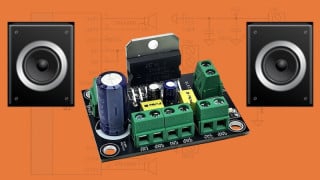
I have 14v 2amp DC input, I need two outputs 12v and 5v DC, what is the efficient way?
I am planning to use two dc-dc buck converters
24v-12v
24v-5v
Or
24v-12v
12v-5v
Or is there a dual output converter?
You mention 24V in the title but only 14V in the text? Either way, you might want to consider using linear regulators for each of the required voltages. It depends on the currents you expect to draw, if it isn’t much then the power loss across the regulators should be acceptable and you get nice clean voltages
You mention 24V in the title but only 14V in the text? Either way, you might want to consider using linear regulators for each of the required voltages. It depends on the currents you expect to draw, if it isn’t much then the power loss across the regulators should be acceptable and you get nice clean voltages
It depends on how much current you need.
Try a LMR38010 For each.
If you do 24V to5V then you put less stress on the 24V to 12V converter, and you have two devices in the chain, so twice the possibility of failure.
Sorry it's type.
I am working on smart irrigation project.
So I have 24v( 1amp or 2amp) motorised ball valve,so to operate it I used wire from home to ball valve location.
Now I want connect 12 CCTV camera to same power source i.e. 24v, here I need 24v-12v buck converter.
At ball valve location, I am connecting ESP32 to same 24v power ,so here i need 24v-5v converter.
I am new to these conversations.
Bottom-line is I have input 24v, and need two outputs one is 12v and other is 5v.
So what's most efficient way?
The ESP32 modules have an onboard buck converter and can typically cope with up to a 12V power supply so if you buck for your 12V and the ESP32 is not taking much current (so it’s buck converter doesn’t overheat) I’m pretty sure you’ll be okay. For one 12V CCTV camera I’d still say a linear regulator would be fine unless your 24V supply can’t deliver enough current overall. I’m guessing you mean a 12V camera, not 12 cameras?
Or, the TI LM2717 IC is a dual buck converter with one 3.3V output and the other output variable. The ESP32 can be powered directly with 3.3V. Problem is that it's a maximum 20V input (although the detailed specification suggests 22V) but there may be similar ICs out there which cope with a higher input voltage
Sorry it's type.
I am working on smart irrigation project.
So I have 24v( 1amp or 2amp) motorised ball valve,so to operate it I used wire from home to ball valve location.
Now I want connect "Single12V" CCTV camera to same power source i.e. 24v, here I need 24v-12v buck converter.
At ball valve location, I am connecting ESP32 to same 24v power ,so here i need 24v-5v converter.
I am new to these conversations.
Bottom-line is I have input 24v, and need two outputs one is 12v and other is 5v.
So what's most efficient way?
The camera specification says it uses a maximum of 3.3 watts at 12V DC so it’ll draw up to 275mA. But it’s also tolerant to 12V +/- 30% so I’d suggest powering it with around 10V and using that same 10V for the ESP32 putting less strain on the ESP32 buck converter. From the 24V you could use an LM317 linear regulator which can handle 1.5A but you’ll need a heat sink which could be rudimentary, a piece of flattened copper pipe works well. The wide voltage tolerance of the camera makes it easy to drop 24V to something near 10V with two resistors

 Facebook
 Google
 GitHub
 Linkedin