Have a AC to DC power supply max system is 3 amps max with about a foot needed to reach pcba from the switch of the supply. Is 24 awg sufficient enough, since I have some laying around?
Have a AC to DC power supply max system is 3 amps max with about a foot needed to reach pcba from the switch of the supply. Is 24 awg sufficient enough, since I have some laying around?
A foot of #24 would drop about a tenth of a volt at 3A. If that's okay, go for it since that's what you have on hand. If you want to reduce, you can use 2 or 3 pieces of #24.
Do you have any zip style lamp cord? I bought 250 feet of #16 on clearance at Lowes for 7 cents a foot. I used some to make some test leads for high current (good for 13A).
The power supply is from AC to 24vdc, max supply is 3 amps but the pcba is only 1.5 amp max.This wire will only go to the power supply toggle switch to the pcba.Pcba is just led lighting with a driver and passives
The power supply is from AC to 24vdc, max supply is 3 amps but the pcba is only 1.5 amp max.This wire will only go to the power supply toggle switch to the pcba.Pcba is just led lighting with a driver and passives
What voltage is being sent to the board? The AC or the DC? I assume the 1.5 A is the max draw of the PCB? If the AC is going to the board, then the current over your connecting wire will be considerably less. You can always double up your leads, too.
The power supply is from AC to 24vdc, max supply is 3 amps but the pcba is only 1.5 amp max.This wire will only go to the power supply toggle switch to the pcba.Pcba is just led lighting with a driver and passives
What voltage is being sent to the board? The AC or the DC? I assume the 1.5 A is the max draw of the PCB? If the AC is going to the board, then the current over your connecting wire will be considerably less. You can always double up your leads, too.
DC to the board, the power supply is just from the wall to lamp switch. As far as doubling the leads just use 2 pairs of 24 awg with 2 power and 2 ground to the switch and shrink wrap them together? I guess the issue would be once I get to pcba terminals of the connector. 24vdc to the board
What voltage is being sent to the board? The AC or the DC? I assume the 1.5 A is the max draw of the PCB? If the AC is going to the board, then the current over your connecting wire will be considerably less. You can always double up your leads, too.
DC to the board, the power supply is just from the wall to lamp switch. As far as doubling the leads just use 2 pairs of 24 awg with 2 power and 2 ground to the switch and shrink wrap them together?
[/QUOTE]
I wouldn’t bother. Use a single strand of 24 and sleep well. You are nowhere near the danger zone at 1.5A.
The cheap trick will be to use TWO of the #24 wires for all of the portions of the circuit carrying the load current. The two #24 wires should equal a #20, adequate for the load.
If this is CAT5 type of wire, just use one of the twisted pairs for power and another for ground. If the wires are single, use a drill to twist them together and solder the ends together. You haven't mentioned the connectors to be used. That might be an issue.
Have a AC to DC power supply max system is 3 amps max with about a foot needed to reach pcba from the switch of the supply. Is 24 awg sufficient enough, since I have some laying around?
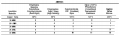
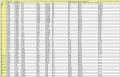
24AWG is rated at 0.578A per NEC at 30C with Ambient at 25C. NEC guidelines are about the things around the wire that will catch fire if the wire is too hot. 24AWG is too small for that current load.
16-18AWG is more likely suitable for 3A at whatever reasonable voltage with little to no fire-risk.
The NEC ratings for wire are for distribution applications, mostly in conduit or other non-vented installations They are based on temperature rise and long term insulation deterioration.
Note that the recently posted cghart provides a second rating for inside a chassis wiring. It is quite different.
Others should note that the TS mentioned that they only had #24 size wire available. Some folks do not have as many resources on hand. I once worked at a place like that: If I needed a #40 lock washer it had to be ordered. They kept no stock of anything. The place was "Perfectly Neat". Not by any stretch a good place to work.
24AWG is rated at 0.578A per NEC at 30C with Ambient at 25C. NEC guidelines are about the things around the wire that will catch fire if the wire is too hot. 24AWG is too small for that current load.
16-18AWG is more likely suitable for 3A at whatever reasonable voltage with little to no fire-risk.
Why are you all giving the TS so many different answers? Facts are far better answers than opinions.
In post#1 he mentions a foot of 24AWG wire and a DC 3Asupply. In post #5 he mentioned that the load current is 1.5A max.
24AWG wire has a resistance of 25.67Ohms/1000ft. Therefore 1.5A will cause a voltage drop of 38.5mV over 1ft. of wire. That will be 58mW of power. That's definitely not enough to cause a dangerous temperature in the wire!
Of course it is VERY SAFE to use 24AWG wire in this case!

 Facebook
 Google
 GitHub
 Linkedin