YesWill the CD4060BE divide the signal if I don't use it as an oscillator?
yesWill this module produce a suitable squarewave.
Look at 74LVC1G175. There are several types of 6-pin FF that will do the job with less footprint area.How would I divide the output down to 1 Hz?

I use effectively the same circuit, but with a CD4536 to get the 1Hz output directly, without needing the additional divide by 2 stage.Hi:
I am currently using a CD4060BE, a 32.768 Khz crystal etc. to generate a 1 Hz timebase.
I was thinking about using a 32.768 Khz oscillator module instead in order to reduce the
component count and because those crystals are a pain since they are so tiny. Here is a
link to the oscillator. https://www.analog.com/en/products/ds32khz.html
3 questions come to mind:
1) Will this module produce a suitable squarewave.
2) How would I divide the output down to 1 Hz?
3) Will the CD4060BE divide the signal if I don't use it as an oscillator?View attachment 339022
Yes, you can. I normally use it as a direct replacement for the CD4060, keeping the 32.768 KHz Xtal, capacitors and resistors. But if you wish to drive it with an external module, that's fine!Hi
That sounds good. I have 4 protoboards that are seriously loaded with components. So I can replace the
CD4060 and the CD4013 with the CD4536 and use an oscillator module. Excellent.
Thanks!
Can you actually get that to oscillate with a crystal? From the datasheet, it doesn't look as though it has the right bits and pieces to make a Pierce oscillator.I use effectively the same circuit, but with a CD4536 to get the 1Hz output directly, without needing the additional divide by 2 stage.
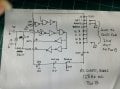
Yes, it works fine if wired as below (sorry for the bad drawing!). I've only used it with the 32.768 KHz Xtal, but it even runs at <3v with a change of resistors. Then the 1M needs to be 680k and the 330k lowered to 100k. The 15pF cap really needs to be a trimmer to get absolute accuracy!Can you actually get that to oscillate with a crystal? From the datasheet, it doesn't look as though it has the right bits and pieces to make a Pierce oscillator.

I'm surprised that it works. The Pierce oscillator needs a linear amplifier, and trying to put linear feedback around 5 gates in series usually makes it oscillate. It's got a Schmitt trigger which rather precludes making a linear amplifier.Yes, it works fine if wired as below (sorry for the bad drawing!). I've only used it with the 32.768 KHz Xtal, but it even runs at <3v with a change of resistors. Then the 1M needs to be 680k and the 330k lowered to 100k. The 15pF cap really needs to be a trimmer to get absolute accuracy!
Pin 4 is useful to measure the actual oscillator frequency.
View attachment 339077
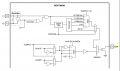
Yes, strange, but it does! I've just had another look at the internal circuit diagram, and wonder if it could also be made to work by using pin 14 as the input, with pin 4 as the output. I'll have to try it when I get a moment.I'm surprised that it works. The Pierce oscillator needs a linear amplifier, and trying to put linear feedback around 5 gates in series usually makes it oscillate. It's got a Schmitt trigger which rather precludes making a linear amplifier.
| Thread starter | Similar threads | Forum | Replies | Date |
|---|---|---|---|---|
| M | TL494/594 Buck converter timebase distorted | Power Electronics | 41 | |
| R | 10mhz timebase osc | Digital Design | 31 | |
| F | 1Hz Timebase from Wall Wart | General Electronics Chat | 17 | |
| C | timebase | General Electronics Chat | 6 | |
| A | Crystal Oscillator As Timebase? | General Electronics Chat | 2 |