Facebook
 Google
 GitHub
 Linkedin
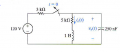
In the solution of this problem they wrote alpha= R/2L. That formula applies when its a series RLC. What elements of the circuit are we talking about when we're saying series/parallel. I used to think it was the inductance and the capacitor. Does opening the switch making the inductance capacitor resistor a separate circuit has anything to do with it ?
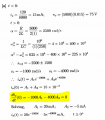
Here's how I think if i'm asked to find i(t) -current through the inductance - for t > or = 0
I get i(0) so I get a relationship like this A1+A2 =0
then I derive the general equation of the case.
=> di/dt = ...
then I think that di/dt isn't "anything" so I remember that the voltage of a inductance is V= L di/dt. so I multiply both sides of the newly derived equation to get V= ...
In this circuit V(0) would be 0 because the inductance became a wire.
Is this a wrong way to think ? It's never working for me.
Back to the solution I posted. How did they find di(0)/dt ?
Last edited: