Facebook
 Google
 GitHub
 Linkedin

I'm trying to build a reliable circuit that is based on analog components to detect the temperature of a device and shut it down if the temperature gets too high potentially damaging the device.
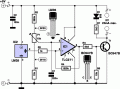
So far, I have brainstormed and have this layout in my head:
1. Thermistor is affixed to device to be monitored, and is part of a voltage divider.
2. A Shmiddt trigger op-amp monitors voltage from voltage divider (1), if voltage corresponds to a temperature that is below the maximum, op-amp output is low and relay providing power to device is de-energized
3. If voltage corresponds to a temperature that is higher than maximum, op-amp output is high and the relay providing power to the device is energized and cuts the power circuit powering the device, while the cooling system on the device remains on
4. Once device temperature returns to normal, op-amp output goes low, and power to the device is restored
Is this reasonable?
So far, I have brainstormed and have this layout in my head:
1. Thermistor is affixed to device to be monitored, and is part of a voltage divider.
2. A Shmiddt trigger op-amp monitors voltage from voltage divider (1), if voltage corresponds to a temperature that is below the maximum, op-amp output is low and relay providing power to device is de-energized
3. If voltage corresponds to a temperature that is higher than maximum, op-amp output is high and the relay providing power to the device is energized and cuts the power circuit powering the device, while the cooling system on the device remains on
4. Once device temperature returns to normal, op-amp output goes low, and power to the device is restored
Is this reasonable?