Glue for heavy Through Hole Componenets

Thread Starter

Doros

Joined Dec 17, 2013
144
Hello everybody,

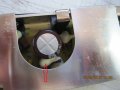
Can you tell me what kind of glue is the one we use to support heavy through hole components i.e. big electrolytics

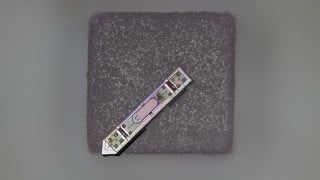
Attached photos

I do not think that hot melt is recomended

Many thanks

doros
 

Attachments

mcgyvr

Joined Oct 15, 2009
5,394
Look into products like 3m Scotch-Weld Hot Melt and Epoxy adhesives...
Also RTV silicones formulated for electronic use
 

wayneh

Joined Sep 9, 2010
18,106
I do not think that hot melt is recomended...
That's probably only because hot melt can ... melt. If the application stays cool, I think hot glue would be fine. I use it all the time. Not that I'm making a commercial product.
 

ebp

Joined Feb 8, 2018
2,332
I struggled with that problem for years (I don't anymore, but only because I don't do electronics anymore).

I was never happy with silicone RTV for really heavy parts because it is too soft to do much good, but it is useful for some tasks. Hot-melt adhesives gets too soft even a high ambient to be reliable, in my opinion, but could be useful in some circumstances. Standard epoxies are too hard and very difficult to deal with if rework is required. I think "toughened" epoxy is probably a good choice for some applications, but epoxies are also typically too fluid before curing to be workable for things like in the photos. Hot-melt polyurethane has lots of good properties except it won't stick to anything!

All of which is to say - I know what I don't like, but I don't know of a broadly applicable good solution.

A prototype of one switchmode power supply I designed came back from the end user with several parts, notably a large electrolytic and some other bits broken off. No one had bothered to tell either my client, who would be manufacturing them, or me that surviving the cement mixer test was a requirement (actually a rather brutal shaker table vibration test). My client solved the problem with a conformal coating that was high viscosity before curing and was applied in a fairly thick layer.

I once diagnosed a manufacturing issue with a Mean Well switcher. An adhesive had been rather liberally used to secure some parts, but in so doing a resistor was prevented from cooling properly and ultimately resulted in fan failure. Something intended to improve reliability had exactly the opposite effect. Mean Well modified their process to fix the problem.
 

ian field

Joined Oct 27, 2012
6,536
That's probably only because hot melt can ... melt. If the application stays cool, I think hot glue would be fine. I use it all the time. Not that I'm making a commercial product.
Hot melt glue is fairly common in low power stuff and I've never seen it cause trouble. Some components like aluminium electrolytics that aren't normally considered hot components can get pretty warm with high ESR and ripple current,

The non acetic curing RTV is more expensive, so I often use cheap stuff from the DIY store - you just have to be careful where you put it.

Asian manufacturers used a glue that looked similar to polyester putty, but it decomposed with heat and became highly corrosive - fortunately it was very brittle and could be chipped away easily. When new, it was a very clean white - the decomposed residue gave rise to the; "brown glue syndrome".

The intermediate stage of getting nasty looked like Evo-Stik.
 

dendad

Joined Feb 20, 2016
4,638
My vote is hot melt if your device will not heat up. It is easy to service as a blast from the hot air rework tool melts it so the part can be removed.
 

Thread Starter

Doros

Joined Dec 17, 2013
144
Thanks a lot,

I would go with hot melt, since the project is for my own use. The problem with hot melt is that there are so many types, with different specs each, that you do not know the one from the local hardware shop, what type is. I am also sure that if you measure resistance you will find it higher than 10^12ohm. I am not sure what will be in 3-4 years, but if it is for your own use you can measure again then.

thanks again for your help

doros
 

AnalogKid

Joined Aug 1, 2013
12,140
If you want to know what is used in the device in your photos, try to dent it with a finger nail. If you can, that's silicone; if not, it's hot melt.

I prefer silicone. It still has some flexibility even after it's fully cured. This can either a) act as a shock absorber, preventing the full force of a transient impact from being delivered to the pc board, possibly fracturing it or breaking a trace; or b) allow components to wiggle a little bit in a constant vibration environment, leading to device pins breaking. Life is choice.

ak
 

Thread Starter

Doros

Joined Dec 17, 2013
144
Thanks AK,

Actually I want to use a supporting material for my projects (not for sale). So I will go with hot melt. If in the future a project becomes a product to be sold, I would need to search thoroughly.

thanks again

doros
 

AnalogKid

Joined Aug 1, 2013
12,140
silicone can cause other problems.
I've seen that in print before, but never with a clear indication of the problems. One of the power supply companies we worked with didn't allow silicone. When I pressed for a reason, it turned out to be worker safety. A squirt now and then is nothing, but thousands applications per day is a lot of out-gassing.

ak
 

KJ6EAD

Joined Apr 30, 2011
1,581
I've seen that in print before, but never with a clear indication of the problems. One of the power supply companies we worked with didn't allow silicone. When I pressed for a reason, it turned out to be worker safety. A squirt now and then is nothing, but thousands applications per day is a lot of out-gassing.

ak
That's strange since the gas is alcohol vapor. Maybe they shouldn't allow the workers, whose safety they're so concerned about, to smoke on the job. :rolleyes:
…Or perhaps they could use the fume exhaust system they must have for solder flux fumes?
 

ian field

Joined Oct 27, 2012
6,536
My vote is hot melt if your device will not heat up. It is easy to service as a blast from the hot air rework tool melts it so the part can be removed.
Its very common that you can pry a blob of holt melt glue - heating is the best way of improving the bond, it may spread and you can't get hold of it with anything to pull it off.
 
Top