Facebook
 Google
 GitHub
 Linkedin
So I'm studying for a test and I'm not sure how an answer was derived based on the previous number. Could someone tell me how the answer came about?
[10*(j1)] / [(-2+j1)*(j2)]
The Answer is:
5 / [2.24 angle(153.43*)]
The final answer is in polar form but I don't get how it came about. I tried to solve it and it didn't work. Could someone show me the steps?
----------------------------------------------------------
I tried solving the bottom part by distribution:
(-4j + j^2 2) = (-2 - j4) = 4.47 angle(-63.43)
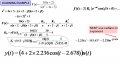
The top I didn't really know how it came to it. This part is of course part of the bigger problem but I don't understand how this part came about. I've included the slide I got it from & circled where I got stuck. Could someone help me understand?
[10*(j1)] / [(-2+j1)*(j2)]
The Answer is:
5 / [2.24 angle(153.43*)]
The final answer is in polar form but I don't get how it came about. I tried to solve it and it didn't work. Could someone show me the steps?
----------------------------------------------------------
I tried solving the bottom part by distribution:
(-4j + j^2 2) = (-2 - j4) = 4.47 angle(-63.43)
The top I didn't really know how it came to it. This part is of course part of the bigger problem but I don't understand how this part came about. I've included the slide I got it from & circled where I got stuck. Could someone help me understand?
Attachments
-
 75.6 KB Views: 22